Plug-and-Play Lighting Systems for Data Centers: Low-Voltage, PoE, and DC Power Explained
- Introduction
- Why It Matters to You
- Core Technologies
- PoE Lighting Deep Dive
- DC-Connected Systems
- DLVP Systems
- Plug-and-Play Explained
- Controls & Protocols
- Sensor-Based Automation
- Integration Considerations
- Energy & PUE Impact
- Safety, Maintenance & Workforce
- ROI and Cost Analysis
- Sustainability & Standards
- Vendor Landscape
- Niche Innovations
- Real-World Case Studies
- How to Plan & Specify
- Deployment & Commissioning
- Operation & Maintenance
- Common Pitfalls & How to Avoid
- Frequently Asked Questions (FAQ)
- Future Trends
- Glossary
- References & Further Reading
Key Takeaways
| Feature or Topic | Summary |
|---|---|
| Definition | Pre-wired LED lighting systems designed for fast deployment with minimal configuration. |
| Primary Benefits | Faster installation, fewer errors, better integration with IT systems, energy savings. |
| Key Technologies | PoE, DC-connected, DLVP, DALI/D4i, Zhaga, BMS/DCIM integration. |
| ROI | Average payback in 12–24 months due to reduced install and operational costs. |
| Certifications | UL, ISO 9001/14001/45001, TIA-942-A compliant fixtures. |
1. Introduction
Plug-and-play lighting systems aren’t a gimmick. They solve real problems in real places—especially data centers where uptime, safety, and energy precision are non-negotiable. These systems let you connect luminaires quickly, like modules. Think hot-swappable servers but for lights.
- Reduced install times
- Less labor complexity
- Better integration with BMS and DCIM
- Energy savings
- Safer installs in confined or high-risk zones
- Flexibility in maintenance and future upgrades
2. Why It Matters to You
You’re not buying bulbs; you’re buying operational uptime and efficiency. In data centers, downtime equals cost. Lighting isn’t the first thing you think of when planning a hall—but it’s one of the most overlooked components that can cause delays and safety risks if improperly handled.
- Downtime risk: Lighting should never delay IT readiness
- Energy load: Every watt matters in PUE metrics
- Safety: Low-voltage means lower risk
- Smart integration: Occupancy and daylight sensors matter more in vast, semi-occupied zones
- Speed: A week shaved off install is money saved
- Reliability: Systems should hold up in high-temp, high-humidity environments
3. Core Technologies
The tech isn’t one-size-fits-all. Here are the key formats:
| Type | Description | Use Case |
|---|---|---|
| Line Voltage | Traditional 230V/110V wiring | Legacy retrofits, older builds |
| Low Voltage | 48V or under DC circuits | New builds prioritizing safety and efficiency |
| PoE | Data + power through CAT5/6 cabling | Rack areas, perimeter lighting |
| DLVP | Headend with distributed low-voltage branches | Open zones, hot/cold aisle grids |
4. PoE Lighting Deep Dive
Power over Ethernet (PoE) uses network cables to transmit both power and data. For data centers, this means:
- Reduced cable complexity
- Integration with IT infrastructure
- Fixture-level control and feedback
- Faster rollouts and simpler upgrades

Standards to know: IEEE 802.3bt allows up to 60W per port — enough for most high-efficiency fixtures.
Key Tip: Use managed PoE switches for visibility and alerts at the port level.
5. DC-Connected Systems
These systems are engineered like the rest of a data center: centralized, efficient, and segmented. In essence, the lighting grid mirrors a server architecture.
- All lighting routes from a rack-based headend
- Local power redundancy built into zones
- Daisy-chain lighting architecture that isolates failures
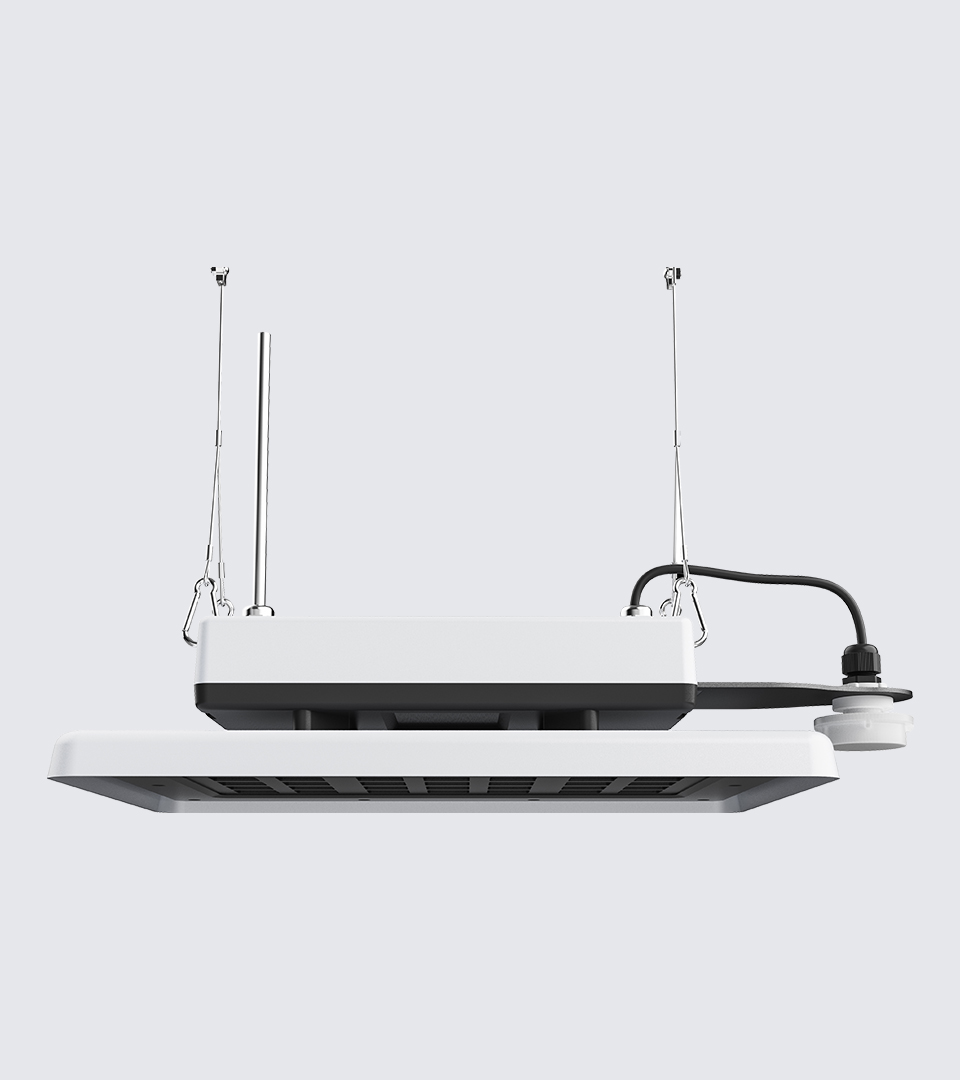
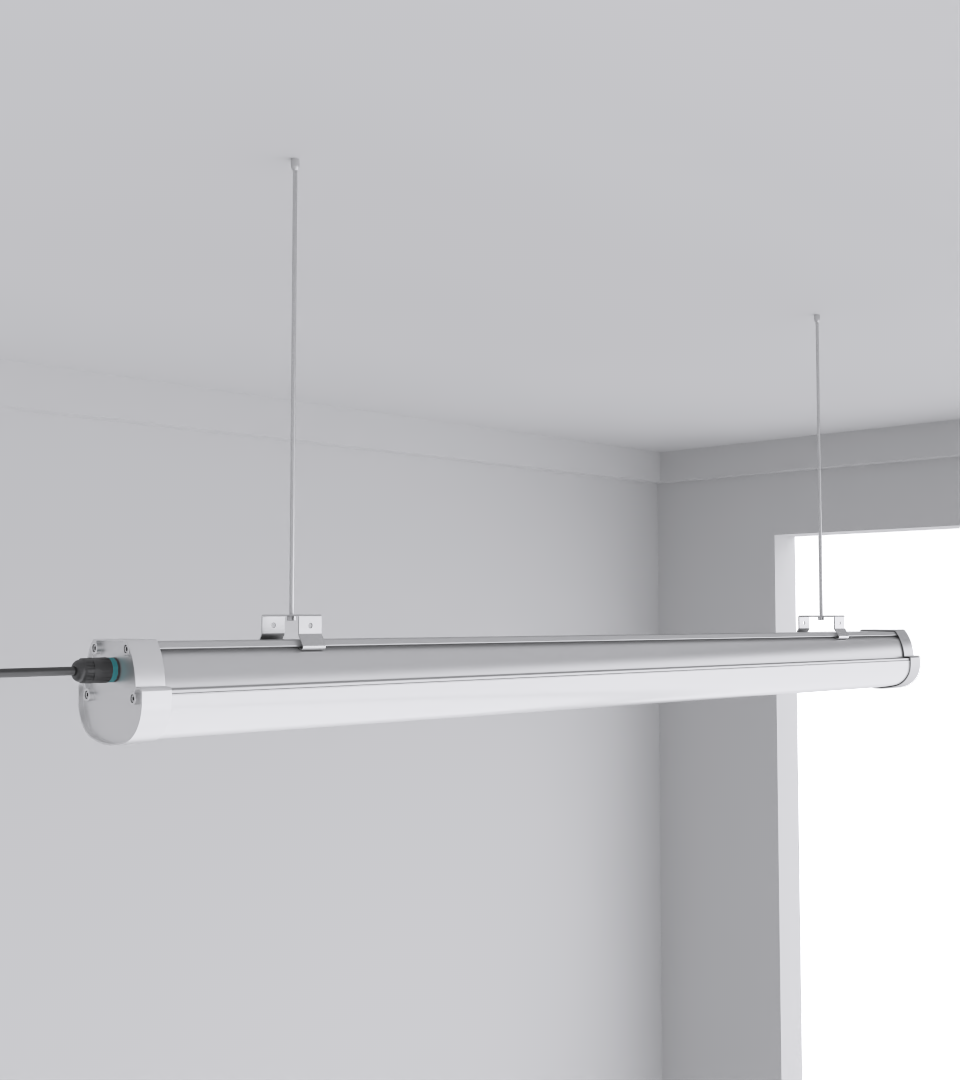
CAE Lighting’s Squarebeam Elite and Quattro Triproof Batten are thermally and electrically optimized for continuous-use environments.
Field Example: In our Johor warehouse fit-out, we replaced fluorescent tubes with DC-powered battens in under 72 hours, reducing power draw by over 20% without sacrificing lux levels.
6. DLVP Systems
Distributed Low Voltage Power (DLVP) blends plug-and-play wiring with centralized control. This model is ideal for:
- Rapid deployment across uniform rack rows
- Integration with motion and ambient sensors
- Reducing electrician involvement post-headend
| Feature | Benefit |
|---|---|
| Headend-driven | Central control point for 100+ fixtures |
| Plug-in branches | Modular lighting zones, easy expandability |
| DALI/D4i-ready | Real-time fixture feedback and automation |
Use Case: Cooper Lighting’s deployment at H5 Data Centers retrofitted 10,000 square feet in 1.5 days with a 70% energy saving.
7. Plug-and-Play Explained
Let’s strip it down. “Plug-and-play” in this context means:
- No field wiring
- Pre-terminated connectors
- Daisy-chaining fixtures like extension cords
- Fast troubleshooting through digital controllers

What You Avoid: Conduit design delays, manual wiring errors, and permit slowdowns.
In Penang: One project lead said, “With pre-configured kits, we knocked out a 60-fixture job before the networking team even showed up.”
8. Controls & Protocols
Modern plug-and-play setups are useless without smart control. Here’s what matters most:
- DALI / DALI-2 / D4i: Digital dimming, feedback, and auto-addressing
- Zhaga: Modular sensor/driver interface for easy upgrades
- BACnet, KNX: Cross-system BMS communication
- Zigbee, Bluetooth Mesh: Wireless control for retrofits and mobile zones
CAE Lighting’s remote interface series supports all of the above through [Squarebeam Elite](https://www.caeled.com/product/squarebeam-elite/) and Quattro Triproof models.
Tip: Never spec a fixture without confirming protocol compatibility. We learned that the hard way in 2017.
9. Sensor-Based Automation
Automation is where plug-and-play lighting earns its intelligence. Smart sensors give systems the ability to react instantly to occupancy, ambient light levels, or heat signatures.
- Occupancy sensors: Activate lights only when people are present — vital in low-traffic zones.
- Daylight harvesting: Applies in hybrid spaces near windows or entryways.
- Temperature-linked dimming: Helps mitigate fixture heat buildup in dense server rooms.
Pro Tip: Mount motion sensors at mid-rack height for better directional coverage and fewer false triggers.
10. Integration Considerations
Lighting must integrate smoothly into larger data center systems. That means:
- Building Management Systems (BMS): HVAC, fire, lighting, access — all visible in one console.
- Data Center Infrastructure Management (DCIM): Energy tracking and maintenance dashboards.
- Security Segmentation: Lighting should be isolated on its own VLAN.
| Protocol | Function |
|---|---|
| BACnet/IP | Standard in most BMS platforms |
| DALI-2 / D4i | Lighting control + real-time feedback |
| MQTT | Lightweight comms for cloud dashboards |
Field Win: A CAE deployment in KL integrated all lights via BACnet + Zigbee with zero post-install rework.
11. Energy & PUE Impact
Lighting affects Power Usage Effectiveness (PUE) more than expected — especially when integrated with HVAC and sensors.
- LED systems use 50–75% less power than legacy fluorescent setups.
- Smart controls can reduce active light hours by up to 30%.
- Lower fixture heat output reduces cooling demand.
| Lighting Type | Avg. Power (W) | HVAC Load Impact |
|---|---|---|
| Fluorescent | 65W | High |
| Basic LED | 45W | Medium |
| Smart DC LED | 30W | Low |
12. Safety, Maintenance & Workforce
Plug-and-play systems simplify installation and reduce electrical hazards:
- No exposed wiring during connection
- Low-voltage circuits minimize shock risk
- Tool-free replacements save hours of skilled labor
Success Metric: One client reduced lighting maintenance time by 45% using CAE’s waterproof Quattro battens with snap-lock connectors.
13. ROI and Cost Analysis
Here’s how plug-and-play lighting stacks up financially over time:
- Capex: Slightly higher upfront cost per fixture
- Opex: Lower energy, labor, and maintenance costs
- Payback Period: 12–24 months on average
| Factor | Plug-and-Play | Traditional |
|---|---|---|
| Install Time | 2–3 days | 6–10 days |
| Labor Cost | 30–40% lower | Higher |
| Payback | 12–24 months | 36+ months |
14. Sustainability & Standards
Lighting upgrades can support certifications and compliance initiatives:
- Lower embodied carbon via reduced cabling and copper
- Higher efficiency supports green building scores
- Quick integration with ESG dashboards
Certifications Covered:
- ISO 14001 – Environmental Management
- ISO 45001 – Occupational Safety
- UL 924 / 1598 – Emergency & general lighting
- TIA-942-A – Data center lighting guidelines
15. Vendor Landscape
| Vendor | Specialty |
|---|---|
| CAE Lighting | Thermally resilient, sensor-integrated battens |
| Sinclair Agile-Core | Rack-mounted DC distribution grids |
| Cooper DLVP | PoE + distributed systems with robust case history |
| WTEC Smartengine | Advanced analytics and fixture-level controls |
| Lantana LED | Hybrid PoE high bays for mixed-height spaces |
16. Niche Innovations
- Solar-Integrated Edge Lighting: Great for signage, parking, and security zones without trenching (e.g. SEPCO Lighting).
- Kinetic Wireless Controls: Self-powered sensors with zero battery maintenance (e.g. Shine Lighting).
Note: CAE is actively testing battery + solar integrated battens for use in rural data backup sites.
17. Real‑World Case Studies
H5 Data Centers (USA)
- 70% energy reduction with Cooper Lighting DLVP
- 10,000 sq ft completed in 1.5 days
- Remote diagnostics via BMS integration
Sinclair Agile-Core (Singapore)
- Reduced copper usage by 58%
- All lighting routed through rack headends
- UPS-backed modular power zones
CAE Lighting (Johor, Malaysia)
- Replaced 600 battens in under 3 days
- 32% runtime reduction via motion-triggered LEDs
- Used [Quattro Triproof](https://www.caeled.com/product/quattro-triproof-batten/) for IP66 resilience
18. How to Plan & Specify
- Assess your site: ceiling height, lux needs, HVAC impact
- Choose your topology: PoE, DLVP, DC rack, or hybrid
- Define zoning: cold/hot aisle, access lanes, perimeter
- Write clear specs: min. 400 lux, DALI-ready, 90+ CRI
Tip: Always include testing ports in headend racks for easy commissioning and M&V.
19. Deployment & Commissioning
- Pre-bench-test all fixtures
- Color-code low-voltage harnesses
- Pre-assign DALI IDs to avoid post-install duplicates
- Use wireless tablets or dashboards for live testing
Lesson Learned: Overlapping DALI IDs caused 3-day delays in a Thailand install — always pre-program offline.
20. Operation & Maintenance
- Check firmware quarterly
- Enable SMS/email alerts for fixture-level faults
- Use wireless diagnostic tools to reduce climb time
- Keep 5% of SKUs in stock for rapid replacements
Zhaga-based fixtures allow hot-swapping sensors without rewiring — critical in high-density data zones.
21. Common Pitfalls & How to Avoid
| Mistake | Fix |
|---|---|
| Overloading PoE ports | Use IEEE 802.3bt switches and budget properly |
| Controller misconfiguration | Validate profiles offline in a sandbox system |
| Poor zoning of sensors | Use test mode to map zones and eliminate overlap |
| Unsecured lighting VLANs | Use network segmentation and change default creds |
22. Frequently Asked Questions (FAQ)
What is plug-and-play lighting in data centers?
Preconfigured fixtures, sensors, and wiring that allow rapid install and auto-addressing with minimal fieldwork.
Can PoE lighting be used in high bays?
Yes, if you use high-power switches and ensure the fixtures match your ceiling height and lux needs.
Is DC lighting more reliable than AC?
Yes. DC systems eliminate step-down transformers and typically operate at higher efficiency and lower heat.
Can I retrofit these into an old data hall?
Absolutely. DLVP and PoE systems are especially suited for retrofit without extensive rewiring.
Does this require new skills?
No. Most systems are built for standard electrical or IT teams with minimal retraining.
23. Future Trends
- DC microgrids with lighting as a native load
- AI-based motion and runtime optimization
- Wireless, battery-less sensors using kinetic tech
- Cloud-managed firmware and lighting analytics
24. Glossary
| Term | Definition |
|---|---|
| PoE | Power over Ethernet — single cable for data and power |
| DALI | Digital Addressable Lighting Interface |
| Zhaga | Standard for interchangeable lighting components |
| DLVP | Distributed Low Voltage Power system |
| PUE | Power Usage Effectiveness — data center efficiency ratio |