Quantum Dot Lighting in Data Centers: Efficiency Gains, Heat Reduction, and Integration Guide
–
Key Takeaways
| Question | Quick Answer |
|---|---|
| What is Quantum Dot (QD) lighting? | A lighting technology using nanocrystals that emit precise colors when excited by light or electricity. |
| Why is it useful for data centers? | Higher energy efficiency, low heat output, and precision spectrum control improve cooling and visibility. |
| Are QD lights better than LEDs? | In some use cases, yes. They offer better spectral tuning and potentially longer lifespans. |
| Is the tech ready now? | Emerging. Use cases like emergency lighting and pilot projects are starting to roll out. |
| What are the risks? | Material toxicity (e.g. cadmium), heat stability, integration costs. |
| Who makes these lights? | Ams Osram, Nanoco, Nanosys, CAE Lighting is investigating use cases in industrial applications. |
What Is Quantum Dot Lighting?
Quantum dots (QDs) are nanocrystals that emit specific wavelengths of light when excited by a photon or an electric field. Their standout feature? You can tune the emission color by simply changing the particle size.
- Unlike traditional phosphor LEDs, QD lighting achieves more accurate spectral control.
- Photoluminescent QDs (excited by blue LEDs) are common in display backlighting.
- Electroluminescent QD LEDs (directly powered) are now emerging for general illumination.
Why QD Lighting Is Relevant to Data Centers
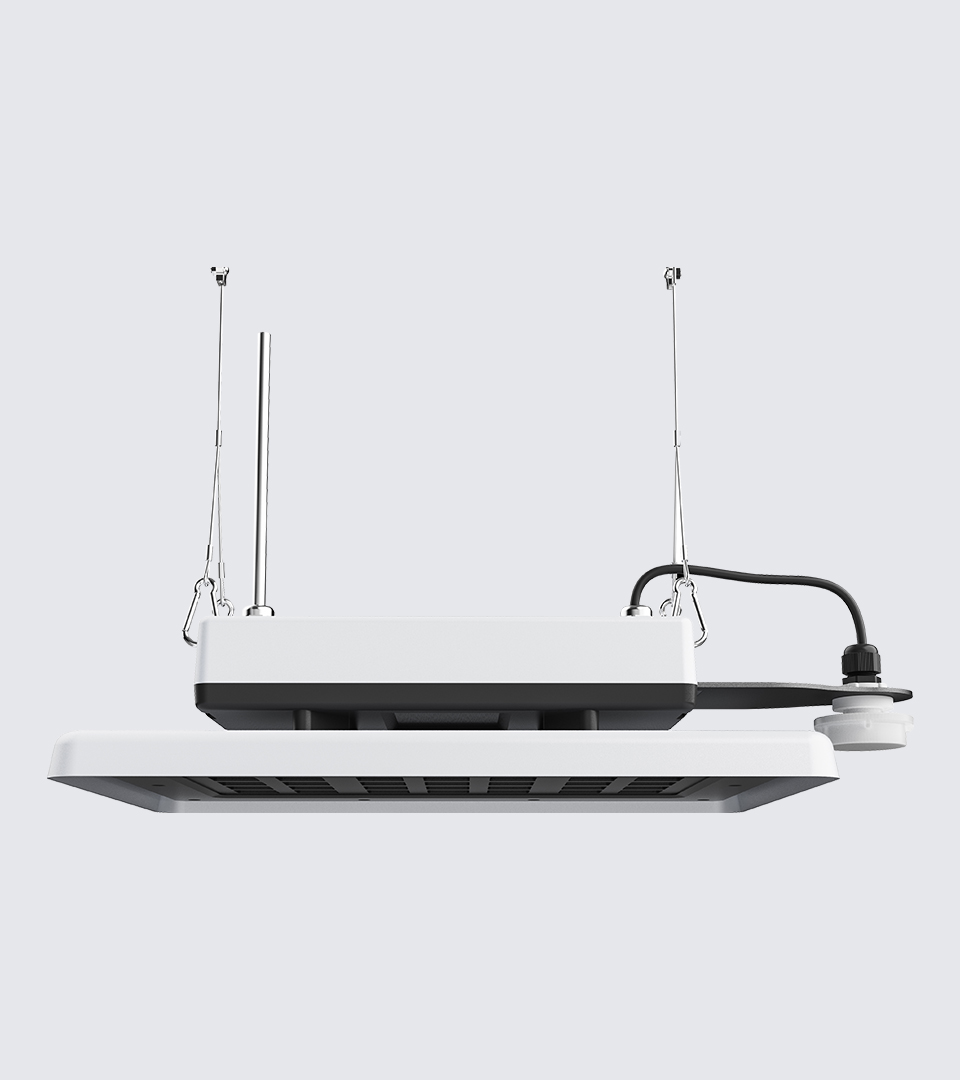
- QD lights can improve energy efficiency by up to 20% compared to conventional LEDs.
- Spectral tuning helps with circadian-friendly work zones in control rooms.
- Lower heat output means reduced HVAC strain — a subtle but long-term win.

Photoluminescent vs Electroluminescent QD LEDs
| Type | How It Works | Pros | Cons |
|---|---|---|---|
| Photoluminescent | QDs are excited by a blue LED backlight | Mature tech, used in displays | Lower efficiency for large spaces |
| Electroluminescent | QDs are directly powered by electricity | High control, ultra-thin fixtures | Expensive, R&D stage |
Key Use Cases in Data Centers
- Server Room Ambient Lighting: Tunable white balance reduces eye strain; color accuracy helps cable ID.
- Rack-Level Directional Lighting: QD modules allow for narrow, non-glare beam angles.
- Emergency Egress: QDs stay visible via photoluminescence even during outages.
Challenges & Risks
- Material Safety: Cadmium-based QDs pose RoHS compliance risks.
- Thermal Stability: Heat degradation can affect performance over time.
- Cost: QD modules are currently more expensive than standard LEDs.
Market Readiness & ROI
- Status: Pilot deployments in R&D labs and select retrofits.
- ROI: 2–3 year payback in hyperscale centers.
- Environmental: Smarter light placement, reduced HVAC usage.
Expert Tips for Deployment
- Start with low-risk zones like corridors and admin spaces.
- Avoid sealed enclosures — thermal flow matters.
- Work with vendors early — like CAE Lighting — to check compatibility.
Future Outlook
- Commercial QD modules expected by 2026–2027.
- Cadmium-free and safer encapsulated designs incoming.
- Smart platform integration already underway.
Frequently Asked Questions
Q: Can I retrofit existing LED systems with quantum dot modules?
A: Some can — photoluminescent films are easiest. Electroluminescent needs new drivers.
Q: Are QDs safe for people?
A: If cadmium-free and encapsulated, yes. Always verify RoHS compliance.
Q: Do they need special fixtures?
A: Not always — some films work on standard diffusers.
Q: Will they interfere with servers or photonics?
A: No known issues. They may even enhance optical networks in future.
Q: Who do I contact for a trial install?
A: CAE Lighting offers prototyping and consultation.