How Autonomous Lighting Drones Are Transforming Data Center Maintenance and Inspection
- What Are Autonomous Lighting Drones?
- Why Autonomous Lighting Drones Are Taking Off Now
- Key Lighting Issues in Data Centers
- Anatomy of a Lighting Inspection Drone
- Operational Workflow: From Launch to Report
- Integration with Facility Systems
- ROI Breakdown: Does It Actually Save Money?
- Frequently Asked Questions (FAQ)
Key Takeaways
| Feature or Topic | Summary |
|---|---|
| Integration Benefits | Energy savings, streamlined operations, enhanced monitoring, and predictive maintenance. |
| Key Protocols | BACnet, Modbus, SNMP ensure interoperability. |
| Implementation Strategies | Assess existing infrastructure, select compatible systems, phased deployment recommended. |
| Operational Advantages | Reduced downtime, improved safety, occupant comfort, and significant sustainability contributions. |
What Are Autonomous Lighting Drones?
Autonomous lighting drones are specialized UAVs (Unmanned Aerial Vehicles) designed for inspecting and analyzing lighting infrastructure in complex, high-ceiling environments such as data centers. Equipped with:
- RGB and thermal cameras
- LiDAR scanners for structural mapping
- Adjustable LED illumination modules
They offer autonomous navigation, data capture, and diagnostics — often docking into a ground station for recharging and data upload.
Why Autonomous Lighting Drones Are Taking Off Now
- Edge AI Advancements — Enables real-time object detection and photometric analysis.
- Drone-in-a-box Systems — Fully autonomous launch, land, and recharge cycles.
- High Cost of Manual Inspections — OSHA-compliant lift operations are time-consuming, require shutdowns, and carry liability risk.
Recent push for ISO 50001 and energy audits is also accelerating demand. In CAE Lighting’s deployments, failure to detect just one dark aisle led to hundreds of man-hours lost during cooling system misdiagnosis.
Key Lighting Issues in Data Centers
| Problem | Manual Inspections | Drone Solution |
|---|---|---|
| High Ceilings | Requires lifts, scaffolding | Autonomous vertical access |
| Hot Spots | Missed in periodic checks | Real-time thermal scanning |
| Dark Zones | Under-rack shadowing | Top-down LiDAR mapping |
| Compliance Gaps | Paper logs/manual photos | Timestamped image audits |
Anatomy of a Lighting Inspection Drone
- SLAM Navigation: Indoor positioning via ceiling reflectance and IMU.
- Edge Compute Module: For onboard lux calculation, anomaly tagging.
- Thermal/RGB Cameras: Identify failing units or overheat zones.
- Adjustable Light Source: Angle-tuned LED arrays to match fixture types.
- Docking Station: Recharge + data upload (integrates with CAE’s control gear).
Operational Workflow: From Launch to Report
- Autonomous Launch from a base station (pre-mapped).
- Flight Mission uses predefined coordinates with obstacle avoidance.
- Lighting Scan with simultaneous photo, video, and thermal data.
- Edge Processing tags lux dropouts, alignment issues.
- Dock & Upload to DCIM or BMS for technician review.
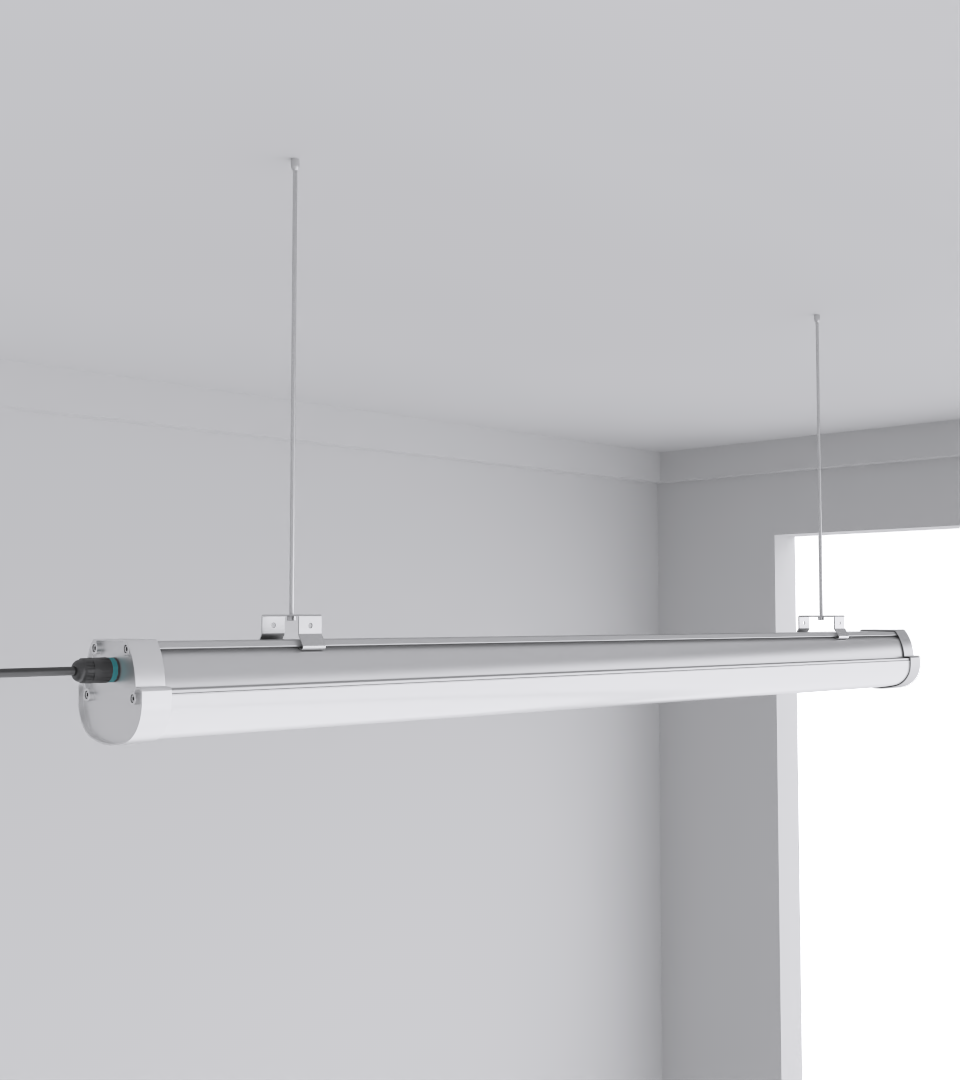
CAE Lighting’s SeamLine Batten can be paired with drone sensors to flag minor glare anomalies before human perception is affected.

Integration with Facility Systems
Drones must speak to your infrastructure. That means:
- DCIM Integration: Tagging location/lux/temp into rack management systems
- CMMS Hooks: Auto-create service tickets for flagged failures
- BMS Sync: Adjust HVAC behavior if lighting contributes to thermal load
In some CAE-led retrofit projects, drones preemptively triggered maintenance orders before ground staff were even aware of failures.
ROI Breakdown: Does It Actually Save Money?
| Metric | Manual | Drone-Enabled |
|---|---|---|
| Inspections/Week | 1–2 | 10+ |
| Staff Involvement | 2–3 people | 0 (autonomous) |
| Risk of Delay | High | Low |
| Monthly Cost | $4,500 | $900–$1,300 avg. |
| ROI Timeframe | N/A | ~12–18 months |
Savings accelerate in high-density sites with >100 aisles. For clients running Simplitz V3 retrofits, drones helped identify 8 underperforming units per floor in the first week.

FAQs
Q: What’s the battery life of a lighting drone?
A: Most offer 15–22 minutes per mission, enough for 4–6 aisles.
Q: Can drones inspect while the data center is online?
A: Yes, especially with collision-avoidance and EMI shielding.
Q: What resolution is used for lux measurements?
A: Down to ±5 lux variance using calibrated sensors.
Q: Is this legal indoors?
A: Indoor operation does not fall under FAA BVLOS restrictions.
Q: Does this integrate with CAE Lighting’s products?
A: Yes. Systems like Squarebeam Elite and SeamLine Batten are compatible.
For full product specs and sample deployment plans, contact CAE Lighting.
Explore more inspection-ready luminaires at the CAE product page.