
How to Monitor Data Centers Effectively: Protocols, Sensors, and Standards
–
- Defining Data Centre Monitoring vs. DCIM vs. Observability
- Reference Standards That Define “Good” Monitoring
- Uptime Targets and SLA Maths
- Sensor Placement: Rack-Level and Room-Level
- Protocols: SNMP, Redfish, Modbus, and OpenTelemetry
- Cooling & Liquid Systems Monitoring
- Security, Safety, and Integration with Lighting
- Building Your Monitoring Build-Sheet & RFP Checklist
- Frequently Asked Questions (FAQ)
Key Takeaways
| Question | Quick Answer |
|---|---|
| What is data centre monitoring? | A system integrating IT, power, cooling, and security telemetry into one view (DCIM + EPMS + BMS). |
| Which standards apply? | ASHRAE thermal guidelines, TIA-942, ISO 27001, NFPA/OSHA. |
| Why does uptime matter? | 99.999% uptime = only ~5m downtime/year. Monitoring ensures reliability. |
| Key metrics? | Temperature, humidity, airflow, leak detection, PUE/WUE/CUE, MTTR/MTTD. |
1. Defining Data Centre Monitoring vs. DCIM vs. Observability
Data centre monitoring is not a single tool — it is a layered stack of systems: DCIM, EPMS, and BMS. The overlap creates confusion. A clear demarcation avoids finger-pointing during outages.
2. Reference Standards That Define “Good” Monitoring
Monitoring design relies on standards. ASHRAE TC9.9 defines intake: 18–27 °C, RH: 40–60%. TIA-942-C requires aisle sensors. Following these avoids wasted cooling and ensures audit compliance.
3. Uptime Targets and SLA Maths
| SLA (%) | Downtime per Year |
|---|---|
| 99.9% | ~8.7 hours |
| 99.99% | ~52 minutes |
| 99.999% | ~5 minutes |
4. Sensor Placement: Rack-Level and Room-Level
- Rack-level: top/mid/bottom intake, exhaust deltas, door contacts.
- Room-level: hot/cold aisle, leak ropes, smoke detection.

5. Protocols: SNMP, Redfish, Modbus, and OpenTelemetry
SNMP for devices, Redfish for servers, Modbus & BACnet for facilities, NetFlow/sFlow for traffic, OpenTelemetry for unified pipelines. If your DCIM doesn’t support Redfish, it’s behind.

6. Cooling & Liquid Systems Monitoring
- CRAH/CRAC, filter ΔP, coil fouling
- Chillers, pump flows, valves
- Leak detection under raised floors
- Immersion fluid quality monitoring
7. Security, Safety, and Integration with Lighting
Integrating badge, biometrics, CCTV, and smoke detection into DCIM dashboards is essential. Occupancy-based luminaires add both energy savings and safety.
8. Building Your Monitoring Build-Sheet & RFP Checklist
Checklist: protocol support, redundancy, dashboards, integrations, lighting tie-ins.
| Component | Example |
|---|---|
| Sensors | Temp, humidity, leak ropes |
| Protocol Gateways | Modbus/BACnet converters |
| Monitoring Platform | DCIM with OpenTelemetry export |
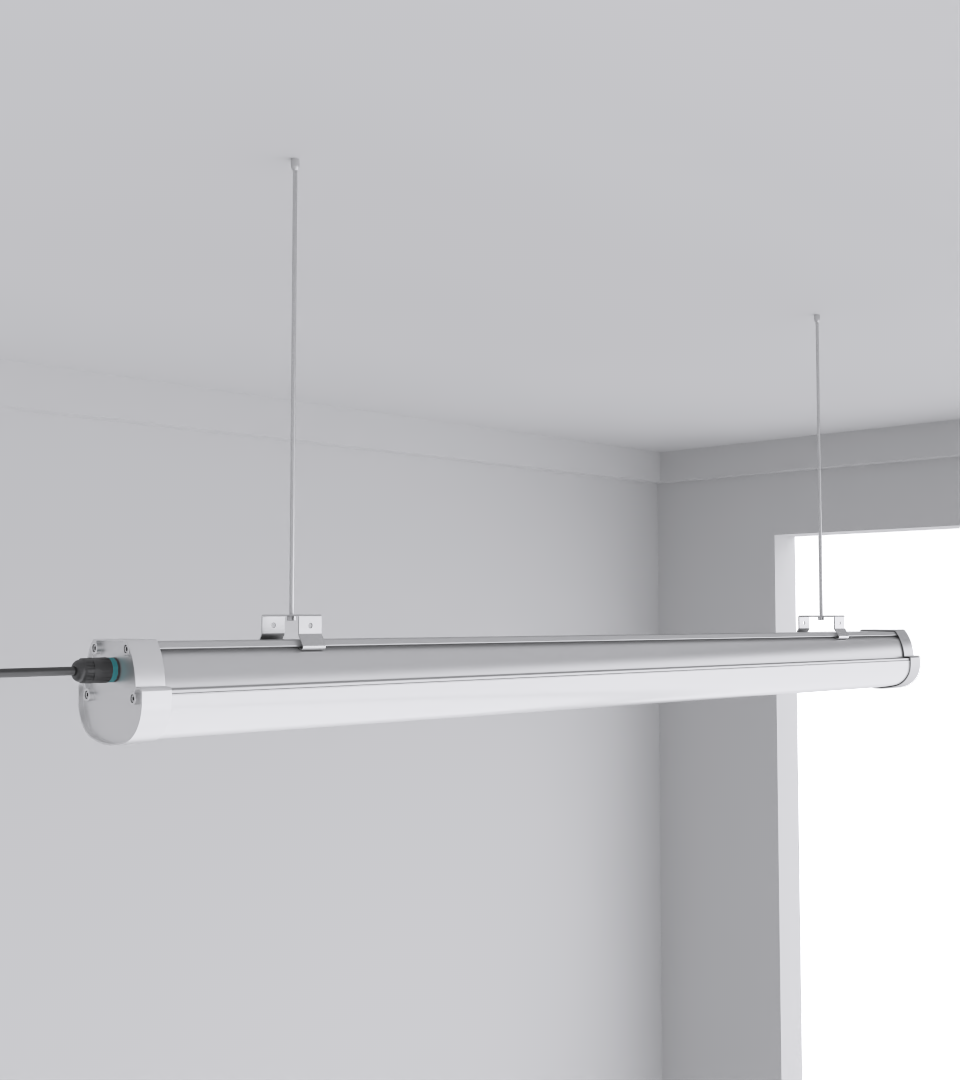
| Lighting Safety | Quattro Triproof Batten |
Frequently Asked Questions (FAQ)
Q1: How many temperature sensors per rack?
At least three (top, mid, bottom).
Q2: Is OpenTelemetry mature enough?
Yes, for metrics/logs. SNMP/Modbus still required for legacy gear.
Q3: Should lighting be tied to monitoring?
Yes, occupancy LEDs improve energy use and security visibility.
Q4: Biggest cause of monitoring failure?
Not sensor cost, but poor placement and unclear alarm demarcation.