
Smart Lighting in Data Centers: Hidden Cybersecurity Risks and How to Stop Them
- 1. What Is Smart Lighting in Data Centers
- 2. Physical and Cyber Threats in Data Center Lighting
- 3. Protocols and Network Segmentation
- 4. Real-World Incidents and Industry Lessons
- 5. Designing Secure Lighting Architectures
- 6. Installation and Maintenance Considerations
- 7. Best Practices and Compliance
- 8. Where CAE Lighting Fits In
- Frequently Asked Questions (FAQ)
Key Takeaways
| Feature or Topic | Summary |
|---|---|
| Main Concern | Smart lighting systems in data centers pose cybersecurity risks due to network access. |
| Common Threats | DDoS, eavesdropping, malware injection, and covert channels via light signals. |
| Industry Standards | NIST, ANSI/UL 2900, DOE matrices guide secure design and implementation. |
| Best Practices | VLANs, encryption (AES-128), secure commissioning, firmware management. |
| Key Products | Squarebeam Elite, Quattro Triproof Batten, SeamLine Batten. |
| CAE Lighting’s Role | Certified luminaires designed for cyber/physical resilience and energy efficiency. |
1. What Is Smart Lighting in Data Centers — and Why It Matters
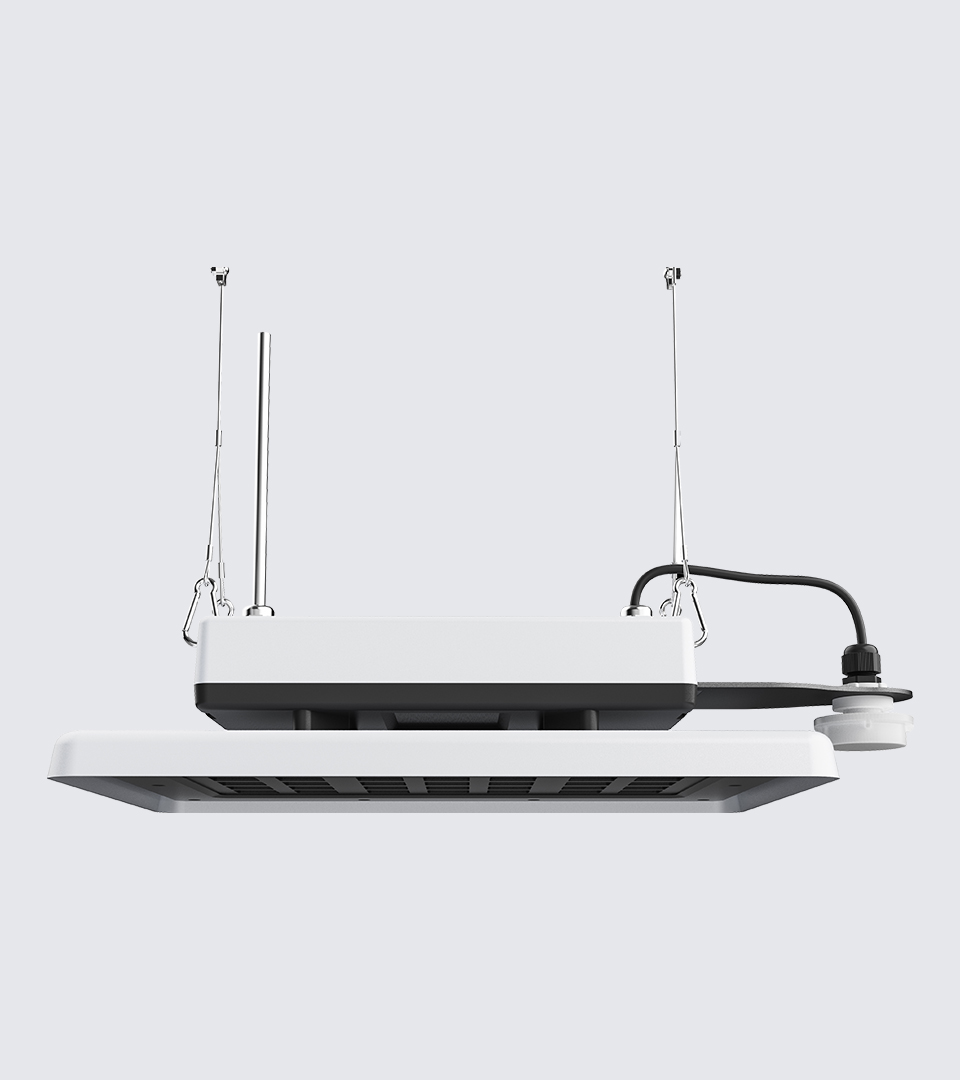
Smart lighting in data centers involves network-connected LED luminaires that communicate via protocols like Zigbee, DALI, or Ethernet (PoE). These fixtures can be controlled remotely, integrated into broader building automation systems (BAS), and even participate in real-time monitoring and optimization.
2. Physical and Cyber Threats in Data Center Lighting
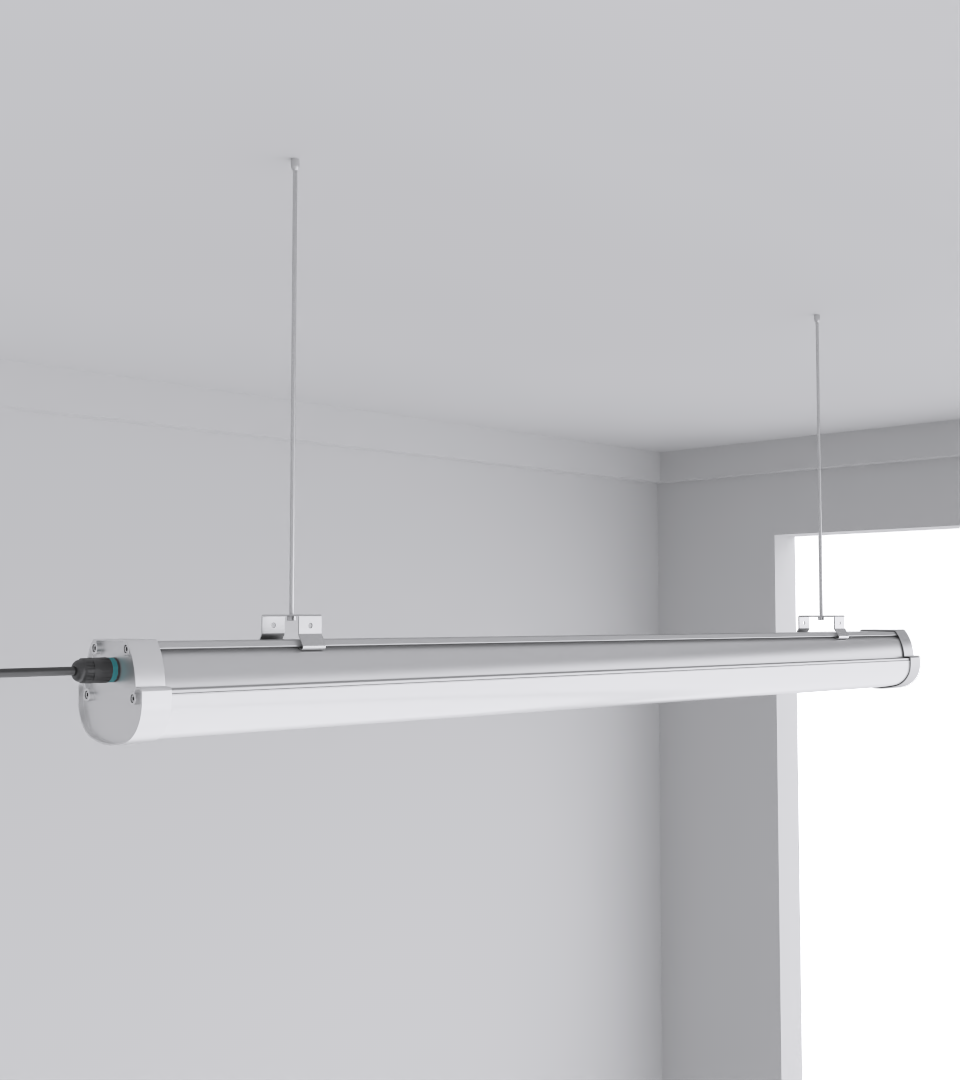
Lighting has traditionally been seen as a passive asset — today, it’s an active participant in data infrastructure. Threats include DDoS attacks on controllers, sniffing of Zigbee traffic, and firmware tampering via insecure update channels.
3. Protocols and Network Segmentation: What to Use (And Avoid)

Older protocols like DALI weren’t built for security. Use AES-128 encryption, secure TLS for remote access, and VLAN-segmented PoE systems to isolate lighting traffic from IT core infrastructure.
4. Real-World Incidents and Industry Lessons
Real-world attacks have included drone exfiltration using LED modulation and Mirai-like malware targeting CCTV-lighting networks. Incidents have caused surveillance blind spots and emergency light disruptions.
5. Designing Secure Lighting Architectures
- Device authentication via certificates
- Use end-to-end AES encryption
- VLAN or physical segmentation of lighting network
- Firmware updates via secure channels only
- Emergency lights on isolated redundant loops
6. Installation and Maintenance Considerations
- Lock and secure PoE switches
- Segment lighting zones by physical security zones
- Quarterly firmware integrity checks
- Training for on-site technicians on secure handling
7. Best Practices and Compliance
CAE’s certifications (ISO 9001/14001/45001) support secure practices, but best practices require Zero Trust principles, MFA on lighting dashboards, staff cybersecurity awareness, and vendor vetting.
8. Where CAE Lighting Fits In
CAE’s data center portfolio includes Squarebeam Elite, Quattro Triproof, and SeamLine Batten—all engineered for high thermal and security requirements. Their integrated approach supports lighting that is both operational and cyber-resilient.
Frequently Asked Questions (FAQ)
What is the biggest cybersecurity risk in smart lighting for data centers?
Lateral movement from lighting to core IT via unsegmented networks.
Can lighting be used to exfiltrate data?
Yes, via visual covert channels like flicker modulation or unsecured broadcast protocols.
Should I prefer PoE over Zigbee?
Yes, PoE with VLAN segmentation is more secure and easier to control in structured cabling environments.
How often should firmware be updated?
At least quarterly or immediately after a vulnerability patch is released.
Is CAE Lighting a secure vendor?
Yes, their practices align with DOE, NIST, and ANSI
Custom Scene Programming for Data Centers: The Technician’s Guide to DMX, SCADA, and Smart Logic Integration
- What Is Custom Scene Programming in Data Centers?
- Why It Matters: Benefits for Technical Teams & Operations
- Common Use Cases for Scene Logic
- Core Components: What Makes a Scene System Tick
- Scene Logic Programming: Workflow Breakdown
- Lighting Integration: DMX Scene Configuration Tips
- Troubleshooting Scenes: Common Pitfalls
- What Next: Tools, Certification, and Real-World Scaling
- Frequently Asked Questions (FAQs)
Key Takeaways
| Feature or Topic | Summary |
|---|---|
| Integration Benefits | Energy savings, streamlined operations, enhanced monitoring, and predictive maintenance. |
| Key Protocols | BACnet, Modbus, SNMP ensure interoperability. |
| Implementation Strategies | Assess existing infrastructure, select compatible systems, phased deployment recommended. |
| Operational Advantages | Reduced downtime, improved safety, occupant comfort, and significant sustainability contributions. |
Custom Scene Programming in Data Centers: A Technician’s Guide to Design, Deploy & Maintain Automated Control Systems
Custom scene programming refers to defining control logic sequences that activate specific outputs (lighting, fans, alarms, notifications) in response to predefined triggers (temperature spikes, open doors, scheduled maintenance, etc.).
- A technician unlocks a cabinet
- Lighting ramps up to full brightness
- Cooling fans increase airflow
- A security log entry is created
Why It Matters: Benefits for Technical Teams & Operations
- Energy Efficiency: Scene-based control reduces unnecessary lighting/fan operation.
- Incident Visibility: Scenes can trigger alarms, logs, and visual indicators.
- SLA Compliance: Smart control systems react instantly to failure points.
- Technician Efficiency: Fewer manual interventions, faster diagnostics.
Field Insight: We reduced nighttime energy draw by 14% in a Tier-III facility by triggering low-output scenes after staff badge-out.
Common Use Cases for Scene Logic
- Emergency Mode: Smoke sensor triggers full lights, mutes fans, unlocks exit paths.
- Cooling Load Scene: Trigger lighting cutback + high-flow fan mode.
- Rack Provisioning: Badge scan activates lighting + HVAC + logging.
- Weekly Maintenance: Pre-scheduled override reduces output for crew comfort.
Core Components: What Makes a Scene System Tick
- Inputs: Sensors (motion, smoke, temp, airflow, humidity, contact)
- Outputs: Lighting (e.g. SeamLine), HVAC, logs
- Controllers: SCADA/BMS, DMX, automation hubs
- Protocols: BACnet, MQTT, REST, SNMP, Modbus
- Scene Logic: Stored in local controller or cloud config
Scene Logic Programming: Workflow Breakdown
- Map Inputs: Sensors reporting what and where
- Define Triggers: Example – “if temp > 30°C”
- Sequence Outputs: Lights, fans, notifications
- Test: In SCADA simulator or dry-run
- Deploy: With rollback enabled
Tips:
- Use timestamps in logs
- Never hardcode MAC/IP
- Keep test/prod environments separate
Lighting Integration: DMX Scene Configuration Tips

- Assign DMX addresses to fixtures
- Use per-channel logic: RGBW, fade, dim, temperature
- Split into DMX universes for scalability
Troubleshooting Scenes: Common Pitfalls
Checklist for scene failures:
- Check event timestamps and timezone config
- Validate sensor connectivity
- Confirm output mapping and channel integrity
- Look for overlapping logic or debounce settings
What Next: Tools, Certification, and Real-World Scaling
- Explore: Node-RED, Home Assistant (lab environments)
- Train on SCADA platforms: Schneider, Siemens, Honeywell
- Certify in DMX, BACnet, MQTT as applicable
- Use Git for versioning YAML/JSON scene configs
Frequently Asked Questions (FAQs)
Q: What is a “scene” in lighting control for data centers?
A: A sequence of lighting and system changes triggered by a specific event (e.g. temperature spike, door open).
Q: Can I run lighting scenes via BMS or SCADA?
A: Yes. Most modern BMS platforms support custom scripting or visual logic.
Q: Is DMX better than MQTT for data centers?
A: DMX excels in lighting; MQTT is better for distributed control messages.
Q: How do I avoid scene overload?
A: Use namespaces and logical zones. Avoid global triggers unless strictly needed.
Q: Can scenes reduce energy costs?
A: Yes—when tied to occupancy, HVAC, and scheduled load control.
Scalable Lighting Control Systems for Data Centers: Modular Architectures, PoE Integration, and Protocol Optimization
–
- What Is Scalable Lighting Control?
- Why Data Centers Need Scalability
- Core Lighting System Components
- Wiring & Power Architectures
- Protocols: What Your BMS Can Actually Talk To
- Mesh Sensor Networks & Control Zoning
- Cybersecurity & Redundancy
- Deployment Case Study: Modular vs Traditional
- Frequently Asked Questions
Key Takeaways
| Feature or Topic | Summary |
|---|---|
| Scalability | Modular, decentralized lighting systems support phased data center expansion. |
| Energy Efficiency | PoE and DC systems can reduce lighting energy use by 20–75%. |
| System Integration | Supports BMS, BACnet, and APIs with full sensor feedback. |
| Reliability | Redundant wiring and emergency failover critical for uptime. |
| Recommended Fixtures | Squarebeam Elite, SeamLine Batten, Quattro Triproof from CAE Lighting. |
What Is Scalable Lighting Control?
Lighting in data centers is no longer a passive component—it’s a critical part of the facility’s energy, safety, and operational performance. Over the past decade, we’ve helped upgrade and scale control systems in over 100+ mission-critical sites across Asia. Here’s what works.
Why Data Centers Need Scalability
- Reduces CAPEX upfront: Only install what’s needed now
- Supports future retrofits: Add sensors or emergency nodes later
- Improves service uptime: No lighting-related shutdowns during upgrades
Core Lighting System Components
- Fixtures: Industrial battens, high bays — e.g., SeamLine Batten for high CRI and modular wiring
- Sensors: Motion, daylight, temperature. Mesh-enabled recommended
- Control Platform: On-prem BMS or hybrid cloud APIs
- Wiring: Standard AC or PoE Cat6 for low-voltage DC
Wiring & Power Architectures
| Feature | AC Wiring | PoE/DC | PoEzero |
|---|---|---|---|
| Voltage | 230–277V | 48V DC | ~54V, high-efficiency |
| Cabling | Separate power + comms | Cat6 | Cat6 + onboard power mgmt |
| Control | Relay, DALI | Networked APIs | Smart grid-ready |
| Best For | Legacy builds | New builds | High-efficiency greenfields |
Protocols: What Your BMS Can Actually Talk To
- DALI-2 / D4i: Strong for fixture-level feedback
- BACnet / Modbus: Standard for building-level integration
- Hybrid control: Mix of cloud and local for redundancy
Mesh Sensor Networks & Control Zoning
- Fixtures share sensor data in real time
- Zones adjust dynamically based on activity
- Failure-tolerant: one down, others pick up
Cybersecurity & Redundancy
- Lighting VLANs separate from core network
- Firmware updates must be signed
- Every zone must fail ON, not OFF
Deployment Case Study: Modular vs Traditional
| Metric | Traditional | CAE Modular |
|---|---|---|
| Install Time | 4 weeks | 8 days |
| Zones | 3 fixed | 12 dynamic |
| Downtime | 1 hr (partial) | 0 hrs |
| PUE Reduction | 8% | 17% |
Frequently Asked Questions
- Q: What’s the benefit of PoE in lighting?
A: Lower heat, lower install cost, and full network control from day one. - Q: Can I use Zigbee for a full data center?
A: Yes, but mix with wired backbones for critical paths. - Q: Are wireless sensors reliable in hot aisles?
A: Only with industrial-grade units—Quattro Batten has proven reliable. - Q: What controls work with emergency lighting?
A: DALI-2 with EM modules gives the best performance and test logging. - Q: Do I need custom firmware for CAE Lighting products?
A: No—most are ready for open protocols. Check each SKU’s datasheet.
Lighting Control Apps for Data Centers: Full Protocol & Integration Guide (2025 Edition)
- What Lighting Control Apps Do in Data Centers
- Why Controls Matter: Efficiency, Uptime & Compliance
- Comparing Protocols: DALI-2 vs BLE vs Wi-Fi Mesh
- App Features: Real Control from Any Device
- Asset Tracking, Security & Maintenance
- Reporting, Energy Savings & Real-World ROI
- Compliance, ESG & Selecting the Right Tech
- FAQ: Lighting Control Systems in Data Centers
Key Takeaways
| Feature or Topic | Summary |
|---|---|
| Why It Matters | Boosts energy efficiency, reduces cooling costs, supports ESG goals |
| Control Protocols | DALI-2, BLE, Wi-Fi mesh, Zigbee, Dynalite, TALQ |
| User Tools | Mobile/web dashboards with real-time dimming, BMS integration |
| Performance Impact | Up to 80% energy savings with automated occupancy-based dimming |
| Security & Maintenance | IoT audit trails, API access, automated scheduling, remote diagnosis |
What Lighting Control Apps Do in Data Centers
Lighting control apps manage luminaires through web or mobile platforms. In data centers, this includes:
- Real-time light adjustment per zone or room
- Occupancy-based dimming for low-traffic areas
- Integration with facility systems (e.g., HVAC, BMS)
Why Controls Matter: Efficiency, Uptime & Compliance
- Every watt matters in PUE (Power Usage Effectiveness) metrics
- Poor light distribution adds heat—raising cooling load
- DALI-2 and BLE systems support zoning, helping isolate faults or reduce over-illumination
Comparing Protocols: DALI-2 vs BLE vs Wi-Fi Mesh
| Protocol | Features | Pros | Cons |
|---|---|---|---|
| DALI-2 | Wired, IEC 62386, robust zones | Highly stable, strong compliance | Wired infrastructure required |
| BLE Mesh | Wireless mesh | Flexible, retrofit-friendly | Limited range in shielded rooms |
App Features: Real Control from Any Device
- Zone-based dimming and override
- Occupancy and daylight scheduling
- API support for BMS/DCIM sync
- Maintenance alerts and firmware management
Asset Tracking, Security & Maintenance
- Track movement of staff and contractors using motion trails
- Log access events and dim overrides
- Monitor dead fixtures automatically
Reporting, Energy Savings & Real-World ROI
- Energy heatmaps by zone
- Comparative PUE before/after data
- Occupancy vs lux ratio benchmarking
Compliance, ESG & Selecting the Right Tech
| TIA-942A Levels | Ensures light safety in critical spaces |
| LEED Points | Boosts sustainability metrics |
FAQ: Lighting Control Systems in Data Centers
What’s the difference between DALI-2 and BLE systems?
DALI-2 is wired and highly reliable for large facilities. BLE is wireless and easier to retrofit but may struggle with interference.
Can lighting controls help reduce heat?
Yes. Dimming and occupancy sensors mean less power used and less radiant heat—reducing HVAC loads.
Are CAE Lighting systems compatible with BMS?
Yes. Products like Squarebeam Elite offer BMS integration and open APIs.
What protocols should I request from vendors?
Ask for DALI-2 with D4i, BLE Mesh, or Zigbee. Also confirm BACnet or OPC-UA support.
Can I manage multiple sites from one dashboard?
Most lighting control apps offer multi-site management through the cloud.
Motion-Triggered Lighting in Data Centers: Sensor Selection, TIA-942-A Compliance, and Real-World Deployment Strategies
Key Takeaways
| Feature or Topic | Summary |
|---|---|
| Energy Efficiency | Cuts lighting energy by up to 75% in rarely accessed zones |
| Security Integration | Works with CCTV and alarms for intruder visibility |
| Sensor Variety | PIR, ultrasonic, microwave, and AI-based sensors offer deployment range |
| ROI Timeline | Payback possible within 12–24 months depending on scale |
What Motion-Triggered Lighting Means for Data Center Environments
In a facility where uptime is king and kilowatts are cash, even lighting has to earn its keep. Motion-triggered lighting in data centers isn’t about making a space look good. It’s about eliminating unnecessary usage while supporting staff workflows and security operations.
Why Motion-Controlled Lighting Is Crucial in Data Centers
- Data centers often operate “lights-out” to reduce HVAC load and power draw
- Constant illumination isn’t necessary in most zones (e.g. back-of-house, cable trays)
- Motion sensors enable dynamic activation — saving power without impacting usability
- Supports uptime goals by reducing thermal burden on HVAC systems
Tiered Lighting Compliance: TIA-942-A Lux Requirements
| Tier | Use Case | Illuminance (lux) |
|---|---|---|
| 1 | Background illumination | ~100 |
| 2 | Active zone navigation | ~200 |
| 3 | Task lighting/work zones | ~500 |
Understanding Sensor Types: Which One Actually Works?
| Sensor Type | Strengths | Weaknesses |
|---|---|---|
| PIR (Infrared) | Low cost, reliable in line-of-sight | Struggles with heat interference |
| Ultrasonic | Good for enclosed aisles | False positives from airflow |
| Microwave | Penetrates barriers, sensitive | Can trigger through walls |
| Camera-based AI | Best accuracy, advanced logic | High cost, privacy concerns |
Control Mechanisms: PoE, BMS & Direct Control
- PoE (Power over Ethernet): Enables full networked control and analytics
- Building Management Systems (BMS): Centralizes light and HVAC response
- Manual override: For critical maintenance zones
Real-World Scenario: Rack-Level Follow-Me Lighting
We implemented a follow-me lighting grid at a Tier 3 facility in Malaysia using CAE’s high bay and linear battens with staggered sensors.
- Activated light 1m ahead of personnel movement
- Maintained 30s fade-out delay
- Dropped energy usage by 64% month-over-month
Common Mistakes & What to Avoid
- Incorrect sensor placement
- Ignoring lux measurement post-install
- Overcomplicating networks where simple timers suffice
How to Get Started: Design, Install, Maintain
- Start with a lighting audit
- Choose your sensor tiers
- Install in layers
- Commission carefully
- Review quarterly
FAQs: Motion-Triggered Lighting in Data Centers
Q: Is motion-activated lighting reliable in 24/7 environments?
Yes — reliability exceeds 99.5% when installed properly with redundancy.
Q: Best sensor for high-ceiling cold aisles?
PIR or microwave sensors with wide-angle, low latency detection.
Q: Can I integrate motion lighting into my BMS?
Yes — if fixtures support PoE or have an open API.
Q: What’s the ROI timeline?
12–24 months depending on scale and energy cost.
Q: What standards apply?
TIA-942-A, plus local codes and NFPA 70E.
Smart Fixtures in Data Centers: How Sensor-Driven Lighting Enables Real-Time Data Collection
Key Takeaways
| Feature or Topic | Summary |
|---|---|
| Integration Benefits | Energy savings, streamlined operations, enhanced monitoring, and predictive maintenance. |
| Key Protocols | BACnet, Modbus, SNMP ensure interoperability. |
| Implementation Strategies | Assess existing infrastructure, select compatible systems, phased deployment recommended. |
| Operational Advantages | Reduced downtime, improved safety, occupant comfort, and significant sustainability contributions. |
Smart fixtures in data centers aren’t just about illumination anymore. They’ve evolved into data-rich devices quietly capturing environmental, power, and occupancy data in real time. From ceiling-mounted LED battens like Squarebeam Elite
What Is a Smart Fixture, Really?
Not every LED is smart. A smart fixture:
- Has built-in sensors (temperature, motion, humidity, light)
- Can communicate data over PoE, Zigbee, LoRaWAN or Modbus
- Supports integration with DCIM, BMS, or edge analytics platforms
- Is designed for harsh, high-density environments like data centers
The Quattro Triproof Batten is a good example.
Where These Fixtures Fit: Use Cases by Type
| Fixture Type | Main Use Case | Product Example |
|---|---|---|
| Environmental | Thermal/humidity monitoring | Squarebeam Elite |
| Power-Sensing | Load tracking, overcurrent warnings | PoE battens with current sensors |
| Lighting-Controlled | Presence-based dimming, zoning | SeamLine Batten |
| Security Integrated | Motion alerts, camera triggers | Corridor battens |
How Data Moves: From Fixture to Dashboard
- Fixture collects raw sensor input (e.g. 32°C at Rack 17B)
- Sends data via BACnet or MQTT to local edge processor
- Filters and formats data for DCIM platform
- Pushes to cloud analytics (if applicable) for trend analysis
Integration & Compatibility Tips
- Match protocols: PoE + MQTT, or LoRa + SNMP
- Pre-validate DCIM support (e.g., Sunbird, Schneider)
- Never skip firmware security patches
- Use modular fixtures for rack-specific adjustments
Predictive Maintenance & Energy ROI
- Pre-emptive fan failure alerts via heat rise detection
- Energy optimization via occupancy tracking
- Real-time load balancing alerts
Security Considerations
- Encrypted data streams only (TLS 1.2+)
- Separate VLANs for IoT traffic
- Routine firmware audits
Implementation: Step-by-Step
- Start with 1 aisle (pilot) with heat/humidity/motion collection
- Validate data with manual instruments for 30 days
- Expand to lighting integration + rack-level power
- Connect to DCIM
- Set thresholds + alerts
Frequently Asked Questions (FAQs)
Q: Can old facilities use smart fixtures?
Yes—wireless retrofits or PoE can upgrade legacy lighting with minimal cabling.
Q: What sensors are most common?
Temperature, humidity, motion, voltage/load.
Q: How often should these be calibrated?
Annually, or every 6 months in high-temp zones.
Q: Are these covered by compliance standards?
Yes—ASHRAE, ISO, and some DCIM vendor certifications.
Q: Can I integrate these with existing dashboards?
Yes—verify protocol match (SNMP, MQTT, Modbus) and use gateway APIs.
For more technical documentation, product inquiries or spec sheets, visit the CAE Lighting Product Page or Contact the Team.
Wired vs Wireless Control Systems in Data Centers: Performance, Cost, and Integration Compared
- 1. What Are Control Systems in Data Centers?
- 2. Why This Comparison Matters
- 3. Technical Foundations
- 4. Performance Comparison
- 5. Reliability & Security
- 6. Deployment Considerations & Costs
- 7. Use-Case Breakdown
- 8. Hybrid Architecture
- 9. Wireless Data Center Networks
- 10. Control Integration
- 11. Best Practices for Deploying Wireless
- 12. Final Thoughts
- Frequently Asked Questions (FAQ)
Key Takeaways
| Question | Short Answer |
|---|---|
| Which is more reliable: wired or wireless control systems? | Wired is more reliable for latency-sensitive and safety-critical systems. |
| Where does wireless excel in data centers? | Wireless is best for environmental monitoring, mobile assets, and retrofits. |
| Are hybrid systems viable? | Yes — hybrids balance performance, cost, and flexibility. |
| What are the biggest cost differences? | Wired has higher install costs; wireless saves on labor and materials. |
| Is wireless secure enough for mission-critical tasks? | With encryption and RF planning, yes — but risks remain. |
| When should you absolutely use wired control? | In actuator control loops, structured BMS, and power systems. |
| What does CAE Lighting offer for data center lighting? | Industrial battens, smart high bays, and motion-sensor luminaires designed for thermal-heavy DCs. |
Wireless vs Wired Control Systems in Data Centers
1. What Are Control Systems in Data Centers?
Data center control systems manage environmental sensors, access mechanisms, building automation, power infrastructure, and safety loops. These aren’t optional — they’re operational lifelines. Both wired and wireless technologies are used depending on the performance and scalability needed.
2. Why This Comparison Matters
Wireless and wired systems each carry significant tradeoffs. Cabling adds cost and complexity; wireless reduces infrastructure but raises concerns about interference, coverage, and long-term reliability.
3. Technical Foundations
Wired: Ethernet, fiber, industrial Ethernet for deterministic timing. Wireless: Wi-Fi 6/6E, Zigbee, mmWave for flexibility. Protocols like BACnet and Modbus can run on both — but integration methods vary.
4. Performance Comparison
Wired outperforms wireless in bandwidth and latency, but for many use cases (like monitoring), wireless is fast enough. Loss-sensitive or real-time systems should stick to wired infrastructure.
5. Reliability & Security
Wireless introduces more physical-layer risks: jamming, interference, and signal dropouts. Wired risks include physical damage or disconnection. Security depends on encryption (WPA3, TLS) and proper segmentation.
6. Deployment Considerations & Costs
Wireless is cheaper and faster to deploy — especially in retrofit environments or ceiling-restricted spaces. Wired systems have higher CapEx, but may reduce long-term maintenance depending on uptime needs.
7. Use-Case Breakdown
Use wired for control loops and power systems. Use wireless for environmental monitoring, mobile assets, or temporary infrastructure like containerized DCs.
8. Hybrid Architecture
The best systems combine wired backbones with wireless edge devices. For example: BACnet over Ethernet for HVAC controls, Zigbee sensors for rack airflow monitoring.
9. Wireless Data Center Networks
mmWave and Optical Wireless Communication (OWC) promise cable-free topologies. But heat dissipation, signal obstruction, and reliability under stress still limit adoption.
10. Control Integration
Time synchronization, VLAN segmentation, firmware control, and gateway compatibility are critical when mixing wireless and wired systems. Lack of planning leads to integration failure.
11. Best Practices for Deploying Wireless
RF mapping, channel planning, battery tracking, secure key management, and phased migration are musts for stable wireless control deployments.
12. Final Thoughts
Use wireless where it adds value: mobility, fast install, flexible topology. Use wired where failure is not an option. Hybrid wins when designed with intention and understanding of the physical and logical risks involved.
Frequently Asked Questions (FAQ)
- Q: Is wireless safe for critical controls like power or fire suppression?
A: No — always use wired for life-safety and deterministic control functions. - Q: Which wireless protocol is best?
A: Zigbee for sensors, Wi-Fi 6 for telemetry, mmWave for high-speed interconnects in R&D environments. - Q: Can wireless fully replace wired in modern data centers?
A: Not yet. It’s best used in complementary, not replacement, roles today. - Q: Does CAE Lighting offer wireless-ready products?
A: Yes. [Squarebeam Elite](https://www.caeled.com/product/squarebeam-elite/) and [Quattro Triproof Batten](https://www.caeled.com/product/quattro-triproof-batten/) integrate smart control and motion detection features.
Advanced Scheduling Systems for Data Center Lighting: Integration, Controls, and ROI
–
- What Is a Lighting Scheduling System in a Data Center?
- Why Scheduling Matters: Energy, Uptime & Compliance
- Types of Scheduling Controls
- Zone Mapping in Data Centers: Cold Aisles, Corridors & Edge
- Integration with BMS and DCIM Platforms
- Common Implementation Mistakes to Avoid
- Monitoring Results: ROI, Energy Savings, Feedback
- Procurement, Rollout & What to Do Next
- Frequently Asked Questions (FAQ)
Key Takeaways
| Feature or Topic | Summary |
|---|---|
| Integration Benefits | Energy savings, streamlined operations, enhanced monitoring, and predictive maintenance. |
| Key Protocols | BACnet, Modbus, SNMP ensure interoperability. |
| Implementation Strategies | Assess existing infrastructure, select compatible systems, phased deployment recommended. |
| Operational Advantages | Reduced downtime, improved safety, occupant comfort, and significant sustainability contributions. |
1. What Is a Lighting Scheduling System in a Data Center?
A lighting scheduling system automates how and when lights operate within a facility. In data centers, where uptime and energy efficiency are essential, automated lighting reduces operational waste and enhances control.
- Example: Motion-triggered lights in low-traffic zones reduce hours of unnecessary illumination.
- Time-based: Lights activate during defined operating hours.
- Zone-specific: Separate cold/hot aisle logic or emergency areas.
2. Why Scheduling Matters: Energy, Uptime & Compliance
- Energy Cost: Up to 38% savings reported in CAE Lighting’s Malaysia retrofit.
- Cooling Load: Less heat from lighting reduces HVAC burden.
- Safety: Emergency lighting logic integrates with system power failovers.
- Compliance: Building code often mandates scheduled dimming or override functions.
3. Types of Scheduling Controls
| Control Type | Description |
|---|---|
| Time-based | Daily, weekly, or holiday-based schedules using wall clocks or system clocks |
| Occupancy Sensor | Uses motion sensors (PIR or ultrasonic) to trigger lights |
| Daylight Harvesting | Adjusts lighting based on ambient light levels |
| Zone Scheduling | Maps and separates zones with unique scheduling needs |
| Emergency Override | Maintains lighting in critical paths during outage |
4. Zone Mapping in Data Centers: Cold Aisles, Corridors & Edge
- Cold Aisles: Scheduled low-lumen output to support cooling.
- Corridors: Motion-activated or time-triggered for walkways.
- Security Zones: Constant low light for CCTV.
- Edge Areas: Manual override zones for maintenance.
5. Integration with BMS and DCIM Platforms
- BMS: Centralized lighting plus HVAC control
- DCIM: Tracks real-time occupancy, schedules alerts
- Smart Modules: Zigbee/Casambi compatibility for remote management
6. Common Implementation Mistakes to Avoid
- No occupancy profiling — sensors wrongly placed
- Flat scheduling across all zones — inefficient
- Manual override conflicts — lighting remains active unnecessarily
7. Monitoring Results: ROI, Energy Savings, Feedback
| Metric | Method |
|---|---|
| kWh per zone | Compare pre/post install |
| Sensor trigger counts | Diagnose over-activation |
| Lumen depreciation | Plan reconfiguration or relamping |
| Occupancy heatmaps | Tune schedules based on traffic |
8. Procurement, Rollout & What to Do Next
- Start with an audit: Map current lighting usage by zone
- Select hardware: Choose sensor-equipped luminaires
- Define scheduling logic: Include overrides, seasons, and fail-safes
- Pilot test 1–2 zones
- Review and optimize: Adjust based on real data
- Scale up: Use centralized control and remote management
Frequently Asked Questions (FAQ)
What is a data center lighting schedule?
It’s a pre-defined control plan that turns lights on/off or dims them based on time, occupancy, daylight, or emergencies.
How much can you save?
Typical range is 25–40%, depending on baseline usage and how optimized the zones and sensors are.
Can you use sensors in cold aisles?
Yes. Just ensure the sensor tech is resistant to temperature fluctuation and false triggers.
What if staff override the system?
Include timed manual overrides and audit logs to reset defaults after short periods.
Should all zones follow the same schedule?
No. Separate logic for critical, public, and edge zones yields the best efficiency and safety balance.
How to Integrate Energy Dashboards into Data Centers: Protocols, Metrics, and Real-Time Monitoring Explained
–
Key Takeaways
| Feature or Topic | Summary |
|---|---|
| Integration Benefits | Energy savings, streamlined operations, enhanced monitoring, and predictive maintenance. |
| Key Protocols | BACnet, Modbus, SNMP ensure interoperability. |
| Implementation Strategies | Assess existing infrastructure, select compatible systems, phased deployment recommended. |
| Operational Advantages | Reduced downtime, improved safety, occupant comfort, and significant sustainability contributions. |
Data centers run on data, obviously. But tracking their own energy use? That’s where dashboards come in—and where most operators fall short. In this guide, I’ll walk through the real, technical, on-the-floor integration of energy dashboards in high-density environments, using real product examples from CAE Lighting and lessons learned the hard way.
Why Energy Dashboard Integration Actually Matters
- Operational savings: Identify vampire loads, HVAC inefficiencies, idle compute.
- Real-time alerts: Out-of-spec events trigger maintenance before failures.
- ESG compliance: Feed CUE and carbon data into reports.
- Strategic insight: Enables workload shifting based on energy costs or heat maps.
I’ve been inside facilities where a 0.1 drop in PUE saved six figures annually—just by identifying inefficient light zoning and runtime. Systems like CAE’s motion-triggered fixtures did half the job without IT needing to lift a finger.
Which Metrics Matter, and Why
| KPI | Meaning | Use Case |
|---|---|---|
| PUE | Power Usage Effectiveness | Most common metric—low = good |
| CUE | Carbon Usage Effectiveness | Supports ESG reporting |
| WUE | Water Usage Effectiveness | For cooling-heavy regions |
| DCiE | Data Center Infrastructure Efficiency | Inverse of PUE, used in Europe |
Tech Behind Integration: Protocols That Matter
- SNMPv3 for PDUs and smart lights
- Modbus RTU for HVAC
- MQTT from edge devices and microgrids
- RESTful APIs to unify in DCIM platforms
If you’re mixing legacy and new tech, you’ll need translators or gateways. CAE’s high bay systems can be patched in using SNMP for real-time luminance control.
Smart Lighting as a Data Source
- Always on unless automated
- Generate passive heat load
- Easy to retrofit with motion + daylight sensors
CAE Lighting’s Squarebeam Elite units have integrated sensor kits and Zigbee/Bluetooth mesh. In one Johor data hall, switching to sensor-controlled lighting dropped energy draw by 12% in hot aisles.
How to Normalize Lighting + HVAC + Power Data
- Standardize timestamps across sources
- Map device IDs to physical zones (rack rows, CRACs)
- Apply conversion factors to unify units (kWh, BTUs, lumens)
Use open-source ETL tools or dashboard-native backends. Don’t hand-code this unless you like pain. CAE’s devices simplify this with pre-labeled device IDs and consistent SNMP schema.
Embedding in DCIM Platforms
Once lighting and energy data is normalized, push it into:
- Nlyte for visualization
- Cisco’s Nexus Dashboard for anomaly tracking
- Homegrown Grafana panels with REST inputs
We’ve used CAE’s API endpoints to send lux, occupancy, and wattage into Grafana, aligning lighting with server load and HVAC cycles. When correlated, the dashboard revealed cold spots—exactly where old lights were burning 24/7 with no activity.
FAQs: Energy Dashboards in Data Centers
What’s the ROI on dashboard integration?
Depends on your baseline, but lighting + HVAC control can yield 10–25% savings annually.
Can I integrate CAE Lighting with my current dashboard?
Yes—SNMP, Modbus, and REST options are available for most CAE luminaires.
Do I need to replace all fixtures?
No. Retrofit sensor modules can be added to existing CAE battens and high bays.
What if I have old BMS infrastructure?
CAE systems can bridge into legacy BMS via RS485 or gateway-based Modbus.
Where do I start?
Start with your largest lighting zone. Pilot with CAE’s Squarebeam or SeamLine products in one high-traffic area and connect via SNMP to your monitoring tool.
Remote Access Lighting for Data Centers: Protocols, Power Systems, and Control Strategies Explained
–
- What Remote Access Means for Data Center Lighting
- The Role of CAE Lighting’s Product Range in Remote Deployment
- Control Technologies Compared: DALI vs PoE vs Wireless
- Cloud Management: Remote, Responsive, Reliable
- Predictive Maintenance and Diagnostics
- Security & Compliance in Remote Access
- Best Practices for Lighting Deployment in Remote Facilities
- Case Studies: What’s Working in 2025
- Frequently Asked Questions (FAQ)
Key Takeaways
| Benefit | Why It Matters in Data Centers |
|---|---|
| Remote Control & Monitoring | Reduces on-site labor, improves response time, ideal for edge sites |
| Energy Efficiency | Lowers cooling load and operating costs |
| Protocol Flexibility | Supports PoE, DALI, DC, Zigbee; adaptable to existing systems |
| Security & Compliance | Enables network segmentation, supports certifications (TIA-942-A etc.) |
| Smart Automation & Scheduling | Adapts lighting to occupancy, time, events |
| Predictive Maintenance | Proactively handles faults, reduces downtime |
| Integration with BMS & DCIM | Aligns lighting data with operational dashboards |
| Future-Proofing for AI & IoT | Sets stage for intelligent, fully autonomous infrastructure |
1. What Remote Access Means for Data Center Lighting
Remote access in lighting systems enables facility teams to monitor, control, and adjust lighting conditions across a data center—without needing to be physically present. For large-scale or edge data centers, this is a crucial operational upgrade.
- On-demand lighting changes: trigger brightness/dimming by software.
- Sensor integration: presence, motion, ambient light sensors feed decisions.
- Real-time monitoring: status, uptime, performance, energy usage.
In Malaysia, we deployed over 300 motion-sensor luminaires in an unmanned server hall. Remote control reduced monthly site visits by 80%.
2. The Role of CAE Lighting’s Product Range in Remote Deployment
CAE Lighting’s data center-focused products such as the SeamLine Batten and Squarebeam Elite are purpose-built for environments with remote operations.
- Thermal management: Critical in hot aisle/cold aisle containment
- Emergency fallback lighting: With DALI/KNX compatibility
- Rugged design: Supports 24/7 uptime with minimal maintenance
Also see: Lighting Solutions Guide for Contractors
3. Control Technologies Compared: DALI vs PoE vs Wireless
Each lighting control protocol used in remote access systems has distinct advantages. In our deployments, we often evaluate based on infrastructure age, IT integration needs, and emergency requirements.
| Protocol | Use Case | Strength | Limitation |
|---|---|---|---|
| DALI (DALI-2 / D4i) | New builds and retrofits with sensor feedback needs | Standardized; BMS friendly; great emergency support | Bus topology limitations |
| PoE | Digital-native, low-voltage installations | One-cable power + data; future-ready | Switch/injector dependency; IP conflict risks |
| Wireless (Zigbee / Mesh) | Edge sites, remote locations, or modular pods | No new cabling; easy sensor integration | Signal interference in high EMI zones |
4. Cloud Management: Remote, Responsive, Reliable
Modern remote-access lighting solutions connect to centralized dashboards via the cloud. These allow real-time monitoring and multi-site visibility from any connected device.
- Create and manage zones by site, floor, or room
- Push firmware updates without interrupting operations
- Enable automation: time-based dimming, adaptive motion triggers
Tip: Always segment your lighting VLAN from primary operational networks to reduce security exposure.
5. Predictive Maintenance and Diagnostics
Remote systems feed analytics platforms with real-time performance and failure data. This supports smart diagnostics and lowers operational overhead.
- Burnout prediction: usage-hour tracking per fixture
- Temperature thresholds: automatic dimming to reduce heat
- Alerting: centralized dashboards flag error conditions
One Malaysian facility we support dropped its maintenance response window from 5 days to under 36 hours using predictive alerts.
6. Security & Compliance in Remote Access
While lighting systems are often overlooked in cyber assessments, they can become a point of entry. CAE systems address this with strict design standards.
- Encrypted device firmware with signature verification
- Only VPN-tunneled cloud interactions; no open public APIs
- Separate VLANs for lighting vs corporate devices
Compliance frameworks to consider:
- ISO 27001 – Information security
- TIA‑942-A – Data center design & lighting standards
- IEC 62443 – Networked control systems security
See reference: Tridium Lighting Vulnerability
7. Best Practices for Lighting Deployment in Remote Facilities
Our team emphasizes a few baseline practices in every remote-controlled deployment:
| Location Type | Lighting Strategy |
|---|---|
| Hot aisle/cold aisle | Passive infrared sensors with directional beam angles |
| Back rooms / loading bays | Motion-triggered high bays with override switch |
| Security paths | Always-on, low-glare luminaires |
Tip: Always include fallback manual switches during setup for redundancy.
8. Case Studies: What’s Working in 2025
We installed over 450 units of Squarebeam Elite and SeamLine Battens in a Johor-based DHL data node:
- Uptime improvement: +85% zone visibility
- Remote resets: Reduced on-call dispatch by 50%
- ROI achieved: Under 14 months, thanks to 62% YOY energy savings
Another installation in Selangor deployed Quattro Triproof Battens in ceiling ducts, eliminating maintenance exposure risk during power reroutes.
Frequently Asked Questions (FAQ)
Q1. Can remote lighting systems work without internet?
Yes, local controllers can maintain functionality with stored rules. Cloud sync resumes when online.
Q2. What protocols should I choose for a retrofit?
Zigbee or Bluetooth Mesh systems are usually best—minimal rewiring required.
Q3. Are CAE products compliant with international standards?
Yes. CAE holds ISO 9001, ISO 14001, and ISO 45001. Lighting gear also meets UL, IEC, and DALI protocols.
Q4. Can remote access lighting integrate with security systems?
Yes—camera-linked lighting control is a key use case in high-security zones.
Ready to upgrade your infrastructure? Contact CAE Lighting for tailored consultation and sample units.