Boost Data Center Efficiency: Power-Saving LED Lighting Solutions and Advanced Control Strategies
–
- Why Lighting Still Matters in High-Power Data Centers
- How CAE Lighting Delivers Efficiency in Real Environments
- Understanding Key Metrics: PUE, GPUE, and Lighting’s Role
- Thermal Design: Why Heat is the Silent Energy Killer
- Lighting Architecture: PoE and Low-Voltage Systems
- Intelligent Control Systems That Actually Save Money
- What the Numbers Show: ROI from Real Projects
- What to Watch Out For: Common Failures and Fixes
- Frequently Asked Questions (FAQ)
Key Takeaways
| Feature or Topic | Summary |
|---|---|
| Integration Benefits | Energy savings, streamlined operations, enhanced monitoring, and predictive maintenance. |
| Key Protocols | BACnet, Modbus, SNMP ensure interoperability. |
| Implementation Strategies | Assess existing infrastructure, select compatible systems, phased deployment recommended. |
| Operational Advantages | Reduced downtime, improved safety, occupant comfort, and significant sustainability contributions. |
1. Why Lighting Still Matters in High-Power Data Centers
Even though lighting consumes a relatively small portion of a data center’s power (typically 3–5%), its role in total efficiency is underestimated. The heat generated by inefficient lighting adds unnecessary load to the cooling system, inflating your PUE (Power Usage Effectiveness).
- Fluorescent tubes and legacy halogens generate more heat per lumen than LEDs.
- Cooling systems work harder to counteract this heat, increasing indirect energy consumption.
- Maintenance downtime for light replacement (especially in high-bay server areas) disrupts operations and increases OpEx.
2. How CAE Lighting Delivers Efficiency in Real Environments
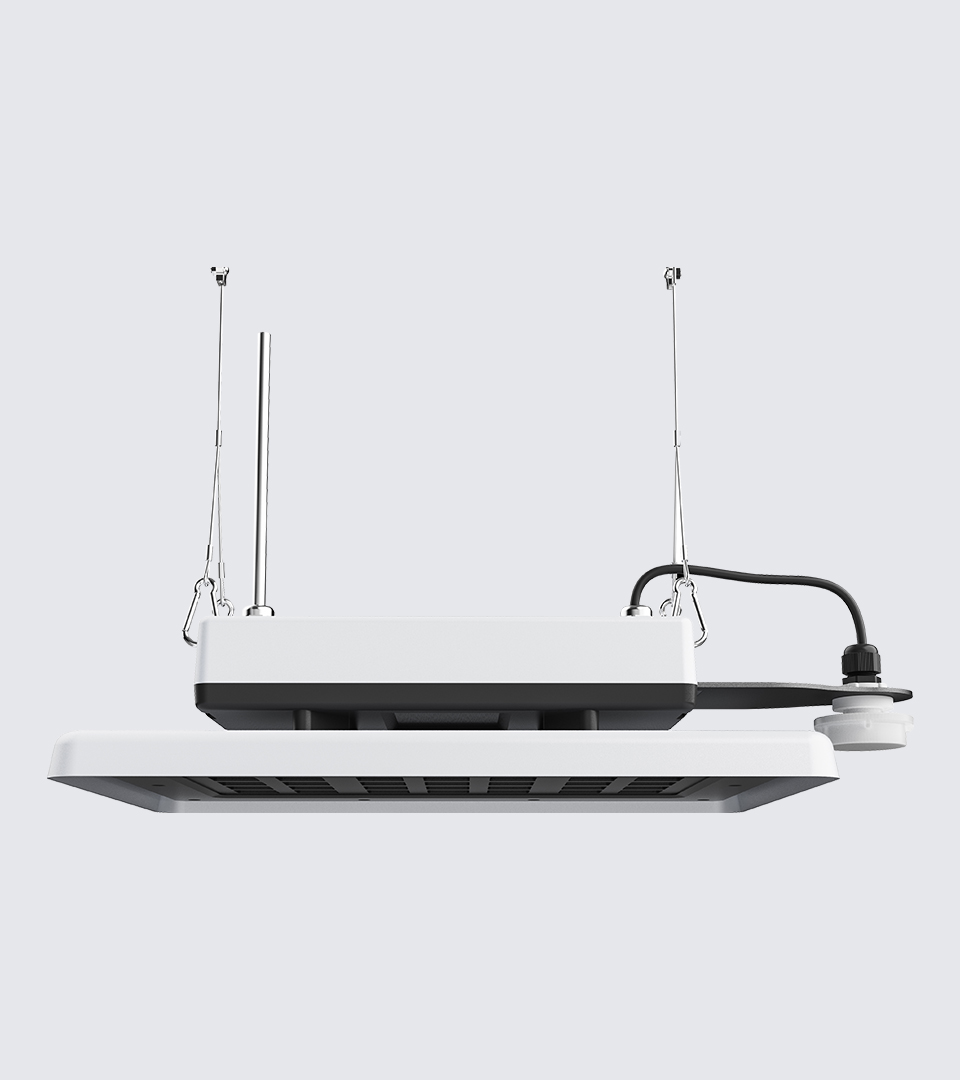
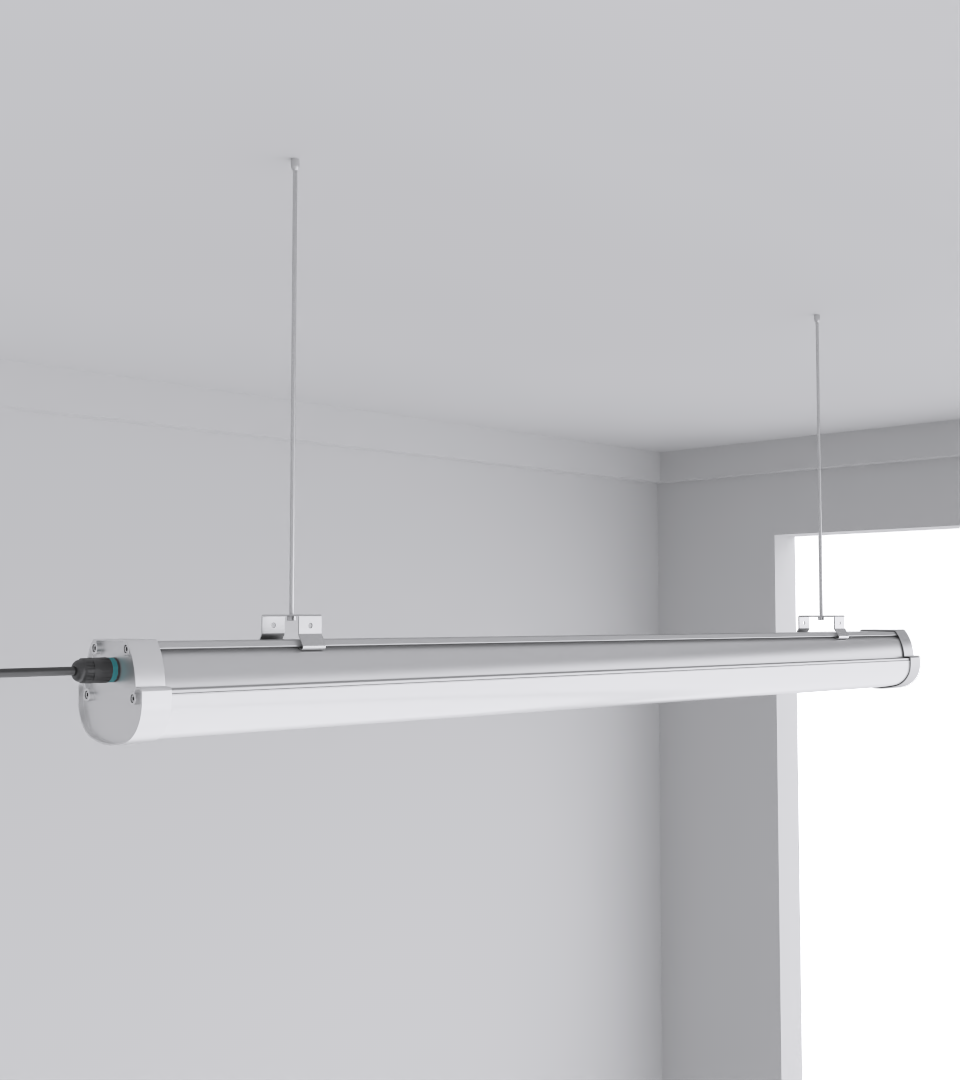
CAE Lighting’s industrial LED range, including the Squarebeam Elite and Quattro Triproof Batten, is specifically designed for data center conditions.
- High efficacy (>130 lm/W) minimizes power draw.
- IP-rated enclosures resist humidity and dust, critical in subfloor or near HVAC vents.
- Motion sensors reduce idle-time energy waste.
- Thermal dissipation via aluminum heat sinks ensures performance over time.
3. Understanding Key Metrics: PUE, GPUE, and Lighting’s Role
PUE (Power Usage Effectiveness) = Total Facility Energy / IT Equipment Energy
CUE (Carbon Usage Effectiveness) = Total CO2 Emissions / IT Equipment Energy
GPUE (Green PUE) = Adjusted for renewable or efficient system integrations
Lighting upgrades directly reduce total facility energy input, improving all three metrics:
| Metric | Before LEDs | After LEDs |
|---|---|---|
| PUE | 1.65 | 1.52 |
| CUE | 0.86 | 0.70 |
| GPUE | 1.45 | 1.28 |
4. Thermal Design: Why Heat is the Silent Energy Killer
Nearly 70% of power fed into older lighting fixtures exits as heat. In sealed or semi-sealed environments, that’s a liability.
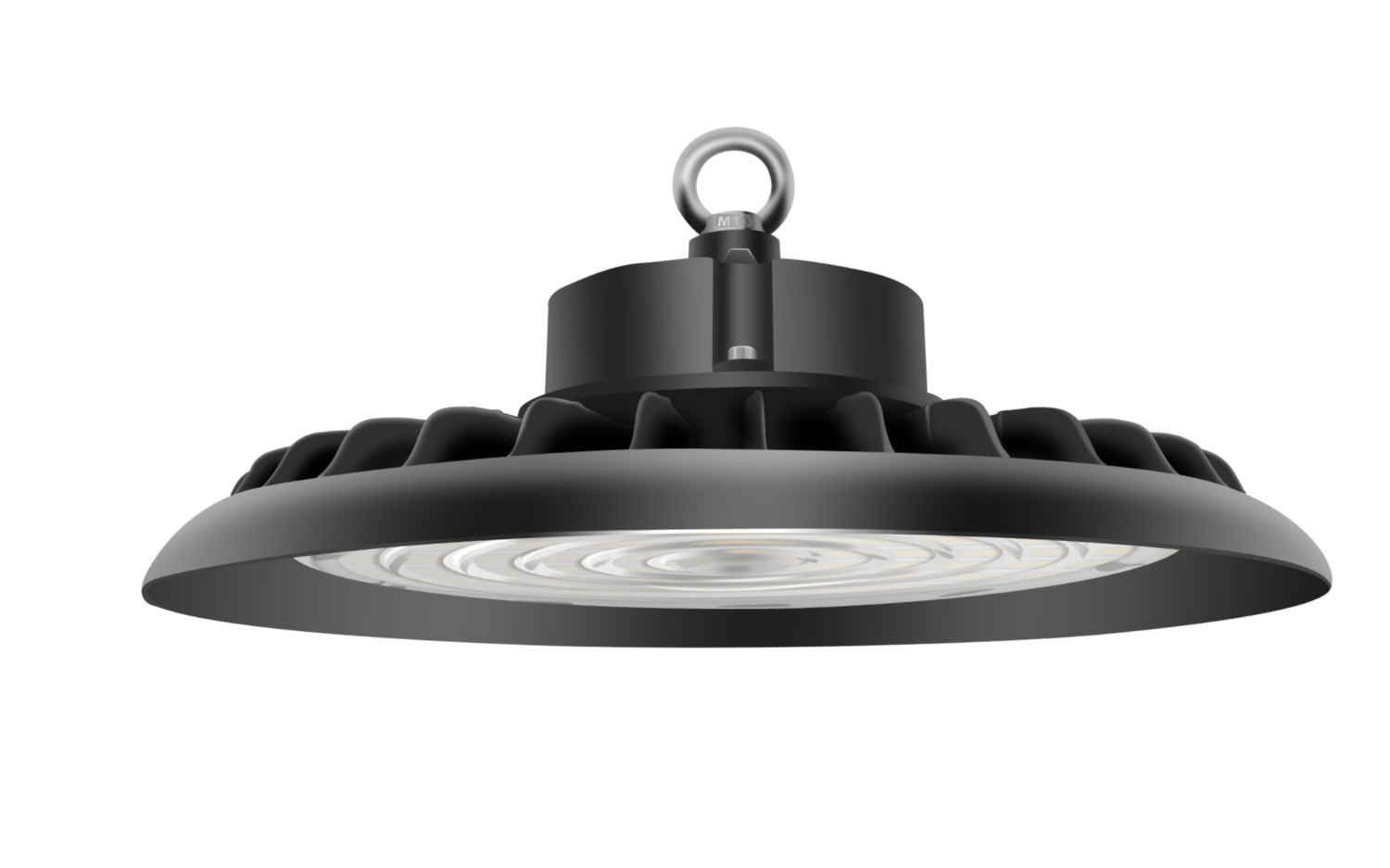
- Fixtures like Budget High Bay use ribbed thermal structures to expel heat.
- CAE integrates passive convection cooling—no fans, no failure points.
- Overheating LED drivers cause lumen depreciation or full outages.
5. Lighting Architecture: PoE and Low-Voltage Systems
Power over Ethernet (PoE) allows facilities to:
- Reduce AC-DC conversion losses
- Centralize control via switches and BMS
- Use thinner cabling, reducing infrastructure cost
Key Insight: Pair PoE-ready lights with a monitored DC bus system. This reduces PDU clutter and streamlines maintenance.

6. Intelligent Control Systems That Actually Save Money
Smart lighting goes beyond occupancy sensors. Integrated systems now include:
- Daylight harvesting (adjusting brightness by ambient input)
- Scheduled zoning based on rack access times
- Real-time telemetry via BACnet or MODBUS to DCIM platforms
7. What the Numbers Show: ROI from Real Projects
CAE retrofitted a 2,000m² facility in Malaysia:
- Lighting energy use dropped by 64%
- PUE improved from 1.58 to 1.44
- Maintenance hours reduced by 73% in year one
- Payback in 14.5 months
These kinds of savings are scalable—especially when using Simplitz Batten V3 alternatives for secondary zones.

8. What to Watch Out For: Common Failures and Fixes
Mistakes in LED integration lead to:
- Misreported PUE due to lighting on a non-metered circuit
- Over-specifying lumens and increasing glare
- Ignoring heat load in PoE conversion cabinets
Fix: Always run a lighting-specific audit. Include:
- Ambient light level mapping
- Thermal discharge flow simulation
- Driver failure rate projections
Frequently Asked Questions (FAQ)
- Can LED lighting really lower my data center’s PUE? Yes. While lighting is a smaller slice of overall energy, LED upgrades reduce both direct use and secondary cooling loads.
- What’s the real lifespan of industrial LED lights? CAE’s fixtures average 50,000–70,000 hours, with some exceeding 100,000 under controlled thermal conditions.
- Are PoE lighting systems worth it? For new builds or facilities with existing Ethernet infrastructure—yes. They reduce cabling, centralize control, and lower voltage risks.
- Do I need to upgrade all lighting at once? No. Start with high-impact zones: server rows, cage access, and maintenance corridors. Then expand in phases.
- Where can I source these lights? Browse full CAE product range or contact CAE for project-specific support.