Circadian Lighting for 24/7 Data Centers: A Technical Guide to Health, Performance, and Compliance
- Why Circadian Lighting Matters in Data Centers
- What Circadian Lighting Actually Means
- Core Problems with Traditional Data Center Lighting
- Product-Based Strategies: What Fixtures Make a Difference?
- Zoning Your Data Center by Circadian Need
- Integrating Smart Controls and Automation
- Metrics That Matter: How to Measure Success
- Long-Term ROI: Not Just Energy Savings
- Checklist: Designing for Circadian Health in 24/7 Data Centers
- Glossary of Terms & Metrics
- Frequently Asked Questions (FAQs)
Key Takeaways
| Question | Quick Answer |
|---|---|
| What is circadian lighting? | Lighting designed to align with natural biological rhythms, especially for shift workers. |
| Why is it critical in data centers? | Supports alertness, reduces fatigue, improves productivity and health in 24/7 environments. |
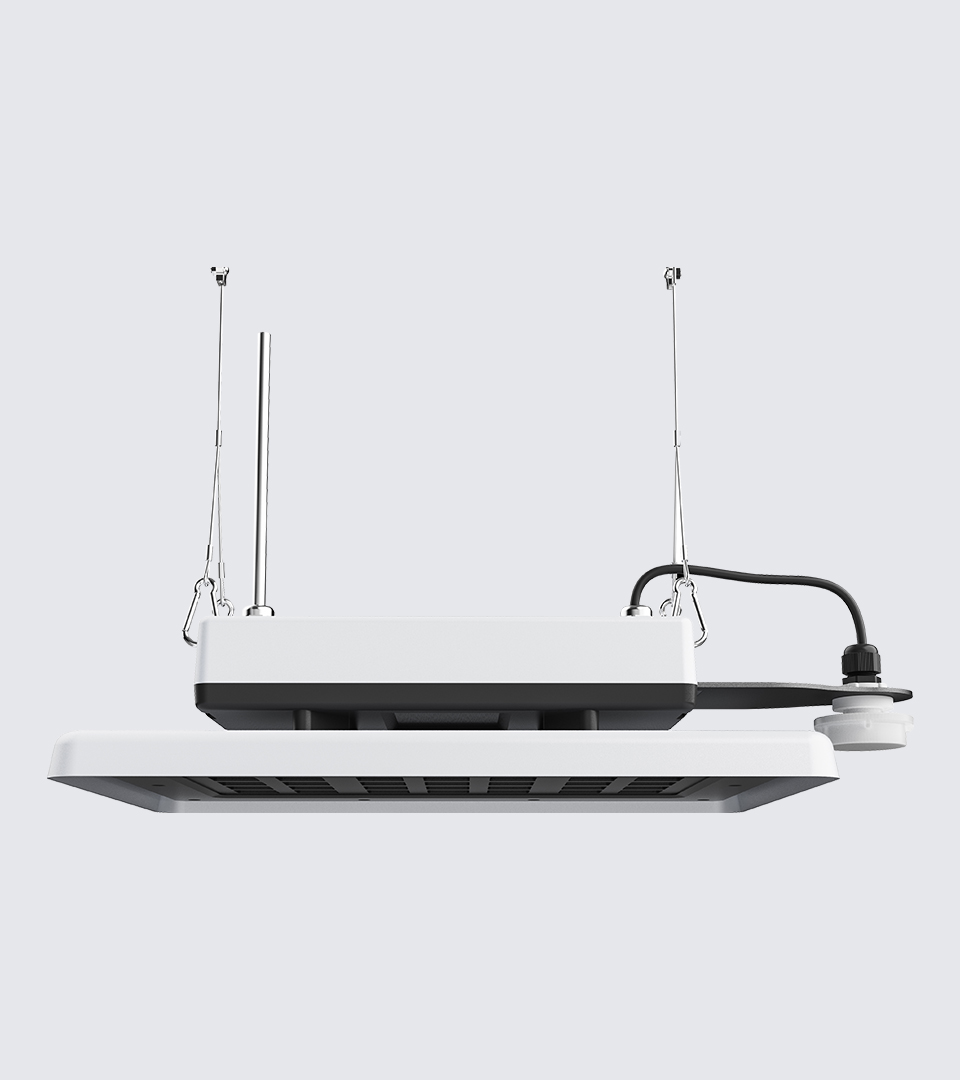
| What are the best fixtures to use? | Color-tunable LEDs like Squarebeam Elite and Quattro Triproof. |
| What measurable benefits does it provide? | Reduces errors, improves sleep, supports WELL compliance, increases ROI through reduced downtime. |
| Who provides reliable solutions? | CAE Lighting offers robust, certified, and energy-efficient circadian systems. |
1. Why Circadian Lighting Matters in Data Centers
Data centers never sleep — and neither do their operators. Working 10–12 hour night shifts surrounded by screens and artificial light puts staff out of sync with their body’s internal clock. That’s where circadian lighting earns its place.
- It mimics natural light patterns to support health.
- Reduces mental fatigue, especially in control rooms.
- Decreases shift-related error rates over time.
2. What Circadian Lighting Actually Means
Circadian lighting goes beyond brightness. It focuses on spectral tuning — adjusting the color temperature and intensity to trigger natural biological responses. Daylight cues wakefulness; warmer tones promote rest.
- Key metric: Melanopic Lux (not just lux or lumens)
- High-blue light (~460nm) stimulates alertness during day
- Low-blue light at night helps maintain melatonin levels

3. Core Problems with Traditional Data Center Lighting
Standard LED systems in 24/7 facilities tend to:
- Stay at a fixed CCT (typically cool white 4000–5000K)
- Emit strong blue-rich spectra continuously
- Lack user control or environmental adaptation
This causes:
- Increased eye strain during late hours
- Sleep-cycle disruption
- Higher risk of human error, especially between 2–5AM
4. Product-Based Strategies: What Fixtures Make a Difference?
| Product | Key Features | Use Case |
|---|---|---|
| Squarebeam Elite | Directional optics, tunable white, thermally optimized | Control rooms, admin spaces |
| Quattro Triproof Batten | IP66, impact resistant, DALI ready | Data halls, equipment aisles |
| SeamLine Batten | Uniform output, color-tunable | Operator corridors, maintenance |

5. Zoning Your Data Center by Circadian Need
Not every area needs the same spectrum or brightness. A real circadian-friendly layout will split the environment into purpose-driven zones:
- Core Control Zones – High CCT (5000–6500K), full spectrum
- Night Break Areas – Warm CCT (<3000K), dimmed below 300 lux
- Corridors & Shared Spaces – Motion-based lighting, neutral tone
This layout reduces overall energy use while improving workplace wellbeing.
6. Integrating Smart Controls and Automation
CAE Lighting’s fixtures support smart control protocols like:
- DALI: Individual fixture programming
- PoE: Lighting over Ethernet for power + control
- Motion & Daylight Sensors: Auto-dimming & off-timers
With control logic in place, light scenes adapt based on time of day, occupancy, or schedule. That’s where automation helps replicate sunlight — even at 3:17AM.
7. Metrics That Matter: How to Measure Success
Forget just checking the wattage. Success in circadian lighting design looks like this:
| Metric | Target Value |
|---|---|
| Melanopic Lux (Day) | 250–400 at desk level |
| CCT (Night) | <3000K |
| Glare Rating (UGR) | <19 for control rooms |
| Operator Satisfaction | >85% in post-commission survey |
Tools like handheld spectroradiometers or WELL-compatible app-based audits can verify performance.
8. Long-Term ROI: Not Just Energy Savings
While LED upgrades cut power bills, circadian solutions also:
- Lower downtime by reducing operator fatigue-related errors
- Improve health outcomes (lower absenteeism)
- Help meet WELL Building Standard Credit 54
- Enhance hiring appeal in high-demand tech facilities
And remember, CAE Lighting’s ISO-certified processes ensure each component, from PCB to lens, meets strict durability and thermal standards.
Checklist: Designing for Circadian Health in 24/7 Data Centers
- ✔ Define lighting zones by task and occupancy pattern
- ✔ Select color-tunable fixtures supporting high and low CCT ranges
- ✔ Ensure UGR (Unified Glare Rating) < 19 in control rooms
- ✔ Use PoE, DALI, or Bluetooth mesh for automation
- ✔ Integrate presence sensors and scheduling controls
- ✔ Target 250–400 melanopic lux during day shifts
- ✔ Limit night light to <300 lux, CCT below 3000K
- ✔ Commission systems using spectroradiometer for verification
- ✔ Educate operators on lighting profiles and shift syncing
- ✔ Monitor ROI: error rate drop, power reduction, staff feedback
Glossary of Terms & Metrics
- Melanopic Lux: Measurement of circadian-effective light intensity
- CCT (Correlated Color Temperature): Describes color of white light in Kelvins
- ipRGC: Intrinsically photosensitive retinal ganglion cells responsible for circadian signaling
- WELL Standard Credit 54: Wellness lighting threshold defined by IWBI
- PoE: Power over Ethernet – used to transmit power and data to lighting fixtures
- DALI: Digital Addressable Lighting Interface – protocol for smart lighting control
- UGR: Unified Glare Rating – metric to quantify glare from luminaires
- BMS: Building Management System – central software that controls facility systems
Frequently Asked Questions (FAQs)
What’s the difference between tunable white and circadian lighting?
Tunable white allows you to change color temperature. Circadian systems use that feature intentionally to support health rhythms by adjusting light at specific times.
Can you retrofit circadian lighting into an existing data center?
Yes. CAE Lighting’s products like the SeamLine Batten and Quattro Triproof are designed to slot into standard mounts while integrating with existing controls.
Is circadian lighting expensive?
Initial setup may cost more than traditional LEDs, but ROI is proven through reduced human error, fewer sick days, and better energy use.
Do I need to monitor melatonin levels?
Not directly. Instead, you monitor melanopic lux, which models how the eye reacts to circadian-effective light.
Where can I find support or design guidance?
CAE Lighting partners directly with facilities managers to design, specify, and support circadian lighting upgrades.
Conclusion & Next Steps
Human-centric lighting in 24/7 data centers isn’t a future trend — it’s a current standard for high-performing, health-conscious environments.
- Start with an audit of current light levels and shift patterns
- Identify critical task zones for circadian upgrades
- Select tunable, certified luminaires (like those from CAE Lighting)
- Deploy controls that adapt lighting by time, task, and user
- Measure outcomes: productivity, absenteeism, system efficiency
If you’re designing a new facility or retrofitting an existing one, the opportunity to integrate lighting that supports your people and your power strategy is now.
Contact CAE Lighting to start your circadian lighting implementation today.