
Data Center Lighting Optimization: Boosting Uptime, Efficiency, and DCIM Integration
- Introduction: Lighting’s Critical Role in Data Center Infrastructure
- 1. Enhancing Visibility for Asset Management and Maintenance
- 2. Supporting DCIM Software with Smart Lighting Integration
- 3. Boosting Energy Efficiency Through Lighting Design
- 4. Lighting’s Role in Operational Efficiency and Change Management
- 5. Capacity Planning with Lighting Layouts
- 6. Lighting and Uptime Improvement
- 7. Integrating Lighting with Power Chain Monitoring
- 8. Visualization Tools and Lighting Synergy
- Conclusion: Lighting as a Strategic Asset in DCIM-Driven Facilities
- Frequently Asked Questions (FAQ)
Key Takeaways
| Feature or Topic | Summary |
|---|---|
| Integration Benefits | Energy savings, streamlined operations, enhanced monitoring, and predictive maintenance. |
| Key Protocols | BACnet, Modbus, SNMP ensure interoperability. |
| Implementation Strategies | Assess existing infrastructure, select compatible systems, phased deployment recommended. |
| Operational Advantages | Reduced downtime, improved safety, occupant comfort, and significant sustainability contributions. |
Introduction: Lighting’s Critical Role in Data Center Infrastructure
Modern data centers rely on a complex network of hardware, cabling, power infrastructure, and environmental controls. While Data Center Infrastructure Management (DCIM) tools provide the digital oversight, the physical layer — particularly lighting — is often overlooked. Yet, data center lighting directly affects uptime, environmental monitoring, capacity planning, and operational workflows.
1. Enhancing Visibility for Asset Management and Maintenance
Proper illumination is essential for maintaining visibility across racks, PDUs, cable pathways, and raised floor wiring. Bright, uniform lighting minimizes errors in asset management by improving barcode scans, visual inspections, and cabling verifications.
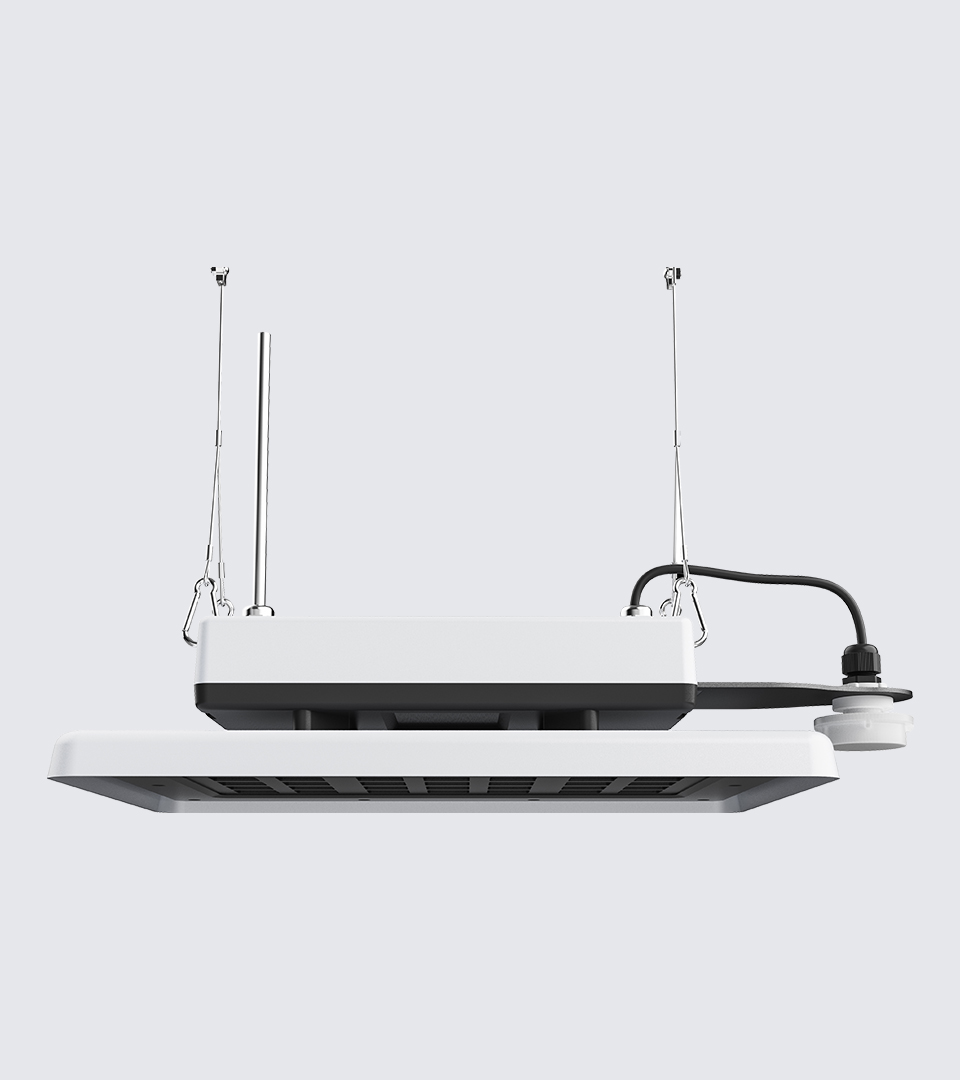
One effective solution is the Squarebeam Elite, which delivers precision-focused light ideal for IT racks and hot/cold aisle separation.
2. Supporting DCIM Software with Smart Lighting Integration
As DCIM software collects and analyzes data from environmental sensors, lighting must enable full visibility into infrastructure conditions, such as airflow obstructions, equipment indicators, and moisture intrusion.
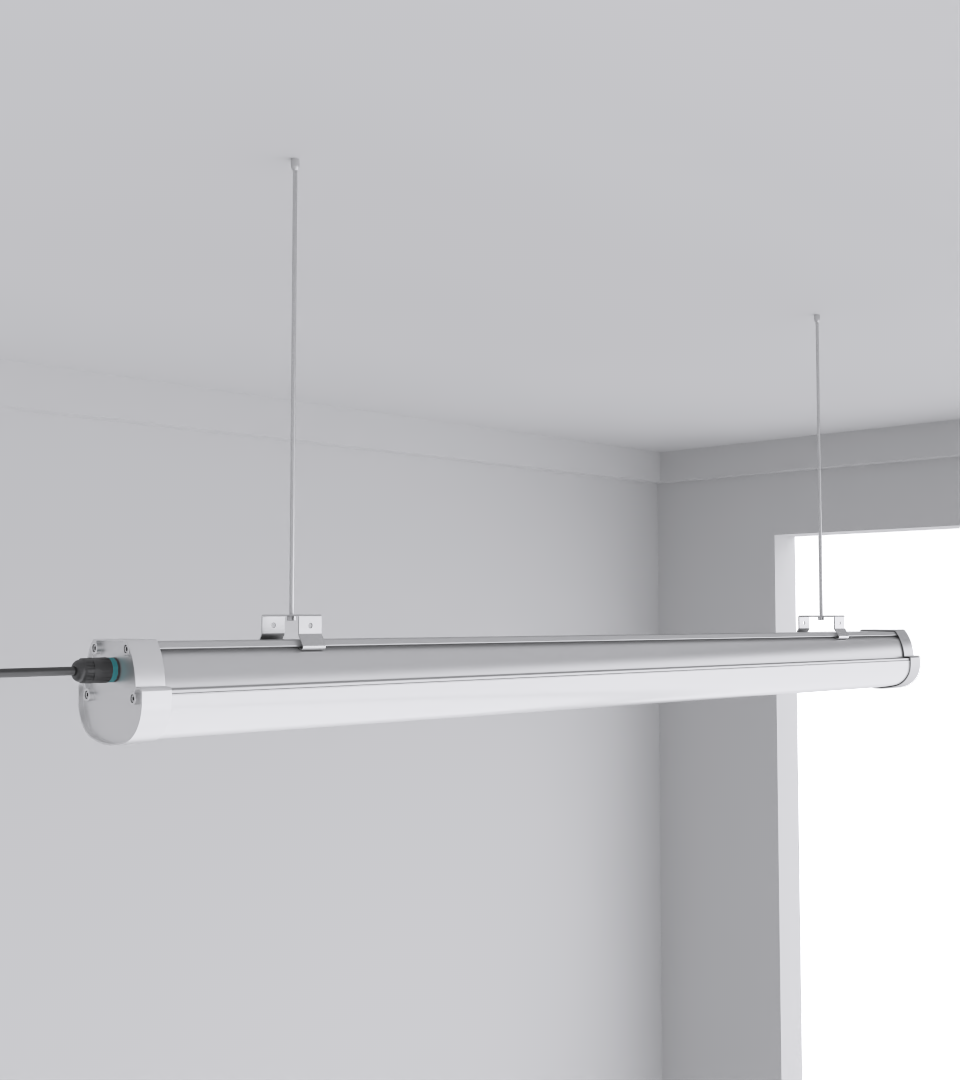
For corridors, equipment zones, and switch rooms, luminaires like the Quattro Triproof Batten enhance visibility in environments exposed to dust and humidity, complementing environmental monitoring systems.
3. Boosting Energy Efficiency Through Lighting Design
Lighting accounts for a significant share of non-IT energy loads in facilities. By adopting energy-efficient LED solutions, data centers reduce power consumption and contribute to lower PUE (Power Usage Effectiveness) metrics.
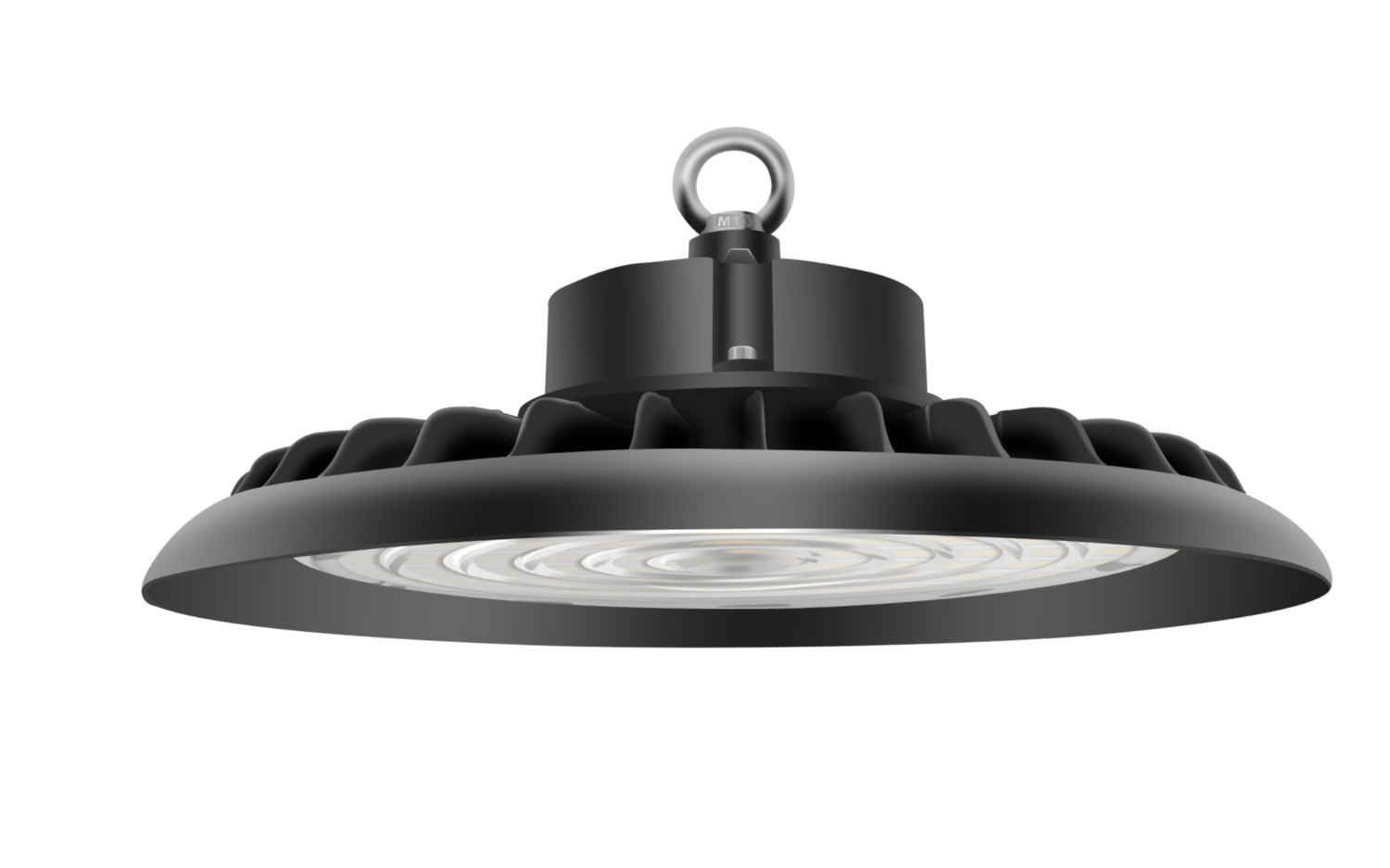
Low-profile fixtures like the Budget High Bay Light are optimized for installation in tall ceiling zones, providing maximum lumens per watt and enabling advanced controls integration.
4. Lighting’s Role in Operational Efficiency and Change Management
During equipment provisioning or network reconfiguration, well-lit environments ensure that technicians can accurately implement change management processes — from rack-level cable changes to power chain tracing.
Slim fixtures like the SeamLine Batten provide continuous lighting across long rows of racks or cable trays, aiding in real-time verification and minimizing human error.

5. Capacity Planning with Lighting Layouts
Effective capacity planning involves optimizing spatial layouts and ensuring that every square meter supports future expansion. Lighting plays a role in these decisions by demarcating usable space, indicating emergency egress paths, and supporting equipment layout validation.
Products like the Simplitz Batten V3 from Osram (used as a reference model for designing optimized aisle lighting) allow planners to visualize and simulate lighting zones during early-stage infrastructure modeling.

6. Lighting and Uptime Improvement
Unplanned downtime is costly. While DCIM tools offer early warnings for temperature or electrical anomalies, lighting ensures rapid physical access and response. Illuminated pathways, well-lit control rooms, and automated occupancy lighting all contribute to better uptime improvement.
Smart fixtures with occupancy sensors enable environmental conditions to remain stable while saving energy when zones are unoccupied.
7. Integrating Lighting with Power Chain Monitoring
The power chain — from utility feeds to rack-level PDUs — must be continuously monitored. When service teams trace circuits or test breakers, precise and stable lighting ensures power management activities are conducted safely and efficiently.
Triproof luminaires such as the Quattro Triproof Batten withstand splashes and utility room contaminants, making them ideal for power and UPS zones.
8. Visualization Tools and Lighting Synergy
Many visualization tools in DCIM software rely on camera systems or manual logging. Poor lighting can compromise accuracy. Installing high CRI (color rendering index) fixtures ensures label readability and consistent visual assessments — especially for camera-based monitoring or auditing.
The Squarebeam Elite is engineered to reduce glare and shadowing, improving visual clarity in documentation-critical zones.
Conclusion: Lighting as a Strategic Asset in DCIM-Driven Facilities
Data center lighting is no longer just an afterthought — it’s a strategic component of modern infrastructure management. By aligning with DCIM goals like uptime, capacity planning, energy efficiency, and operational efficiency, lighting can deliver tangible benefits across every level of a facility.
Choosing the right luminaires — from Squarebeam Elite for hot aisle lighting to SeamLine Batten for layout consistency — enhances not only visibility but the very reliability of infrastructure operations.
Frequently Asked Questions (FAQ)
Q1: What’s the role of lighting in DCIM?
A1: Lighting complements DCIM software by enabling clearer visibility for physical inspections, environmental readings, and emergency access, improving uptime and safety.
Q2: How does lighting affect energy efficiency in data centers?
A2: High-efficiency LEDs with smart controls reduce energy usage and help facilities meet sustainability goals like improved PUE metrics.
Q3: Which lighting products are best for server room applications?
A3: For focused lighting, the Squarebeam Elite is ideal. For general-purpose lighting in humid zones, the Quattro Triproof Batten is highly recommended.