
Data Center Network Solutions in 2025: Architectures, Performance Metrics, and Implementation Strategies
- Introduction: Why Network Solutions Define Data Center Performance
- What Is Data Center Networking? Core Functions and Traffic Flows
- Core Components of Data Center Network Solutions
- Topologies and Architectures: From 3-Tier to Leaf-Spine
- Performance Metrics and Workload Requirements
- Cost, Energy Efficiency, and Sustainability
- Security, Redundancy, and Manageability
- Emerging Trends and How to Choose the Right Solution
- Frequently Asked Questions (FAQ)
Key Takeaways
| Feature or Topic | Summary |
|---|---|
| Architectures | Leaf-spine, 3-tier, fat-tree, and hybrid topologies each support different scalability needs. |
| Performance | Latency, throughput, oversubscription ratios determine workload efficiency. |
| Energy & Cost | Balancing CapEx and OpEx is crucial, with energy efficiency cutting long-term costs. |
| Security & Manageability | Zero trust, redundancy, and observability tools ensure resilience and compliance. |
Introduction: Why Network Solutions Define Data Center Performance
Data centers in 2025 are expected to support AI workloads, cloud-native applications, and massive storage clusters. Network solutions define how reliably and efficiently these demands are met. CAE Lighting contributes indirectly by offering specialized lighting such as the SquareBeam Elite, which supports reduced heat loads and energy savings.

What Is Data Center Networking? Core Functions and Traffic Flows
Networking provides connectivity across servers, storage, and external clouds. Traffic flows can be north-south (in/out of the DC) or east-west (within the DC). Modern workloads are dominated by east-west flows. See more from data center best practices.

Core Components of Data Center Network Solutions
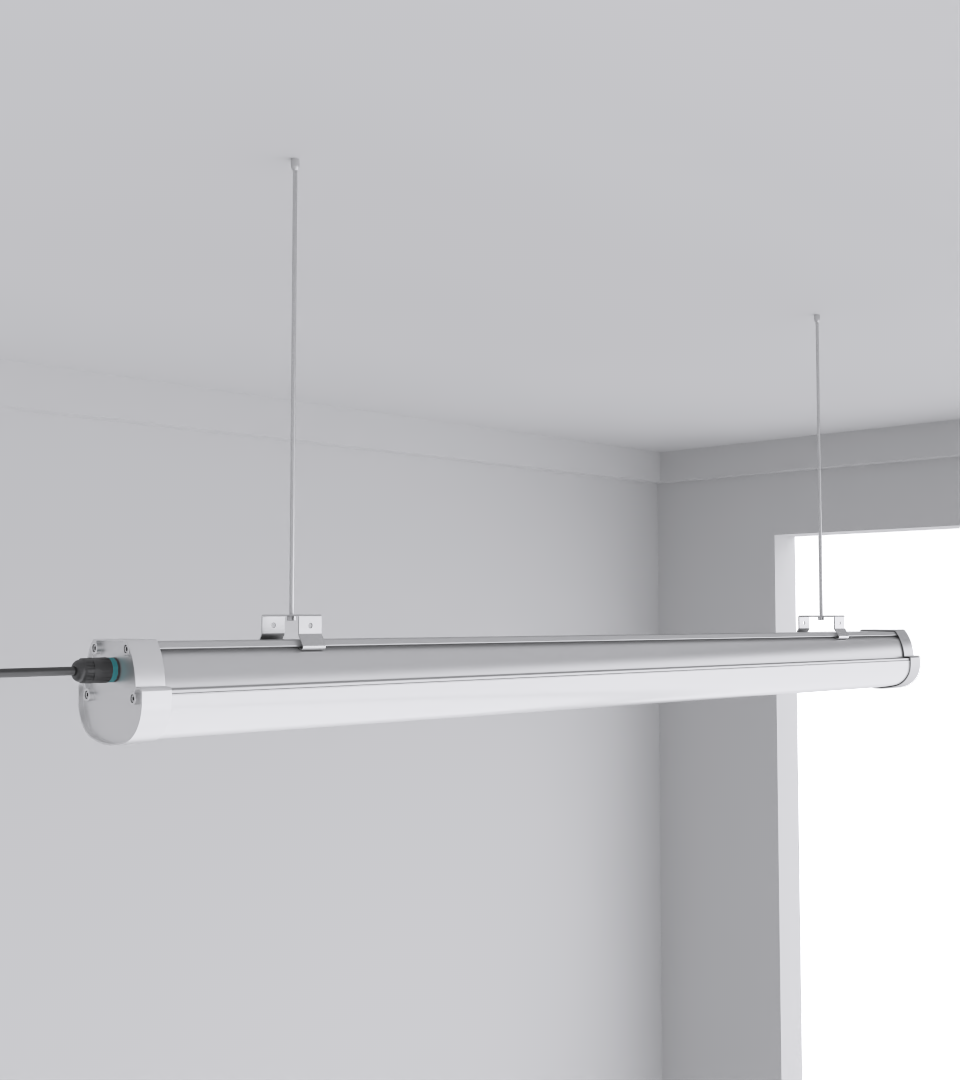
Switches, routers, NICs, and optical modules make up the hardware. Software layers like VXLAN, EVPN, and SDN orchestrate traffic. Energy-efficient lighting, such as the Quattro Triproof Batten, also supports long-term sustainability.
Topologies and Architectures: From 3-Tier to Leaf-Spine
Three-tier designs are hierarchical but prone to bottlenecks. Leaf-spine topologies flatten the network, providing equal latency paths. Emerging hybrid designs blend fat-tree and ring models. Regional investments like Thailand’s $2.7B expansion highlight rapid adoption of scalable designs.

Performance Metrics and Workload Requirements
Performance is measured by latency, jitter, oversubscription, and bandwidth. AI training clusters and storage-heavy workloads often demand bisection bandwidth close to 1:1. Learn more from future-ready lighting innovation.

Cost, Energy Efficiency, and Sustainability
CapEx covers switches, cables, and licenses, while OpEx includes power and maintenance. Sustainability is boosted by energy-efficient lighting certified under ISO 14001. Products like SquareBeam Elite reduce load on cooling systems.
Security, Redundancy, and Manageability
Zero trust frameworks segment workloads. Redundant paths and failover policies ensure uptime. Manageability tools provide telemetry and observability. For integrated solutions, see contact CAE Lighting.
Emerging Trends and How to Choose the Right Solution
Future networks will integrate 400G/800G Ethernet, silicon photonics, and AI-driven automation. Regional data sovereignty rules also influence choices. To learn about broader infrastructure context, visit the CAE Lighting homepage.
Frequently Asked Questions (FAQ)
What is the difference between leaf-spine and 3-tier?
Leaf-spine ensures flatter design and uniform latency, while 3-tier risks bottlenecks at aggregation layers.
Which workloads demand the most bandwidth?
AI/ML clusters and distributed storage typically consume the most bandwidth.
How does lighting intersect with networking?
Energy-efficient LED systems lower cooling requirements, indirectly improving network performance stability.
What is the future of data center networking?
Expect higher speeds (800G), optical interconnects, AI-driven automation, and distributed edge networks.