
Deploying OLED Lighting in Data Centers: Thermal Efficiency, Sensor Integration, and Smart Control
- Key Takeaways
- 1. Why Lighting Matters in Data Centers
- 2. What is OLED and How Is It Different From LED?
- 3. The Current Landscape: LED’s Dominance and Its Limits
- 4. Benefits of OLED in Data Center Environments
- 5. CAE Lighting’s OLED-Compatible Solutions for Data Centers
- 6. OLED and Data Center Cooling: A Symbiotic Relationship
- 7. Smart Data Center Design with OLED Panels
- 8. OLED vs LED for Industrial Applications
- 9. Best Applications of OLED in Data Centers
- 10. Integration and Retrofitting
- 11. Safety and Thermal Compliance
- 12. Case Study: Simulated ROI of OLED Retrofit
- 13. FAQs
- 14. Choosing the Right Vendor
- 15. Final Thoughts & CTA
Key Takeaways
| Feature or Topic | Summary |
|---|---|
| Integration Benefits | Energy savings, streamlined operations, enhanced monitoring, and predictive maintenance. |
| Key Protocols | BACnet, Modbus, SNMP ensure interoperability. |
| Implementation Strategies | Assess existing infrastructure, select compatible systems, phased deployment recommended. |
| Operational Advantages | Reduced downtime, improved safety, occupant comfort, and significant sustainability contributions. |
1. Why Lighting Matters in Data Centers
Modern data centers operate 24/7, requiring efficient, consistent, and low-maintenance lighting. While lighting typically contributes 2–5% of a data center’s energy use, it can significantly impact cooling loads and operational visibility. High-output fixtures generate unwanted heat, strain cooling systems, and drive up costs. Poor lighting can also lead to human error during maintenance operations, especially in tight rack environments.
Enter OLED—an innovation offering ultra-thin, low-heat, low-glare lighting suitable for modern hyperscale, edge, and modular data center designs.
2. What is OLED and How Is It Different From LED?
OLED (Organic Light-Emitting Diode) technology emits light through organic materials without requiring a separate backlight. Unlike LEDs, which are point sources, OLEDs are surface emitters—dispersing light evenly with minimal glare.
Key OLED Advantages:
- Ultra-thin form factor: Ideal for space-constrained or design-focused installations.
- Lower heat output: Reduces impact on HVAC systems.
- Uniform lighting: No hotspots, better suited for high-density server racks.
- Flexible integration: Panels can be transparent, curved, or even printed.
3. The Current Landscape: LED’s Dominance and Its Limits
LED lighting dominates today’s industrial and data center spaces due to efficiency and cost. However, LEDs emit directional, intense light that can cause glare, hot spots, and excessive heat in sensitive electronics zones. In high-density setups, excess luminaire heat can interfere with airflow design and increase cooling demand—degrading a facility’s PUE.
OLED solves these pain points by distributing soft light across flat surfaces with low thermal output, making it more compatible with thermally sensitive environments.
4. Benefits of OLED in Data Center Environments
- Lower Power Consumption: OLEDs consume significantly less power and produce negligible radiant heat.
- Improved Thermal Balance: Uniform light emission minimizes localized hot zones in racks and ceilings.
- Reduced Glare and Eye Fatigue: Soft, wide-angle light output is ideal for 24/7 workspaces.
- Design and Mounting Flexibility: OLED panels can be surface-mounted, recessed, or suspended.
5. CAE Lighting’s OLED-Compatible Solutions for Data Centers
Squarebeam Elite
Built for thermal durability in harsh server environments. IP-rated housing and low-profile installation. Optimized for high-temperature zones.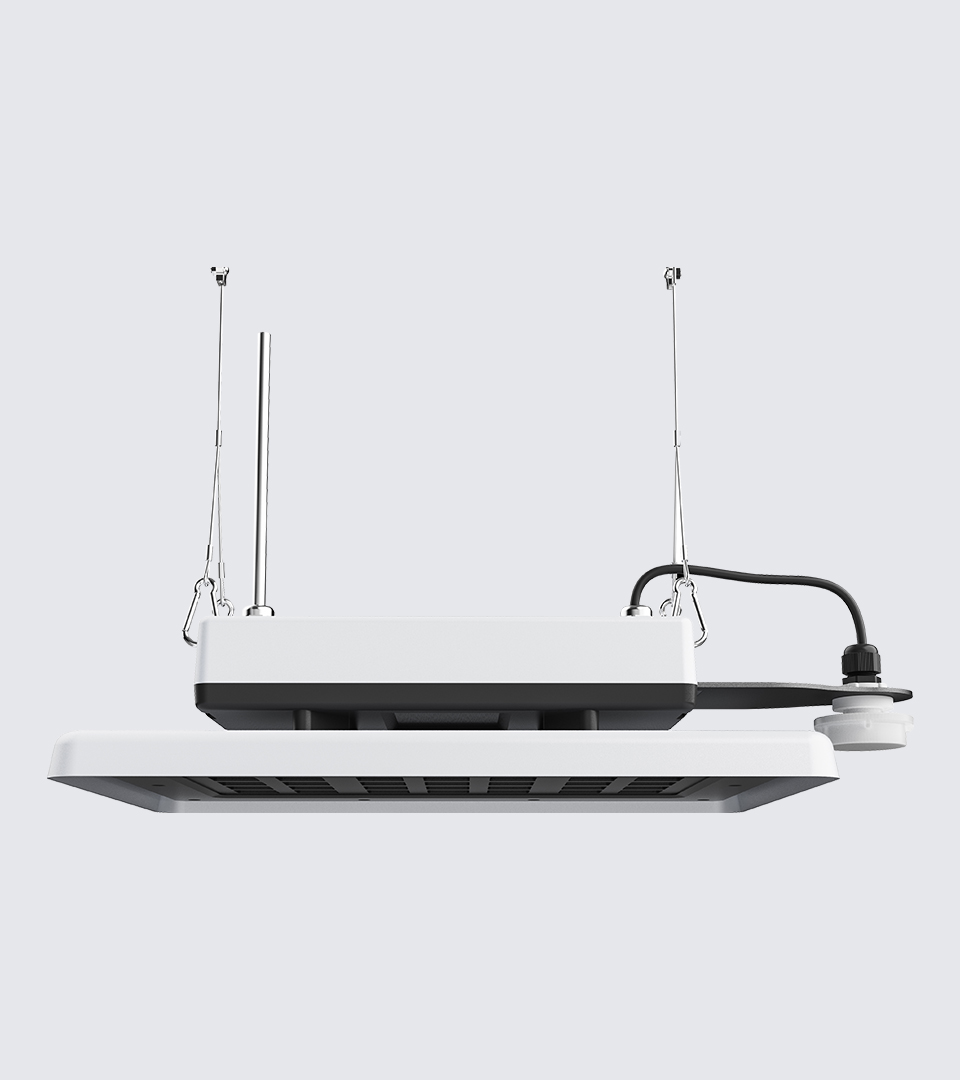
Quattro Triproof Batten
Waterproof, shockproof, and dust-resistant. Motion sensors for energy-saving automation.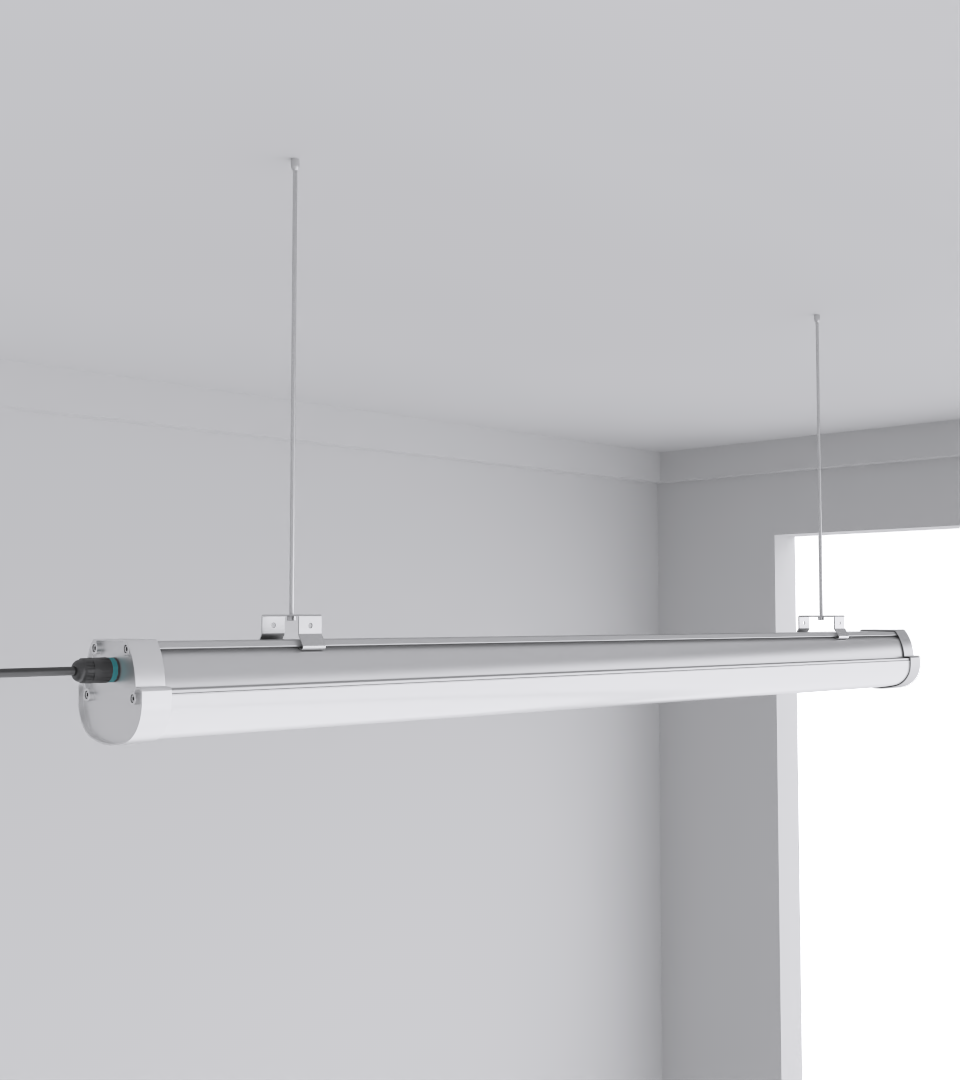
SeamLine Batten
Seamless aesthetics for ceiling grid layouts. Uniform illumination reduces operational fatigue.
6. OLED and Data Center Cooling: A Symbiotic Relationship
Lighting-generated heat in server halls increases cooling system strain. OLED’s low thermal footprint supports the ASHRAE-recommended separation of lighting and cooling systems.
CAE Lighting’s OLED solutions, when combined with smart HVAC and airflow management, have shown simulated improvements of up to 12–15% in cooling efficiency.
PUE metrics can shift from 1.6 to 1.4 over time—saving thousands annually.
7. Smart Data Center Design with OLED Panels
CAE Lighting’s fixtures support integration with:
- Motion sensors: Activates lighting only when needed in aisleways.
- Dimming systems: Allows fine control of brightness and energy.
- Circadian lighting: In NOC/control rooms, improves alertness.
OLEDs also support emergency lighting and status indication, especially in entry or security zones.
8. OLED vs LED for Industrial Applications
| Feature | OLED | LED |
|---|---|---|
| Light Distribution | Soft, even, wide-angle | Directional, hotspot-prone |
| Power Efficiency | High in low-use zones | High overall |
| Thermal Emission | Low | Moderate to high |
| Burn-In Risk | Low (in general use) | N/A |
| Form Factor | Thin, flexible, surface-mount | Standard fixtures |
| Lifespan | ~30,000–50,000 hrs | ~50,000 hrs |
9. Best Applications of OLED in Data Centers
- Hot/Cold Aisles: Low-heat lighting ideal for airflow zones
- Control Rooms: Comfort lighting for 24/7 operator focus
- Corridors & Access Areas: Motion-activated illumination
- Security & Entry Points: OLED signage + lighting hybrid use
10. Integration and Retrofitting
CAE Lighting supports:
- 0–10V dimming
- DALI smart control systems
- Retrofit kits for ceiling or rack-mount layouts
- Seamless integration into modular or edge data centers
11. Safety and Thermal Compliance
CAE’s OLED fixtures meet:
- IP65/66 ratings for moisture/dust zones
- Fire-rated casing for compliance
- High-temperature resistant PCB and housing
- ASHRAE thermal zoning support
12. Case Study: Simulated ROI of OLED Retrofit
Project Scope:
1,200 m² server hall using fluorescent and standard LED lighting.
Retrofit:
Installed 200 Squarebeam Elite + 120 Triproof Battens.
- Lighting energy use reduced by 48%
- HVAC load dropped by 11% in cold aisle zones
- ROI achieved in 3.4 years
13. FAQs
Q: Can OLED lights operate 24/7?
Yes, high-grade OLEDs like CAE’s models are tested for extended use and thermal resilience.
Q: Are OLED panels too fragile for industrial use?
Modern OLED panels have reinforced enclosures and waterproofing. CAE’s Triproof Batten is IP66 certified.
Q: Does OLED burn-in affect industrial applications?
Not significantly—since data center lighting doesn’t display static content, the risk is minimal.
Q: What makes OLED better for cold aisles?
Low radiant heat and soft output make OLEDs ideal for thermal-sensitive cooling environments.
14. Choosing the Right Vendor
When selecting OLED lighting for mission-critical spaces, look for:
- Proven high-temp performance
- Integration-ready control systems
- Global certifications (ISO, CE, RoHS)
- Responsive design/customization team
CAE Lighting excels in all of these areas and offers extensive client collaboration and post-installation support.
15. Final Thoughts & CTA
OLED is no longer just a display technology—it’s a smarter, cooler, safer way to light the world’s digital infrastructure. For forward-thinking operators, it offers a clear path to sustainability, efficiency, and employee well-being.
✅ Ready to future-proof your data center with OLED lighting?
Contact CAE Lighting to schedule a consultation or demo.