
LED Lumen Output Guidelines for Data Centers: Lux Levels, Design Formulas & BTU Impact
–
- Why Lighting in Data Centers Actually Matters
- Who This Article Is For (and Why It’s Different)
- The Numbers: Illuminance by Zone
- How to Convert & Design (The Lumen Method)
- LED Performance Factors: Beyond the Brochure
- Why Heat Load and Efficiency Go Hand in Hand
- Control Systems and Energy Strategy
- Design Tips from the Field (Not a Spec Sheet)
- FAQ: People Also Ask
Key Takeaways
| Feature or Topic | Summary |
|---|---|
| Recommended Lux Levels | 540 lux (50 foot-candles) in server aisles, 750–1500 lux at workstations |
| Lighting Standards | ASHRAE, IESNA guidelines essential for compliance and safety |
| Design Strategy | Use the Lumen Method and simulate layouts with software like DIALux |
| Tech Considerations | Lumen depreciation, CRI, CCT, thermal management, UGR values |
| Controls | PoE, occupancy sensors, daylight dimming, DCIM integration |
| Energy Efficiency | Lower BTUs reduce HVAC demand; LED = 90%+ savings over incandescent |
| Recommended Products | Squarebeam Elite, Quattro Triproof Batten by CAE Lighting |
1. Why Lighting in Data Centers Actually Matters
Data centers aren’t office lobbies or art galleries. Lighting isn’t about ambience—it’s about visibility, safety, and temperature management. And yes, light makes heat. We’ve seen builds with 2°C ambient increases from bad fixture choices alone.
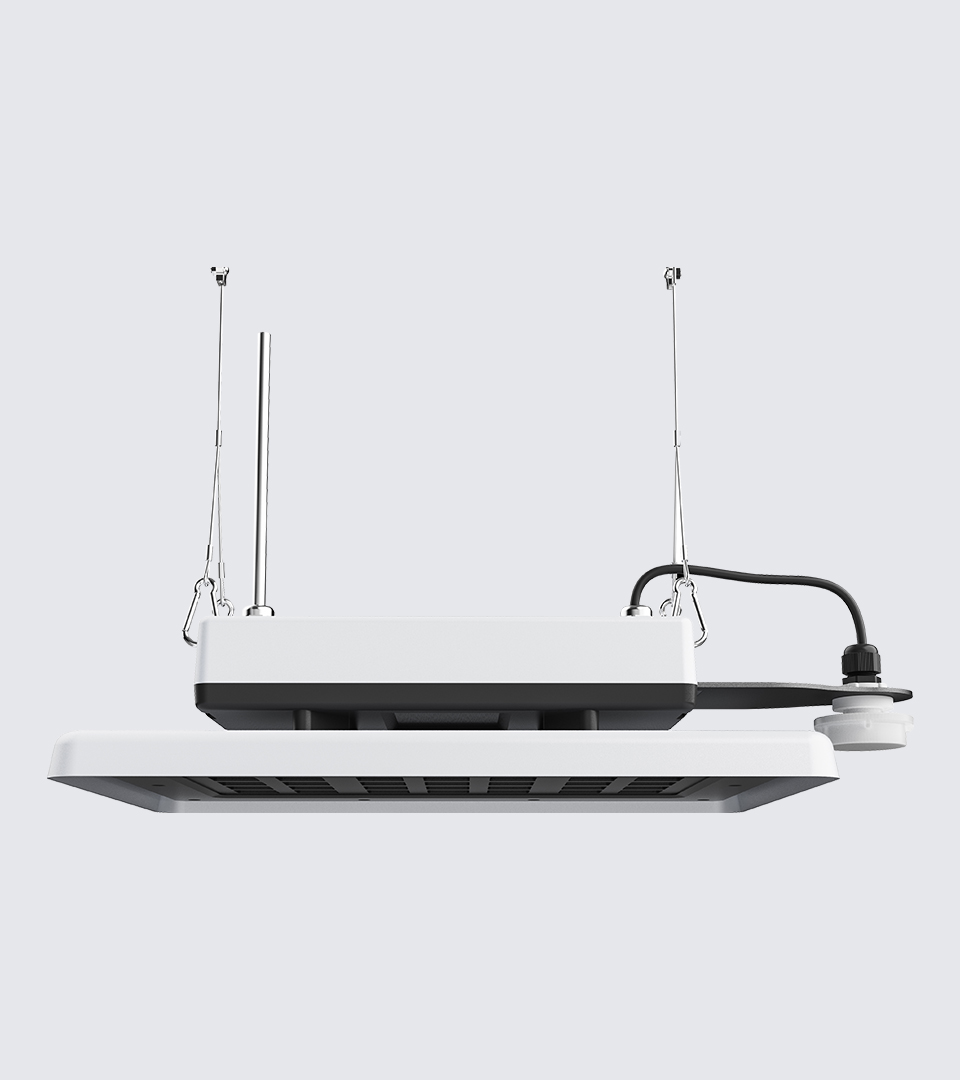
- Task lighting supports cable checks, hardware swaps, and diagnostics.
- Over-lighting = heat load + wasted energy
- Under-lighting = human error and injury risk
2. Who This Article Is For (and Why It’s Different)
This isn’t an architect’s sales pitch. It’s for:
- Data center operations managers
- Lighting designers
- Electrical engineers and systems integrators
3. The Numbers: Illuminance by Zone
| Zone | Foot-Candles | Lux |
|---|---|---|
| Server Aisles | 50 fc | ~540 lx |
| Workbenches | 75–150 fc | ~800–1600 lx |
| Control Rooms | 50–100 fc | ~540–1100 lx |
| General Storage | 10–30 fc | ~110–320 lx |
4. How to Convert & Design (The Lumen Method)
Want to estimate lumen needs? Here’s the simplified approach:
- Measure space (L x W x H)
- Use target lux level
- Account for LLF (Light Loss Factor, typically ~0.7–0.85)
- Calculate fixture count
Example:
- Room: 100 ft x 50 ft (5000 sq ft)
- Target: 540 lux (~50 fc)
- LED fixture output: 4000 lumens
- Needed: ~67 fixtures (depending on LLF)

5. LED Performance Factors: Beyond the Brochure
- Lumen Maintenance: L70 or L80—how long it stays bright
- Color Temp (CCT): 4000–5000K for visual clarity
- CRI: Aim for CRI ≥ 80 for accurate color under stress
- UGR: Keep Unified Glare Rating <19

6. Why Heat Load and Efficiency Go Hand in Hand
Here’s a stat: A 4000-lumen fluorescent generates ~290 BTU/hr. A similar LED? ~136 BTU/hr.
Less heat = less strain on cooling systems. That’s not just good for energy bills—it’s PUE gold.
| Fixture Type | Lumens | Heat Output (BTU/hr) |
|---|---|---|
| Incandescent | 4000 | ~450 |
| Fluorescent | 4000 | ~290 |
| LED | 4000 | ~136 |
7. Control Systems and Energy Strategy
Smart lighting isn’t about apps. It’s about:
- Occupancy sensors (shut off when no one’s in the aisle)
- Daylight dimming (if natural light is present)
- Power over Ethernet (PoE) networks
- Integration with DCIM (so lighting impacts can be tracked like IT systems)
The Squarebeam Elite supports smart modules natively.
8. Design Tips from the Field (Not a Spec Sheet)
- Always overspec CRI if camera monitoring is critical
- Avoid glossy surfaces behind fixtures—it multiplies glare
- Don’t trust fixture count calculators blindly—simulate in DIALux or AGi32
- Budget for maintenance: lumen depreciation = relamping intervals
Lighting is more than lux—it’s a system. One that works best when planned with long-term data in mind.
📌 FAQ: People Also Ask
What’s the ideal lux level for server aisles?
~540 lux (50 fc) is generally optimal—bright enough for inspection but not overkill.
Do LEDs really reduce cooling loads in data centers?
Yes. LEDs emit less heat per lumen compared to traditional lighting, reducing HVAC burden.
How long do LED fixtures last in high-load environments?
Look for L70 ≥ 50,000 hours. But always factor in your ambient temp and relamp strategy.
What’s the best way to model lighting before install?
Use photometric software like DIALux or AGi32. Spreadsheet math alone doesn’t catch uniformity problems.
Should lighting be tied to the DCIM system?
If you want energy and ops efficiency? Yes. Especially for large-scale facilities.
Need help specifying luminaires? Contact CAE Lighting for expert support and fast turnarounds.
Or explore all industrial LED products from CAE Lighting now.