Optimizing Lighting for Containerized Data Centers: Standards, Fixtures, and Energy Control
- Why Containerized Data Centers Need Their Own Lighting Strategy
- Constraints Inside Container Facilities
- Standards You Need To Hit
- Fixture Selection & Placement
- Energy, Control & Automation
- Managing Thermal Load
- Emergency Lighting & Safety Systems
- Implementation & Maintenance
- Frequently Asked Questions (FAQ)
Key Takeaways
| Feature or Topic | Summary |
|---|---|
| Container Constraints | Low ceilings, sealed enclosures, and heat retention require specialized lighting setups |
| Lighting Standards | Must meet ASHRAE 90.4, NFPA 75/76, TIA-942, and ANSI/IES LPD limits |
| Recommended Fixtures | IP65+ rated LEDs, motion sensors, explosion-proof lights, and smart controls |
| Performance Benchmarks | 50 fc at 3ft, CRI >= 80, 4000K+, low-glare diffused lights with long lifespans |
| Energy & Thermal Efficiency | Focus on lm/W > 190, smart dimming, and minimal HVAC impact |
| Emergency & Safety | 90+ mins backup, tamper-resistant luminaires, OSHA light/noise threshold compliance |
| Procurement & TCO | Aim for ROI in 3–5 yrs; include UL/CE, warranty, and maintenance schedules |
| Emerging Trends | Li-Fi, AI-driven dimming, wireless + battery-powered emergency systems |
Why Containerized Data Centers Need Their Own Lighting Strategy
Containerized data centers aren’t just scaled-down versions of conventional builds. They’re fundamentally different environments with distinct physical, thermal, and operational characteristics:
- Ceiling heights are low
- Heat containment is high
- Electrical infrastructure is dense
- Access is tight
This means lighting inside these modular units needs to meet strict spatial, safety, and energy criteria. You can’t just install standard overhead fluorescents and hope for the best.
Lighting affects:
- Personnel visibility and safety
- Emergency preparedness
- Sensor accuracy for occupancy and automation
- Thermal load on the HVAC system
Many of these issues are magnified by the container’s compactness and mission-critical uptime needs. Moreover, poorly lit environments can lead to mistakes in cabling, delayed emergency response, or even failure in maintenance documentation. Lighting is not a background feature—it’s foundational.
Constraints Inside Container Facilities: What You’re Up Against
Working with containerized data centers brings these common constraints:
- IP sealing: Fixtures must be at least IP65-rated
- Explosion risk: Especially in units with diesel generators
- Thermal accumulation: Lighting must not increase HVAC burden
- Access: Fixtures must be accessible and tamper-proof
- Ceiling clearance: Limited vertical space affects beam angle and distribution
Standards You Need To Hit
Lighting in containerized data centers must comply with a range of overlapping regulations:
- ASHRAE 90.4 & TC-9.9: PUE impact and occupancy sensors
- NFPA 75 & 76: Emergency lighting duration & failover
- ANSI/TIA-942: Infrastructure zones and power contingency
- LPD Restrictions: ANSI/ASHRAE/IESNA guidelines on lighting power density
- Local building code: Egress lighting, OSHA visibility levels
| Standard | What It Covers |
|---|---|
| ASHRAE 90.4 | PUE, energy budgets, lighting integration |
| NFPA 75/76 | Fire protection, backup light systems |
| ANSI/TIA-942 | IT space classification and light levels |
| ANSI/IES LPD | Maximum watts per sq. meter for lighting |
Fixture Selection & Placement: What Actually Works
In these compact environments, smart fixture choice is key:
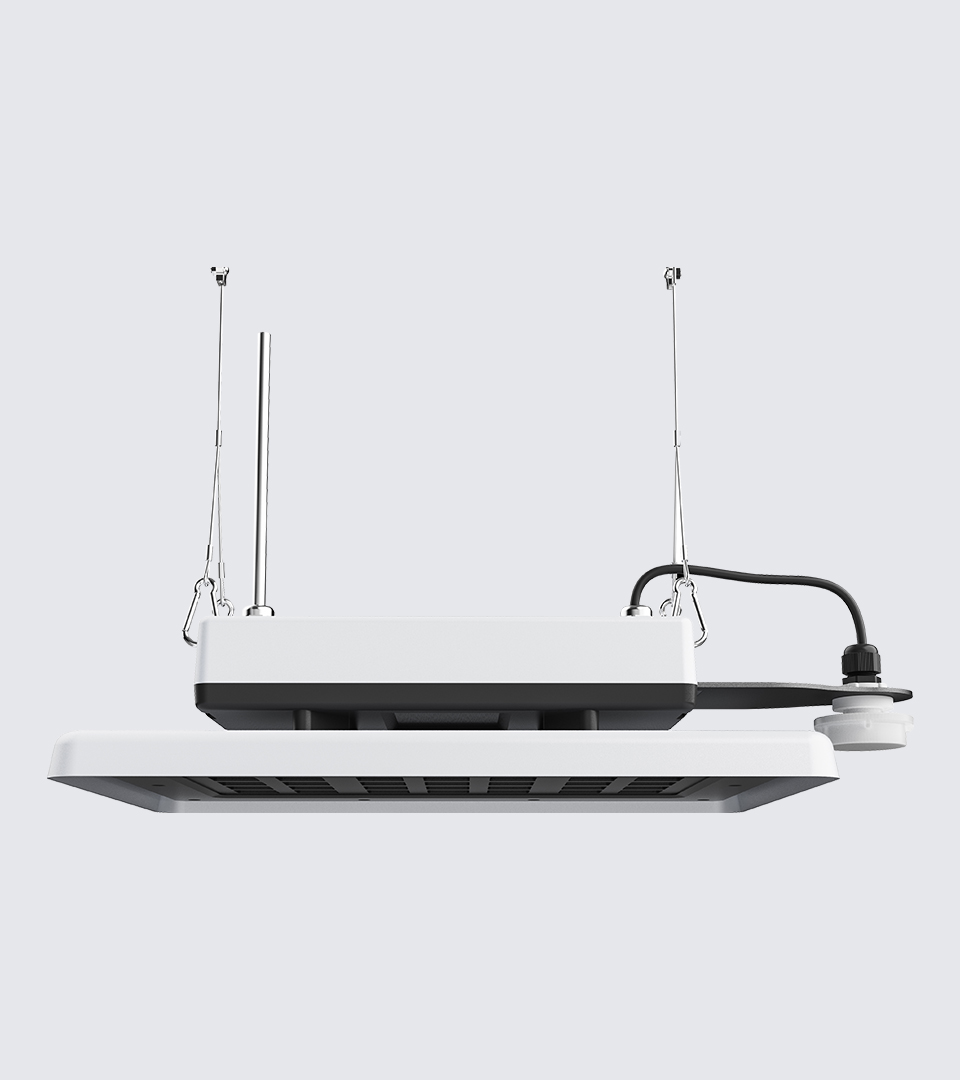
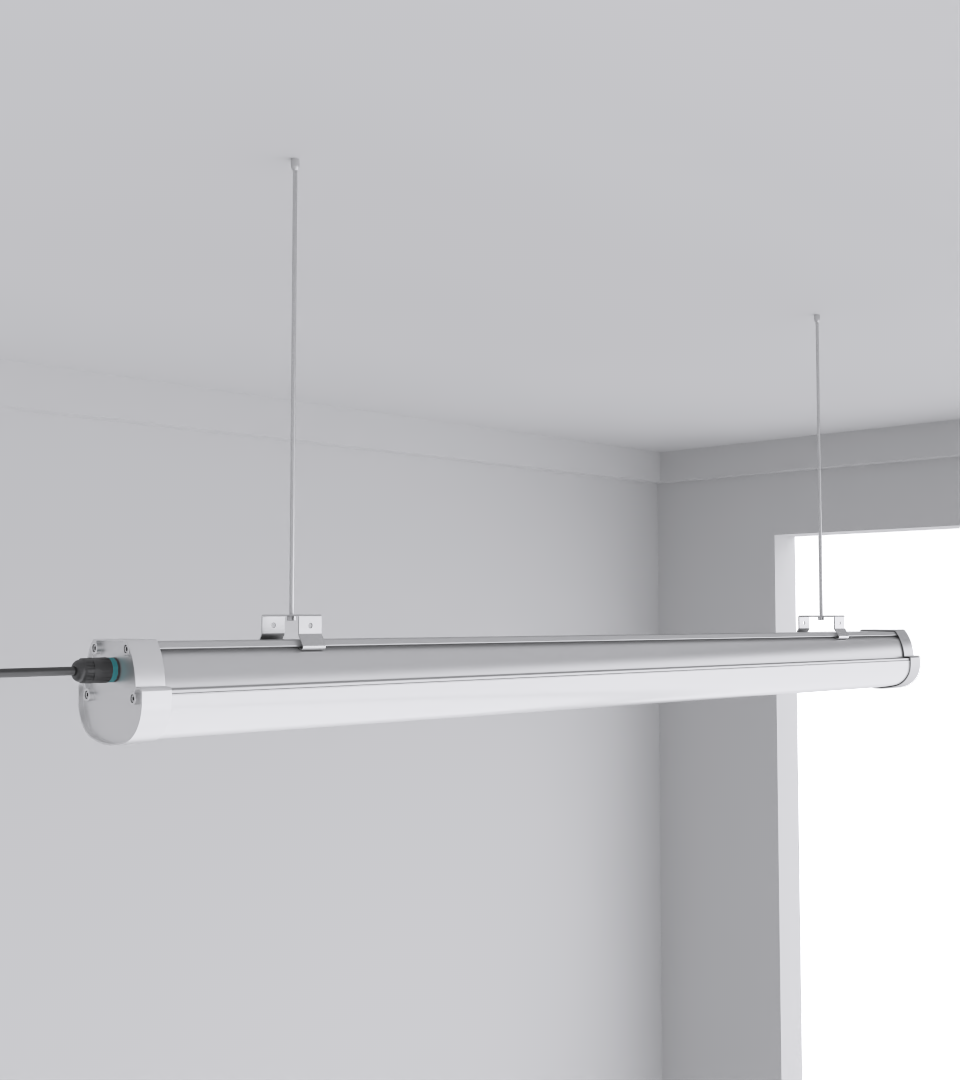
- Use high-efficiency battens like SeamLine Batten for uniform light
- Go for lm/W > 190 to reduce thermal output
- Rely on motion sensors to manage lighting during idle times
- For hot zones, install explosion-proof or tamper-resistant designs
We once had a case where installers mounted units flush to the rack—resulting in harsh shadows and misread panel meters. A minor adjustment in beam angle and spacing cut down technician error rates by 60%.
Energy, Control & Automation: Real Leverage Points
- Follow-me lighting: Lights only turn on where operators walk
- Smart dimming: Adjusts intensity based on activity or schedules
- DCIM/BMS Integration: Lighting trends analyzed alongside server load
Data centers using CAE’s programmable drivers have shown lighting energy cuts of up to 27% in 2024 alone—primarily due to automated low-traffic dimming.
Managing Thermal Load
- Avoid fixtures with high infrared spill
- Use CFD modeling to plan heat distribution
- Select fittings with low self-heating and long service lives
When we retrofitted a client’s three-unit edge deployment in Penang, fixture wattage dropped by 35%, and HVAC demand followed with a 7% reduction.
Emergency Lighting & Safety Systems
- Must run 90+ mins on backup
- Egress and task lights on independent circuits
- Test luminaires under full power outage scenarios
- Pair with motion + heat sensors for smart trigger lighting
Design redundancy with independent cable paths ensures light remains in critical zones even during partial failures.
Implementation & Maintenance: What To Plan For
- Photometric plan + spec sheets
- Maintenance and re-test schedules
- Sensor integration and commissioning checklists
- Ingress sealing (gaskets, conduit, fittings)
- Barcode tagging for quick ID of installed fixtures
Regular audits not only maintain compliance but help track energy drift, sensor failures, and end-of-life projections.
Frequently Asked Questions (FAQ)
Q: Do containerized data centers need explosion-proof lighting?
A: If the unit contains diesel generators, batteries, or flammable components, yes—zones must comply with IECEx or ATEX classifications.
Q: How bright should container data center lighting be?
A: Minimum 50 foot-candles at the 3ft horizontal plane, ideally with uniform vertical distribution.
Q: What is the best color temperature for data center visibility?
A: 4000K to 5000K is ideal for visual clarity and human alertness.
Q: How often should emergency lights be tested?
A: At least monthly, with logs stored per NFPA 75 compliance.
Q: Can lighting affect PUE?
A: Absolutely. Poor lighting choices increase HVAC load and waste energy, impacting PUE significantly.
Q: Should lighting be tied into DCIM?
A: Yes. Integrating lighting controls with DCIM/BMS allows holistic monitoring and improved efficiency.
Data Center Procurement Playbook 2025: Budgeting Smarter with CapEx, OpEx, and Energy-Efficient Sourcing
–
Key Takeaways
| Question | Key Answer |
|---|---|
| What should be in a data center budget? | CapEx (infrastructure, build), OpEx (energy, staff, maintenance) |
| How do you forecast data center growth costs? | Through TCO modeling, load forecasting, and IT alignment |
| What tools support procurement? | Spend analysis dashboards, cost cube software, automated RFP platforms |
| How does sustainability fit into procurement? | Through green vendor selection, PPA contracts, and compliance tools |
| What mistakes should you avoid? | Underestimating lead times, ignoring OpEx, lacking diversification, skipping audits |
1. Introduction: Why Budgeting and Procurement Matter More Than Ever
Data centers are under pressure. Infrastructure costs are rising. Energy rates are volatile. Lead times are stretching across quarters instead of weeks. And the CFO still wants to cut costs.
For decision-makers responsible for growth and uptime — procurement and budgeting strategies are no longer a finance exercise. They’re operational survival tools.
- Poor OpEx modeling leads to cooling system failures and urgent retrofits
- Overreliance on a single supplier leaves entire racks unlit for 3 months
- Data centers that use tools like spend cubes save 7–12% on annual sourcing
2. CapEx vs OpEx: Structuring Your Budget Without Guesswork
- CapEx includes land, power gear, racks, lighting like Squarebeam Elite and Quattro Triproof
- OpEx includes power bills (based on PUE), labor, HVAC and LED relamping
Expert tip: Use environmental sensor logs to stabilize OpEx projections
3. Forecasting Infrastructure Needs: Build vs Expand vs Optimize
| Mode | Description | Risk | CapEx Load |
|---|---|---|---|
| Build | New greenfield facility | High | High |
| Expand | Add capacity in existing site | Medium | Medium |
| Optimize | Upgrade lights, HVAC, tools | Low | Low-Medium |
4. Procurement Lifecycle: What to Control and When
Procurement isn’t just placing orders. It’s managing risk, vendor performance, and uptime. A typical cycle includes:
- Define business need
- Draft technical requirements
- Launch RFP with compliance terms
- Evaluate pricing, SLA, warranty
- Award and manage delivery
CAE Lighting supports this lifecycle by enabling:
- Modular RFP-ready spec sheets like Squarebeam Elite
- Vendor qualification through ISO certifications from CAE Lighting
5. Tools That Make Procurement Work
Data-driven sourcing reduces risk. Use tools such as:
- Spend analysis dashboards with monthly cost cubes per facility
- RFP automation platforms to streamline vendor engagement
- Predictive maintenance logs linked to procurement cycles
With these tools, procurement teams can:
- Measure cost per MW per site
- Track product-level failure rates per vendor
- Model deployment delays based on lead times
6. Green Procurement & Sustainable Budgeting
Modern data centers must meet environmental and regulatory demands. Here’s how to integrate green sourcing:
- Select products with ISO 14001 certification from trusted vendors like CAE Lighting
- Prioritize thermally efficient luminaires like Budget High Bay
- Use power purchase agreements (PPA) and onsite renewable energy
Pro insight: One logistics client reduced cooling OpEx by 18% using motion-controlled LED zones for low-traffic aisles.
7. Avoiding Common Budgeting Pitfalls
Here are common missteps and their fixes:
- Vendor lock-in – Always dual-source essential SKUs
- No CapEx/OpEx bridge – Build transitional planning models
- Ignoring lifecycle costs – Evaluate L70/B50 performance and maintenance load
Additional guidance:
- Segment spend by zone and function (lighting, HVAC, racks)
- Use category management principles to broaden sourcing pool
- Schedule zone-based lighting audits every 18–24 months
8. From Plan to Action: Building Your Playbook
Use this five-step action plan for budgeting and procurement execution:
- Define CapEx/OpEx targets per facility
- Align infrastructure upgrades to IT growth models
- Engage procurement early using spec-based templates
- Track costs and risks with visual dashboards monthly
- Audit vendor and risk profile quarterly
Frequently Asked Questions (FAQ)
What’s the average CapEx per megawatt for a Tier 3 data center?
$7–12 million depending on site location, labor rates, and cooling architecture.
How often should I audit my data center lighting?
Every 18–24 months or immediately after layout or cooling zone modifications.
Can procurement affect uptime?
Yes. Inadequate sourcing or vendor delays can halt deployment or impact compliance timelines.
What are green CapEx models?
These include co-investment infrastructure, renewable-powered builds, and modular PPA-funded units.
Why should I care about ISO 45001?
Worker safety is critical—especially when installing luminaires or power gear near energized racks.
Contact CAE Lighting for a custom spec or budget consultation →
Data Center Retrofit Timelines: Detailed Phase Breakdown, Milestones, and Risk Avoidance
- Why Retrofit Instead of New Build?
- High-Level Timeline Comparison: New Build vs Retrofit
- Retrofit Phase Breakdown
- Commissioning and Go-Live: Final Stages
- Tools, Templates, and Milestone Markers
- Lighting as a Retrofit Lever: CAE Products in Focus
- Common Pitfalls in Retrofit Execution
- Post-Project Performance Review
- Frequently Asked Questions
Key Takeaways
| Feature or Topic | Summary |
|---|---|
| Average Retrofit Duration | 6–18 months, compared to 18–36 for new builds |
| Why Retrofit | Cuts downtime, costs, and carbon footprint |
| Key Phases | Feasibility, design, approvals, build, commissioning |
| Tools Used | Gantt charts, milestone checklists, digital twins |
| Products Mentioned | Squarebeam Elite, Quattro Triproof Batten |
| Common Pitfalls | Poor stakeholder alignment, supply delays, code gaps |
| Final Outcome | Faster ROI, more sustainable infrastructure upgrades |
1. Why Retrofit Instead of New Build?
Retrofit projects offer major benefits in time, cost, and sustainability. Unlike ground-up construction—which can run over two years—retrofitting an operational facility can often be completed within 6 to 18 months. That matters for uptime, budget, and emissions.
- Time Efficiency: Retrofit timelines can be 30–50% shorter (source)
- Cost Control: No land acquisition, fewer permits, and minimal site prep
- Sustainability: Retains embodied carbon, reduces construction waste
Retrofitting also allows use of existing infrastructure like cabling, cooling ducts, or UPS systems, reducing both material and operational cost. And in most active data center environments, a retrofit approach allows incremental upgrades that don’t disrupt mission-critical workloads. Instead of ripping everything out, you selectively replace—sometimes rack by rack, or even aisle by aisle.
2. High-Level Timeline Comparison: New Build vs Retrofit
| Factor | New Build | Retrofit |
|---|---|---|
| Duration | 18–36 months | 6–18 months |
| CAPEX | High | Lower |
| Disruption | None | Low (if phased) |
| Embodied Carbon | High | Low |
| Flexibility | Full control | Existing layout |
3. Retrofit Phase Breakdown
Phase 0: Feasibility Study (2–4 Weeks)
- Site assessment
- Electrical load vs IT load projections
- Early ROI modeling
- Hazard checks and access audits
Phase 1: Programming (1–2 Months)
- Stakeholder engagement
- Budget goals set
- Define ROI model and rebates
Phase 2: Design & Engineering (2–4 Months)
- MEP drawings, 30/60/90% reviews
- Lighting and airflow modeling
- BIM and digital twin where applicable
Phase 3: Permitting & Approvals (1–3 Months)
- Submit local and fire code plans
- Review by authorities having jurisdiction (AHJs)
- Secure lighting rebate preapprovals
4. Commissioning and Go-Live: Final Stages
The final 10% of a project is where most delays and errors happen. Avoid these pitfalls with:
- 30/60/90 Commissioning Plan
- On-site walkthroughs before energization
- Clear stakeholder sign-off structure
Commissioning usually spans 2–4 weeks depending on complexity. Always include:
- Thermal imaging
- Redundancy testing
- PUE benchmarking
- Controls validation (especially lighting sensors)
- Signage and safety audits
5. Tools, Templates, and Milestone Markers
Every successful retrofit project relies on simple but robust project controls:
- Gantt charts showing phased outages and work blocks
- Weekly milestone checklists
- Risk registers with real-time updates
- Stakeholder RACI charts
- Visual timelines (color-coded by trade discipline)
Field advice: Don’t assume BIM files are accurate for older facilities. Use LIDAR scanning to validate rack spacing, ceiling elevation, or return-air plenum size.
Tool Tip: Use digital twin modeling early—it can help visualize thermal hotspots and airflow gaps before they become physical problems.
6. Lighting as a Retrofit Lever: CAE Products in Focus
Lighting upgrades are a fast ROI win. CAE’s Squarebeam Elite and Quattro Triproof Batten are used frequently in high-performance data centers:
- Motion-sensor integration
- IP-rated for hot/cold aisle conditions
- Built to reduce cooling load with targeted beam spread
- DALI and Zigbee compatibility
- Thermally optimized aluminum housings
Also important: lighting retrofits often unlock energy rebates, especially in regions like California or Singapore where utilities subsidize low-wattage installations. CAE’s SeamLine and Budget High Bay ranges are also popular in mezzanine or rack-top applications where visibility and cooling need to be balanced.
7. Common Pitfalls in Retrofit Execution
- Misaligned stakeholder priorities
- Permitting delays due to outdated blueprints
- Inadequate electrical load analysis
- Poor labeling of upgraded infrastructure
- Delays caused by supply chain gaps (e.g., drivers, sensors, breakers)
Pro tip: Always run a full load test 48 hours before go-live—don’t rely on simulation only. You’d be surprised how often a seemingly minor grounding issue or overlooked firmware setting causes a false trip that delays commissioning.
8. Post-Project Performance Review
Within 30 and 90 days, reassess:
- Energy consumption vs projections
- User complaints and tickets
- Hot/cold aisle balance
- Fault alerts from motion lighting sensors
- Access control and maintenance logs
Run thermal mapping again if airflow issues are suspected. This is where long-term savings emerge—or leak. Engage with site operators to document lessons learned, and schedule a follow-up audit in 6 months to validate PUE improvement, power balance, and lighting control effectiveness.
Frequently Asked Questions
Q: How long does a typical data center retrofit take?
A: On average, 6 to 18 months depending on site complexity and scope.
Q: Can I retrofit without taking the whole site offline?
A: Yes—phased approaches and proper redundancy make this possible.
Q: What is the most common cause of retrofit delays?
A: Permitting and late-stage stakeholder misalignment.
Q: Are there lighting solutions specifically for data center retrofits?
A: Yes—Squarebeam Elite and Quattro Triproof Batten from CAE are designed for these conditions.
Q: How can I get help planning a retrofit lighting upgrade?
A: Visit CAE Lighting’s full product range or contact the team for tailored planning support.
Lighting Sensor Integration in Heritage Data Centers: Technical Challenges and Retrofit Solutions
- Why Historical Sites Are Chosen for Data Centers
- Primary Constraints in Historical Buildings
- Lighting Needs Specific to Data Centers
- Best Sensor Technologies for Heritage Sites
- Non-Invasive Sensor Installation Tactics
- Regulatory & Preservation Compliance
- Sensor Network Integration with BAS/BEMS
- Practical Takeaways and Real-World Use
- Frequently Asked Questions
Key Takeaways
| Feature or Topic | Summary |
|---|---|
| Purpose of Article | Explore how to integrate lighting sensors into historical buildings housing data centers without damaging structures or violating preservation codes |
| Main Challenges | Structural integrity, preservation laws, aesthetic consistency, wireless interference, installation constraints |
| Sensor Options | Wireless (Zigbee, LoRaWAN), hybrid, PIR, ultrasonic, tomographic sensors |
| Energy Savings | Up to 50% savings possible through sensor-driven lighting control |
| Installation Tips | Non-invasive mounts, RF mesh planning, hidden wiring routes |
| Regulatory Path | Waivers, pre-approval, compliance forms, stakeholder consultation |
| Best Practice Tools | Sensor layout plans, pilot protocols, integration diagrams |
Why Historical Sites Are Chosen for Data Centers
Integrating lighting sensor systems into historical buildings that have been repurposed for data centers involves a difficult balance: preserving architectural heritage while ensuring the facility meets modern standards of energy efficiency, automation, and safety.
- High structural integrity (thick stone or brick walls, cool interiors)
- Redundant space from old military, university, or financial infrastructure
- Unique security and isolation advantages (natural shielding, fewer windows)
But retrofitting comes at a cost:
- Thick walls and narrow conduits limit sensor wiring
- Heritage boards impose strict rules on modifications
- Local building codes may clash with digital infrastructure goals
Primary Constraints in Historical Buildings
- Structural & Architectural: Solid masonry means no drilling or only with permits. Decorative ceilings and arches limit mounting height and visibility. Legacy cable routing: few service voids or raised floors.
- Legal & Aesthetic: Regulations from preservation authorities. Visual integrity: modern devices must be hidden or blend in. Retrofits must be reversible or non-destructive.
Lighting Needs Specific to Data Centers
- Lower human occupancy but require consistent ambient lighting
- Equipment zones with high heat, airflow, and vibration
- Sensor redundancy requirements (motion, presence, temperature)
Lighting products like Squarebeam Elite and Quattro Triproof Batten offer durable, IP-rated performance while integrating well with motion sensors.
Best Sensor Technologies for Heritage Sites
| Sensor Type | Features | Suitability |
|---|---|---|
| PIR (Passive Infrared) | Simple, low power | Good for open areas, minimal interference |
| Ultrasonic | Active detection via sound | May cause false triggers in arched ceilings |
| Tomographic | Mesh-based movement detection | Excellent for thick-walled structures |
| Zigbee/BLE Wireless | No hardwiring | Ideal for preservation compliance |
Non-Invasive Sensor Installation Tactics
- Mounting Strategies: Magnetic sensor bases (steel beams), high-tack adhesive mounts (3M pads), ceiling-based RF repeaters
- Wiring & Power: Battery-operated sensors, floor box routing, legacy shaft wiring, wireless mesh networks
Regulatory & Preservation Compliance
- Work with local authorities before installing anything
- Use reversible methods and submit impact assessments
- Document all techniques with photos and plans
Helpful guides: Lighting Guide for Data Centers and Emergency Readiness
Sensor Network Integration with BAS/BEMS
- Protocols: BACnet/IP, BACnet MS/TP, DALI-2, Zigbee, BLE
- Mesh compatibility for older systems
- Occupancy-linked HVAC and lighting automation
Practical Takeaways and Real-World Use
- Case: Thailand retrofitting telecom archive vaults — 40% energy savings with motion-based lighting (read more)
- Tip: Start with one aisle and run pilot programs to calibrate sensors in variable humidity zones
Frequently Asked Questions
Can I install sensors without damaging heritage surfaces?
Yes. Use magnetic or adhesive mounts and avoid drilling. Wireless units are preferred.
Are wireless sensors reliable in thick-walled spaces?
Yes, especially with tomographic or mesh-based designs that bypass direct line-of-sight issues.
What savings can I expect from smart lighting in old buildings?
Anywhere from 10%–50%, depending on layout, traffic, and sensor quality.
Can I connect new sensors to an old building’s BAS?
Yes. Use BACnet, KNX, or Zigbee-compatible controllers and ensure your BEMS vendor supports mixed-protocol devices.
Who can help with compliance?
Engage early with your preservation board and hire a lighting engineer experienced in retrofits. CAE Lighting’s team offers consultation support.
Smart Lighting for Legacy Data Centers: Retrofit Strategies Using DALI, BACnet, and ZigBee
–
- Why Retrofits Make Sense for Data Centers
- Typical Legacy Lighting Setup in Data Centers
- Available Smart Control Technologies
- Wiring, Gateways & DCIM/BMS Integration
- Compliance, Commissioning & Security
- Energy Savings & ROI Breakdown
- Real‑World Example: Malaysia Retrofit Rollout
- Implementation Checklist
- Frequently Asked Questions (FAQ)
Key Takeaways
| Feature or Topic | Summary |
|---|---|
| Integration Benefits | Energy savings, streamlined operations, enhanced monitoring, and predictive maintenance. |
| Key Protocols | BACnet, Modbus, SNMP ensure interoperability. |
| Implementation Strategies | Assess existing infrastructure, select compatible systems, phased deployment recommended. |
| Operational Advantages | Reduced downtime, improved safety, occupant comfort, and significant sustainability contributions. |
1. Why Retrofits Make Sense for Data Centers
Smart lighting retrofits deliver real improvements without ripping out the whole system. It’s cost-effective, scalable, and in most cases, doesn’t interrupt uptime.
- Lower total energy use (up to 75%)
- Improve Power Usage Effectiveness (PUE)
- Add scheduling, motion sensors, daylight harvesting
- Enhance safety and response during emergencies
- Align with green certifications like LEED and ASHRAE
2. Typical Legacy Lighting Setup in Data Centers
Before smart upgrades, many centers rely on:
- 0–10V dimming or triac-based dimmers
- Fluorescent or static LED tubes
- No integrated sensors
- Manually switched or timer-based systems
| Issue | Impact |
|---|---|
| Always-on lighting | Energy waste |
| No fault detection | Downtime during failures |
| No daylight adjustment | Overlit or poorly lit zones |
| Static output | No circadian support for staff |
3. Available Smart Control Technologies
- BLE/ZigBee modules for wireless sensor/control overlays
- DALI systems for addressable digital lighting
- BACnet/IP for integration with BMS/DCIM
- TALQ and Modbus for broader device communication
4. Wiring, Gateways & DCIM/BMS Integration
- Retain 0–10V drivers, add wireless dimming controller
- Use occupancy/photo sensors via BLE or ZigBee
- Connect gateways to BMS or DCIM via BACnet/IP or SNMP
5. Compliance, Commissioning & Security
- Validate each sensor and its ID mapping
- Log scenes and schedules for audits
- Set VLANs and encrypt wireless traffic
- Use firmware with OTA updates and rollback capability
6. Energy Savings & ROI Breakdown
| Feature | Before | After Retrofit |
|---|---|---|
| Energy use/year | 240,000 kWh | 96,000 kWh |
| Cost/year (@$0.12/kWh) | $28,800 | $11,520 |
| Maintenance visits/year | 14 | 4 |
| Total annual savings | — | ~$20,000+ |
7. Real‑World Example: Malaysia Retrofit Rollout
- Replaced 1,800 legacy fluorescents with SeamLine battens
- Integrated 380 smart sensors (motion + daylight)
- Linked via 8 BLE gateways to DCIM
- 63% energy reduction
- PUE improved by 0.07
- Maintenance crew workload halved
8. Implementation Checklist
- Conduct lighting audit
- Identify legacy control type (0–10V, triac)
- Test sample sensor compatibility
- Select control modules and gateway protocol
- Map luminaires to digital addresses or groups
- Commission and verify sensor coverage
- Integrate data into BMS/DCIM
- Configure alerts and fallback modes
- Train staff on new UI
Frequently Asked Questions (FAQ)
Q: Can I use smart sensors with triac-based fixtures?
Yes, with the right modules or adapters, you can retrofit dimming and sensor input.
Q: Is DALI mandatory?
Not at all. DALI is great for addressability, but BLE and ZigBee also support group control and feedback.
Q: Do I need new drivers?
Only if your current driver doesn’t accept external dimming/sensor input. Many 0–10V drivers can be retained.
Q: How secure are wireless lighting networks?
Secure if implemented properly: VLAN isolation, strong encryption, and monitored firmware.
Q: What’s the easiest entry point?
Motion-based retrofits using CAE’s Squarebeam or SeamLine products with BLE control are low-cost and high-impact.
Data Center LED Upgrade Guide: Lower PUE, Reduce HVAC Load, Improve Efficiency
- The Case for Change: Why Lighting Still Matters
- Fluorescent Tubes: What’s the Real Cost?
- LED Benefits: What You Actually Get
- Product Fit: What Works for Data Centers
- Retrofit Planning: Avoid These Mistakes
- Cooling + PUE Gains: Let’s Quantify It
- Smart Controls That Actually Work
- Your LED Upgrade Checklist
- Frequently Asked Questions
Key Takeaways
| Feature or Topic | Summary |
|---|---|
| Energy Savings | LEDs cut lighting power consumption by up to 60% and lower HVAC load significantly (up to ~40%). |
| Cooling Efficiency | Lower BTU output per lumen reduces heat, improving Power Usage Effectiveness (PUE) by 0.10–0.20. |
| Retrofit Options | Ballast-bypass and full luminaire upgrades offer better longevity and compatibility with IoT controls. |
| Real Savings | A 10,000 sq ft center saved ~$18,600/year in energy and cooling post-upgrade. |
| Smart Controls | Motion sensors, daylight harvesting, and BMS integration help optimize operations further. |
| CAE Lighting Edge | Products like Squarebeam Elite and Quattro Triproof are optimized for high-demand environments like data centers. |
The Case for Change: Why Lighting Still Matters
In data centers, even “non-IT” systems like lighting can influence uptime and efficiency. With rack density climbing and cooling strategies becoming more precise, heat from fluorescent tubes is an unnecessary overhead.
- Fluorescents produce ~290 BTU per 4,000 lumens.
- Comparable LEDs emit only ~136 BTU—over 50% reduction.
- That delta lowers HVAC loads and extends cooling system lifespan.
Fluorescent Tubes: What’s the Real Cost?
- Ballast failures
- Mercury risks (hazmat disposal)
- Higher flicker rates (can cause fatigue)
- Shorter lifespan: ~10,000 hours vs 50,000–100,000 for LEDs
LED Benefits: What You Actually Get
- Improved PUE (Power Usage Effectiveness)
- Lower HVAC stress
- Longer lifespans, lower labor needs
- No mercury, no starters, no buzzing
- Motion-sensor ready, IoT-ready
Product Fit: What Works for Data Centers
| Product | Key Feature | Best Use |
|---|---|---|
| Squarebeam Elite | Low flicker, directional optics | Rack aisles |
| Quattro Triproof | IP65, anti-corrosion | Utility corridors |
| SeamLine Batten | Sleek, efficient, retrofit-friendly | General room lighting |
Retrofit Planning: Avoid These Mistakes
- Assuming drop-in LED tubes are enough—ballast issues remain
- Ignoring EN 62776 standards
- Skipping photometric planning
- Not assessing flicker risk (especially with surveillance systems)
Cooling + PUE Gains: Let’s Quantify It
- 200 LED fixtures replaced fluorescents
- Annual HVAC cost dropped by ~$18,600
- PUE improved from 1.7 to 1.58
Lower lighting heat means:
- Fans run slower
- Less dehumidification needed
- Server temp drift stays within tighter bands
Smart Controls That Actually Work
- Motion sensors to auto-dim unused zones
- Daylight harvesting to capitalize on natural light in edge rooms
- BMS integration via Zigbee, BACnet, or proprietary APIs
Learn more about automation-ready lighting options
Your LED Upgrade Checklist
- Audit your current fixtures (type, count, control wiring)
- Select EN 62776-compliant luminaires
- Review PUE model with and without upgrade
- Confirm warranty terms & lumen maintenance data (L70)
- Confirm BMS compatibility
- Train ops team on new controls
Frequently Asked Questions
Q: Can LEDs really lower cooling costs in data centers?
Yes. LEDs produce less heat per lumen, which directly reduces the HVAC load, often by 20–40%.
Q: Do I have to bypass ballasts?
Ideally, yes. Ballast-bypass or full luminaire replacements provide better performance and eliminate a major failure point.
Q: Will I need to rewire the facility?
Not always. Many CAE luminaires like the SeamLine Batten are retrofit-friendly.
Q: What’s the ROI for switching to LED?
Typically 18–36 months depending on energy rates and system size.
Q: Are all LED tubes flicker-free?
No. Low-end options often introduce flicker. CAE’s Squarebeam Elite and Quattro Triproof are designed to avoid this.
For tailored procurement and photometric support, contact CAE Lighting directly.
Wiring Retrofits in Data Centers: Expert Guide to Live Environment Challenges & Solutions
- 1. Introduction
- 2. Wiring Challenges in Active Data Centers
- 3. Code Compliance & Safety Protocols
- 4. Planning & Audit Phase
- 5. Wiring Design Strategies
- 6. Emergency & Exit Lighting Integration
- 7. LED Lighting & Smart Controls Wiring
- 8. Interim Power Strategies
- 9. Cable Management Best Practices
- 10. Work Execution
- 11. Validation & Commissioning
- 12. Maintenance & Future Scalability
- 13. Advanced/Niche Considerations
- 14. Case Studies & Lessons Learned
- 15. Conclusion & Checklist
- Frequently Asked Questions (FAQ)
Key Takeaways
| Question | Summary Answer |
|---|---|
| What are the main wiring challenges in data center retrofits? | Cable tray congestion, arc-flash risks, limited raceway space, and EMC segregation. |
| How can lighting systems be upgraded without downtime? | By using phased retrofits, temporary bypass wiring, and low-voltage PoE systems. |
| Which CAE Lighting products are best for data centers? | Squarebeam Elite, Quattro Triproof Batten, and SeamLine Batten. |
| What safety standards and codes must be followed? | NEC, NFPA 70, IEC, and AHJ-specific codes including arc-flash assessments and emergency power requirements. |
| What tools help manage cables during retrofits? | Structured trays, RFID tagging, digital twin tracking, and airflow-optimized tray designs. |
| How is smart lighting wired in existing facilities? | Using DALI, 0–10V, or PoE systems, with surge protection and correct circuit segregation. |
| What interim power strategies can maintain uptime? | UPS-fed temporary lighting, inverter circuits, and phased retrofit sequences. |
| How can wiring documentation and validation be streamlined? | Cable tagging, continuity testing, commissioning reports, and updated digital wiring drawings. |
1. Introduction
Wiring might not be the most glamorous part of a retrofit, but in a data center, it’s the backbone. When you’re upgrading lighting systems, whether for energy efficiency or smarter control, poor wiring decisions can cost far more than just downtime. They can compromise safety, interfere with IT infrastructure, and create long-term inefficiencies that are hard to fix once the cables are in the ceiling.
In retrofit projects—especially those in live data center environments—the challenge isn’t just adding new lighting. It’s fitting that lighting into a space already full of mission-critical systems, without causing disruption. Lighting cables compete for tray space, raise arc‑flash hazards, and often involve both power and control wiring, including emergency circuits that must be code compliant.
This guide breaks down the real-world wiring issues faced by electrical teams and facilities engineers when retrofitting lighting in high-uptime environments like data centers. We’ll look at:
- Where wiring tends to go wrong during lighting retrofits
- How to phase electrical work in a live server hall
- Emergency lighting circuits and inverter topologies
- Smart lighting wiring for PoE, DALI, and sensor loops
- Compliance tips and commissioning checklists
2. Wiring Challenges in Active Data Centers
In a live data center, every wire pulled is a potential disruption. You’re not starting from scratch—you’re weaving into a running engine. Here’s where it typically gets messy:
- Live environment risks: You can’t kill the power. So teams must install on redundant paths or during staggered maintenance windows.
- Raceway limitations: Existing conduits and cable trays are usually sized for the original build—no slack room.
- IT cable dominance: Fiber, Cat6, power—all fight for space in ceiling trays. Lighting wiring often becomes an afterthought.
- EMC and interference: Mixing 230V lighting feeds with data cabling creates noise and safety issues if not properly segregated.
3. Code Compliance & Safety Protocols
Data centers operate under strict safety protocols—both for personnel and infrastructure. Wiring work must comply with national electrical codes and internal data hall standards.
- Arc‑flash hazard zones: Lighting wiring may run near panels or UPS gear that carries high current. A flash assessment determines PPE, clearances, and sequence of work.
- Emergency lighting circuits: Must follow local codes and provide redundancy via batteries or central inverters.
- Documentation: Updated as-built drawings and accurate tagging are required for inspections and future work.
- Local authority coordination: The AHJ (Authority Having Jurisdiction) must approve retrofits that modify life safety systems or fire barriers.
4. Planning & Audit Phase
No lighting retrofit should begin without a baseline electrical and photometric audit. Here’s what’s included:
- Circuit loading: Identify breaker size, circuit count, and load capacity. Avoid adding lights to near-capacity circuits.
- Voltage drop assessment: Essential for long cable runs—especially in high bays.
- Lighting level audit: Determine existing lux levels, glare issues, and dead zones to optimize layout rewiring.
- Stakeholder alignment: IT, security, maintenance, and contractors must be looped in to avoid operational clashes.
5. Wiring Design Strategies
Wiring plans in retrofit projects must accommodate existing infrastructure and allow for scalability. Effective strategies include:
- Phased work zones: Wiring one area at a time with temporary lighting to avoid total darkness or downtime.
- Raceway upgrades: Add parallel conduits or widen cable trays if space is limited. Don’t mix low-voltage and 230V in shared paths.
- Color coding: Use cable jackets or ties to visually separate control wiring, emergency feeds, and general lighting.
- Flexible conduits: In some retrofits, they provide safer routing than rigid EMT, especially around obstacles or tight racks.
6. Emergency & Exit Lighting Integration
Emergency lighting circuits are legally required, and they behave very differently from standard mains lighting. Retrofits must consider both backup and control wiring layouts.
- Egress path wiring: Must remain illuminated during a power outage. This means isolated circuits, either battery-backed or inverter-fed.
- Central inverters vs batteries: Battery units reduce wiring but add fixture maintenance. Inverters centralize maintenance but increase wiring complexity.
- Voltage and redundancy: Must meet local code (e.g., 90 minutes at full output in the U.S.).
- Testing compliance: Monthly tests and commissioning must be built into wiring control logic or done manually.
7. LED Lighting & Smart Controls Wiring
Modern lighting systems often incorporate sensors, timers, and networking. That brings control wiring into the mix—low-voltage, but high in complexity.
- PoE (Power over Ethernet): Supplies power and data over CAT6. Reduces AC wiring but requires switch/router coordination.
- DALI and 0-10V: Common protocols for dimming and group control. Need shielded cable and proper terminations.
- Sensor loops: Occupancy and daylight sensors must be carefully mapped in layouts—usually via control bus wiring.
- Surge and interference control: Smart controls must be isolated from noise-inducing power lines.
8. Interim Power Strategies
One of the biggest challenges in retrofitting data centers is avoiding blackout conditions while circuits are being rewired.
- Temporary bypass lighting: Portable fixtures or UPS-powered luminaires installed during rewiring phases.
- Mobile inverter carts: Useful in areas without easy circuit redundancy—these are wheeled in during work zones.
- Cooling sensitivity: Disrupting power near HVAC control panels or server zones risks unplanned shutdowns. Timing and phase planning are critical.
9. Cable Management Best Practices
Lighting cables must be traceable, safe, and serviceable—especially when sharing tray space with IT wiring.
- Structured cable trays: Divide trays with metal or plastic barriers to separate power, control, and data cables.
- Minimum bend radius: LED driver cabling often has tighter radius requirements than typical MC cables.
- Vertical runs: Use ladder risers with support spacing compliant with weight loading of added lighting circuits.
- Labeling and access: Use RFID tagging or printed labels for serviceability. Trays must remain accessible post-installation.
10. Work Execution
Once the wiring plans are approved and equipment is on-site, work execution becomes the most high-risk phase. Coordination and validation are essential.
- Qualified electricians: All workers must be licensed and trained in live data environments—especially for emergency wiring.
- Lockout‑tagout (LOTO): Proper safety protocols must be followed for every circuit swap or disconnection.
- Lighting loads and UPS: Some circuits may be tied to critical UPS loads. These require extra validation and documentation.
- Test & commissioning: Every cable must be megger tested and continuity confirmed. Lighting levels also validated against photometric targets.
11. Validation & Commissioning
Every lighting and wiring retrofit must end with proper validation—especially in data center environments where any fault can trigger alarms or compliance issues.
- System testing: Ensure all emergency, control, and general lighting circuits perform as expected—under power fail conditions too.
- Load verification: Confirm circuits are balanced and that driver inrush currents are within UPS/inverter limits.
- Energy measurement: Log wattage drops to support utility rebates or ESG reporting. Can be done via submetering or control system output.
- Update documentation: Final drawings, load tables, and cable schedules must reflect as-built conditions for future maintenance.
12. Maintenance & Future Scalability
Great wiring is future-proofed. Retrofits shouldn’t just solve today’s problems but leave room for tomorrow’s upgrades.
- Cable tagging and logging: Use QR or RFID labels for circuit identification. Sync them with BIM or wiring databases.
- Tray space planning: Leave 20–30% tray capacity for future circuits—especially in data halls with growth targets.
- Maintenance training: Train onsite staff to identify and troubleshoot new circuits and controls confidently.
- Standardization: Use consistent materials and methods across all data halls to ease long-term maintenance.
13. Advanced/Niche Considerations
- RFID tagging for cable IDs: Used in hyperscale data centers to track wiring lifecycle and verify configuration.
- Integration with BMS/DCIM: Control systems must hand off monitoring data to Building Management Systems for central visibility.
- Pod lighting in high-density zones: Specific row-by-row layouts may require dual feeds or motion logic to balance performance and savings.
- Cybersecurity: Any IP-based lighting control should be firewalled and follow security protocols (e.g. VLAN segmentation).
14. Case Studies & Lessons Learned
- Live retrofit under cooling gantries: In one case, overhead lighting circuits were installed during chiller replacement using mobile UPS fixtures—coordination between HVAC and lighting teams was essential.
- Colocation data hall upgrade: Phased install of PoE fixtures using suspended trunking allowed full lighting upgrade without service disruption—showed ROI in under 14 months.
15. Conclusion & Checklist
Retrofitting lighting in a live data center is never plug-and-play. But with proper planning and wiring strategy, it’s entirely achievable—and often worth the energy gains and control flexibility.
Wiring Retrofit Checklist:
- ☑ Electrical audit completed and raceway map validated
- ☑ Phased install plan reviewed with IT and ops
- ☑ All emergency lighting circuits code-compliant
- ☑ Control wiring segregated and surge-protected
- ☑ Commissioning completed and as-built docs issued
Frequently Asked Questions (FAQ)
Q: Can I use existing raceways for new lighting wiring?
A: Only if there’s enough capacity and no conflict with IT/data lines. Always check with updated NEC/IEC rules.
Q: How do I wire DALI or PoE lighting during a retrofit?
A: Use shielded twisted pair for DALI; CAT6 for PoE. Run control wiring in separate trays when possible to reduce interference.
Q: What happens if emergency lighting fails commissioning?
A: The retrofit can’t be signed off. You’ll need to resolve inverter load issues or install battery-backup alternatives.
Q: Should I label all new cables?
A: Absolutely. QR codes or RFID tags help maintenance and are now required by many internal auditing policies.
Q: How long does a phased lighting retrofit take?
A: Depends on size, but expect 4–12 weeks for a full hall, assuming minimal shutdowns and 24/7 operational continuity.
Zero-Downtime LED Retrofitting in Live Data Centers: Step-by-Step Engineering Guide
- Why Zero Downtime Matters in Data Center Retrofitting
- Assess Before You Install: Audit & Baseline
- Choose Fixtures That Work With You
- Scheduling the Retrofit: No Interruptions Allowed
- Sensor Logic: Smarter Lighting for Dynamic Environments
- Measuring Real Results: The Malaysian Case Study
- Heat & Load Management
- Final Checklist & Action Points
- Frequently Asked Questions
Key Takeaways
| Feature or Topic | Summary |
|---|---|
| Zero Downtime Retrofit | Step-by-step methods to upgrade lighting without interrupting service |
| Sensor Integration | Covers PIR, ultrasonic, and smart IoT-compatible systems |
| Compliance & Safety Standards | Aligned with ASHRAE, NFPA, IEC, and IECC codes |
| Cooling & Thermal Load Impact | LEDs reduce HVAC strain and improve airflow in rack spaces |
| Wireless & Plug-and-Play Retrofitting | Enables quick installs with minimal disruption |
| Cost & Energy Benefits | Up to 45% reduction in lighting energy use; fewer maintenance hours |
How to Plan a Zero‑Downtime LED Lighting Retrofit in an Operating Data Center
1. Why Zero Downtime Matters in Data Center Retrofitting
Downtime costs aren’t just theoretical. Industry data points to losses of up to $7,000 per minute for data centers experiencing unplanned outages. That figure doesn’t include reputational damage or SLA violations.
- Maintaining full operational uptime
- Ensuring safety standards are never compromised
- Accounting for environmental factors (cooling, air pressure zones)
CAE Lighting’s Squarebeam Elite is purpose-built for this kind of high-stakes environment, offering passive thermal design and smart sensor integration.
2. Assess Before You Install: Audit & Baseline
- Fixture Inventory: Legacy tubes, T8 battens, CFLs, high bays?
- Lux Levels by Zone: Cold aisles vs warm aisles, corridors, utility zones
- Thermal Contribution: Impact of lighting on HVAC load
- Breaker Availability: Current panel load vs expected retrofit draw
In a recent retrofit in Selangor, switching from halogens to CAE’s SeamLine Batten dropped cooling demand by 18% overnight.
3. Choose Fixtures That Work With You
Ideal Features:
- Magnetic mounting options (no drilling)
- Pre-wired quick connectors
- Compatible with Zigbee, Casambi, or DALI
- Sensor sockets or built-in PIR + ultrasonic combo
CAE’s Quattro Triproof Batten checks all these boxes. Plus it survives in high-humidity subfloors and ceiling trays.
4. Scheduling the Retrofit: No Interruptions Allowed
- Night-shift installations
- Aisle-by-aisle isolation
- Temporary bypass lighting
- Parallel power paths (if available)
Pro Tip: Start with low-traffic zones first to reduce risk of visual disruptions.
5. Sensor Logic: Smarter Lighting for Dynamic Environments
| Sensor Type | Use Case |
|---|---|
| PIR | Detects motion in clear view |
| Ultrasonic | Detects motion through obstacles |
| Dual PIR+Ultra | Critical for cable tray zones |
6. Measuring Real Results: The Malaysian Case Study
- 28% reduction in lighting-related energy use
- 45% better lux uniformity
- 3.7x faster maintenance procedures
- 27% drop in inspection-related visual errors
7. Heat & Load Management
Replacing traditional fluorescents with passive LED systems like CAE’s Budget High Bay offers:
- Lowered HVAC workload
- Reduced risk of thermal tripping in racks
- Ambient rack temperature reduced by up to 1.2°C
8. Final Checklist & Action Points
- Perform a baseline audit
- Choose sensor-ready, plug-and-play fixtures
- Start installs during low-activity windows
- Track lux and energy metrics post-install
- Use data to adjust zoning and scheduling
Need help? Visit CAE Lighting’s contact page or browse the product catalog.
Frequently Asked Questions
Q: Can lighting retrofits really happen while a data center is live?
A: Yes. With magnetic mounting, live-circuit plug-and-play wiring, and zone scheduling, downtime is avoidable.
Q: Will this affect my cooling system?
A: Yes, positively. LEDs reduce thermal load significantly, easing strain on HVAC systems.
Q: Do I need to rewire my whole setup?
A: Not necessarily. Many retrofit solutions like CAE’s battens work with existing wiring and power layouts.
Q: How long does a full data center retrofit usually take?
A: Depends on scale, but many are staged over 3–7 days without disrupting uptime.
Q: What’s the ROI on a retrofit like this?
A: Most facilities recoup retrofit costs within 18 months through energy and maintenance savings.
How to Assess and Replace Legacy Lighting in Data Centers: A Technical Guide for 2025
- What Is Legacy Lighting in Data Centers?
- Why Should You Assess Your Data Center Lighting?
- How to Prepare for a Lighting Audit
- What to Look for During a Site Audit
- Interpreting the Data Collected
- Retrofit Options: Practical, Not Theoretical
- Compliance and Safety Standards
- Calculating ROI and Business Case
- Frequently Asked Questions (FAQ)
Key Takeaways
| Question | Answer |
|---|---|
| What is legacy lighting? | Older lighting tech like fluorescent, HID, or early-gen LEDs still in use in many data centers. |
| Why assess lighting? | To improve energy use, reduce cooling load, enhance safety, and meet compliance standards. |
| What tools do I need? | Lux meters, energy meters, layout diagrams, audit checklist. |
| What’s a typical upgrade path? | Audit → LED retrofit → Controls integration → Performance verification. |
| Is it worth the cost? | Often yes—energy + cooling savings + rebates make ROI in 1–3 years possible. |
1. What Is Legacy Lighting in Data Centers?
Legacy lighting includes older lighting types such as:
- Fluorescent tubes (T8/T12)
- HID (High-Intensity Discharge) fixtures
- First-generation LED fixtures with poor LM-80/TM-21 performance
These systems often remain in data centers built before 2015. They’re energy-inefficient, degrade quickly, and strain cooling systems.
2. Why Should You Assess Your Data Center Lighting?
- Lighting contributes up to 10% of energy bills in some facilities
- Adds heat load, increasing cooling demand
- Poor visibility increases operational risk and errors
- Outdated systems may not meet NFPA or ASHRAE guidelines
This is not just about saving energy—it’s about improving uptime and compliance.
3. How to Prepare for a Lighting Audit
- Align teams: Bring in facilities, IT, finance, safety compliance
- Gather documentation: layout drawings, schedules, schematics
- Inventory lighting: type, location, usage, condition
- Set targets: desired lux levels, energy savings, ROI period
Create a shared document to track:
| Location | Fixture Type | Wattage | Install Year | Notes |
|----------------|--------------|---------|--------------|--------------------|
| Cold Aisle 1 | T8 Fixture | 96W | 2012 | Yellowing lenses |
| Backup Server | CFL Fixture | 42W | 2010 | Buzzing, dim |
4. What to Look for During a Site Audit
- Measure light levels in hot/cold aisles, corridors, ingress areas
- Check control systems (occupancy sensors, daylight dimming, manual overrides)
- Use an energy meter to monitor circuit loads
- Note lumen degradation, yellowing diffusers, broken sensors
Compare readings to standards:
| Zone | Recommended Lux | Measured Lux | Notes |
|------------------|-----------------|--------------|------------------------|
| Server Hallway | 300 lx | 180 lx | Needs upgrade |
| UPS Room | 500 lx | 470 lx | Acceptable |
| Office Support | 350 lx | 100 lx | Inadequate for tasks |
5. Interpreting the Data Collected
- Identify energy hogs (older fixtures using 3x the wattage of modern LEDs)
- Pinpoint uneven lighting (shadows = risks)
- Map cooling load impact from lighting wattage
- Estimate lighting power density (LPD) per room
If LPD > 1.0 W/ft² in server halls, it’s a flag.
6. Retrofit Options: Practical, Not Theoretical
- Retrofit with Squarebeam Elite for high-ceiling, high-temp areas
- Use SeamLine Batten in low-profile cable zones
- Add motion sensors or integrate DALI/Smart controls
- Use Budget High Bay to replace failing warehouse lights
7. Compliance and Safety Standards
- NFPA 101 and OSHA emergency lighting
- ASHRAE 90.1 Lighting Power Allowance
- IES Guidelines for glare, CRI, UGR
- LM-80 & TM-21 for lumen maintenance of LEDs
Useful resource: Lighting Best Practices for Data Centers
8. Calculating ROI and Business Case
Annual Savings ($) = (Old Watts - New Watts) × Hours/Year × $/kWh
Example:
- 500W reduced to 200W
- 8,000 hours/year
- $0.12 per kWh
- = $288/year per fixture. Multiply by quantity.
Also consider:
- Cooling load reduction
- Lamp replacement labor & costs
- Utility rebates
Frequently Asked Questions
Q: How often should lighting be re-assessed in data centers?
Every 5 years or after major infrastructure changes.
Q: Can I retrofit without disrupting server operation?
Yes. Phased retrofits or aisle-by-aisle strategies work well.
Q: Are rebates available for LED upgrades?
In most regions, yes—contact your local utility provider.
Q: Does lighting affect my cooling budget that much?
Absolutely. Every watt of lighting often adds 0.5–0.7 watts of cooling load.
Q: Can smart lighting tie into DCIM systems?
Yes. Many DALI/BACnet/Modbus lighting systems integrate with modern BMS/DCIM platforms.
Global Data Center Trends 2025: AI Power Loads, Cooling Tech & Energy Infrastructure Explained
- Why International Data Center Trends Matter
- AI-Hungry ‘Tech Factories’: Power Demand Surge
- Energy Infrastructure Trends
- Cooling Evolution: From Air to Immersion
- Sustainability & Green Data Centers
- Global Facility Trends & Sovereign Infrastructure
- Edge, Modular & Wireless Innovation
- Expert Observations & Future-Proofing Tips
- Frequently Asked Questions (FAQ)
Key Takeaways
| Insight Area | Summary |
|---|---|
| AI Power Surge | Global data centers are scaling for up to 240kW per rack |
| Cooling Innovation | Immersion and liquid cooling adoption is growing, especially in Asia |
| Green Metrics | PUE near 1.7 is now standard; CUE/WUE becoming key site selection tools |
| Global Growth | Capacity expected to triple by 2030 across APAC, EU, and U.S. |
| Energy Diversification | Mix of renewables, nuclear, and gas underpin future-proof facilities |
| Data Sovereignty | Regional compliance shaping facility location and architecture |
| Edge & Portable Infrastructure | Modular centers and wireless links are reducing latency globally |
| Investment Patterns | $1 trillion+ expected by 2027, heavy APAC and sovereign backing |
1. Why International Data Center Trends Matter
The rise in artificial intelligence workloads and sovereign data laws has pulled data centers from back-end infrastructure into global headlines. You can’t build at yesterday’s pace anymore. Global facility builds now require planners to factor in not only raw compute growth, but also power strain, geopolitical shifts, and cooling strategy in diverse climates.
2. AI-Hungry ‘Tech Factories’: Power Demand Surge
Modern data centers have become compute factories—racks now push 240 kW, up from 20–40 kW just a few years ago. This explosion is driven by GPUs powering large language models and generative AI.
- Chip Trends: NVIDIA’s Blackwell and AMD’s MI400s are breaching 1000W TDPs.
- Rack Design: Density requires redesigned aisles, airflow, and safety tolerances.
- Cooling Response: Many hyperscalers are piloting immersion and cold-plate cooling.
Global Buildout Projections
- 15–22% annual growth expected
- Capacity may triple globally by 2030 (especially in Southeast Asia and Northern Europe)
3. Energy Infrastructure Trends
Power has become the new constraint—not land or fiber. We’re seeing more projects stalled by utility delays than zoning.
- Grid Strain: Metro buildouts face 24–48 month utility provisioning delays.
- Small Modular Reactors (SMRs): U.S., Japan, and France are testing for datacenter baseload.
- Renewables: Projects like YTL’s Malaysian campus integrate on-site solar.
- Gas Bridging: In high-demand markets like Singapore, natural gas stabilizes variable renewables.
4. Cooling Evolution: From Air to Immersion
Traditional cold aisle containment is insufficient at today’s rack loads. Facilities are shifting toward:
- Single-Phase Immersion: Used in GPU-heavy deployments
- Direct-to-Chip Cooling: Preferred in retrofits
- Free-Air Cooling: Still viable in Scandinavian and high-altitude locales
- Water Usage Risks: 40% of global builds now occur in water-stressed regions—design must adapt
Read full guide to data center cooling innovation
5. Sustainability & Green Data Centers
Certifications aren’t just for show—operators are pressured to meet real, public metrics.
- PUE: Power Usage Effectiveness trending toward 1.7 or lower
- CUE: Carbon Usage Effectiveness gaining traction, especially in Europe
- Waste Heat Reuse: Swiss centers now warm community pools; Finland connects to urban heating
- Lighting Efficiency: CAE’s SeamLine Batten offers high-efficiency, low-glare illumination
6. Global Facility Trends & Sovereign Infrastructure
Regions are now competing to host sovereign compute, often with subsidies and infrastructure guarantees.
- Malaysia: Johor and Sarawak regions driving solar-led builds with support from firms like CAE Lighting
- Australia: Leaning on clean energy and subsea connectivity
- Europe: €20bn investment for sovereign AI capability; heat reuse requirements in Germany and the Nordics
- U.S.: Regulation is tightening, especially in California (SB57, AB222) targeting AI-specific builds
7. Edge, Modular & Wireless Innovation
Global edge demand is decentralizing data center footprints.
- Modular Builds: Containerized deployments for fast rollouts
- Wireless Interlinks: 60GHz links now trialed in Singapore and California
- Lighting Fitment: CAE’s Quattro Triproof Batten ideal for modular and portable spaces
8. Expert Observations & Future-Proofing Tips
From our deployment experience across Asia and the Middle East, here’s what we’ve learned:
- Choose lighting last: Too many facilities waste money relighting due to layout revisions
- Always plan for secondary cooling: Liquid adoption will not be optional by 2027
- Get local buy-in early: Community resistance has delayed 3 major builds in the last 18 months
- Stay ahead of compliance: Especially around data sovereignty and environmental reporting
Contact CAE Lighting for more support or samples
Frequently Asked Questions (FAQ)
What is the impact of AI on data center energy use?
AI workloads are driving rack densities to 200–240 kW, significantly increasing energy demands and shifting cooling and power design priorities.
How does immersion cooling compare to air cooling?
Immersion offers 90–95% heat capture efficiency compared to 40–60% in traditional air-cooled setups. It also enables denser racks.
Why are data centers built near renewables or nukes?
To access stable, scalable, and carbon-conscious power—especially where grid connection is delayed or costly.
What is data sovereignty and why does it matter?
Data sovereignty refers to the legal requirement for data to be stored within a given region. It impacts architecture and facility siting.
How is global data center investment evolving?
Rapidly. Asia-Pacific leads growth, and sovereign funds are investing billions. Expected global capacity: triple by 2030.