
Data Center Cabling Best Practices: 2025 Standards, Design Methods, and Proven Deployment Strategies
–
- Key Takeaways
- The Ultimate Guide to Data Center Cabling Best Practices in Data Centers (2025+)
- Understanding Why Cabling Is the Backbone of Data Center Reliability
- Cabling Standards That Should Never Be Ignored
- Choosing the Right Cable Types and Architectures
- Pathways, Airflow, and Cooling Integration
- Labeling, Color Coding, and Documentation
- Planning for Scalability and Future-Proofing
- Testing, Maintenance, and Lifecycle Management
- Security, Compliance, and Audit Readiness
- Frequently Asked Questions (FAQ)
Key Takeaways
| Topic | Summary | Practical Tip |
|---|---|---|
| Core Cabling Standards | TIA/EIA-568, ANSI/TIA-942-A, ISO/IEC 11801, EN 50173-5 ensure interoperability, safety, and performance. | Always request vendor compliance certificates. |
| Structured Cabling | Improves maintenance, scalability, and airflow. | Label every endpoint per ANSI/TIA-606-C. |
| Cable Types | Copper for short runs; fiber (OM3/OM4/OM5) for high-speed backbones. | Use MPO/MTP for dense fiber environments. |
| Routing & Airflow | Cable trays, overhead pathways, and separation from power reduce EMI and improve cooling. | Integrate with lighting layouts for unobstructed airflow. |
| Future-Proofing | Plan for 400G/800G and AI monitoring. | Leave 20–30% spare capacity in trays. |
| Testing & Maintenance | Regular certification tests maintain uptime. | Keep a documented change history. |
| Energy Efficiency | Use low-loss cables and integrate efficient lighting like Squarebeam Elite. | Reduces both energy costs and cooling load. |
| Security | Physical segregation and locking panels protect sensitive circuits. | Restrict cabinet access in multi-tenant environments. |
Understanding Why Cabling Is the Backbone of Data Center Reliability
Cabling in a data center isn’t just a “hook-it-up and forget it” task — it’s the literal backbone for uptime, scalability, and thermal performance. Poorly planned cabling can lead to hotspots, signal degradation, or extended downtime during maintenance.
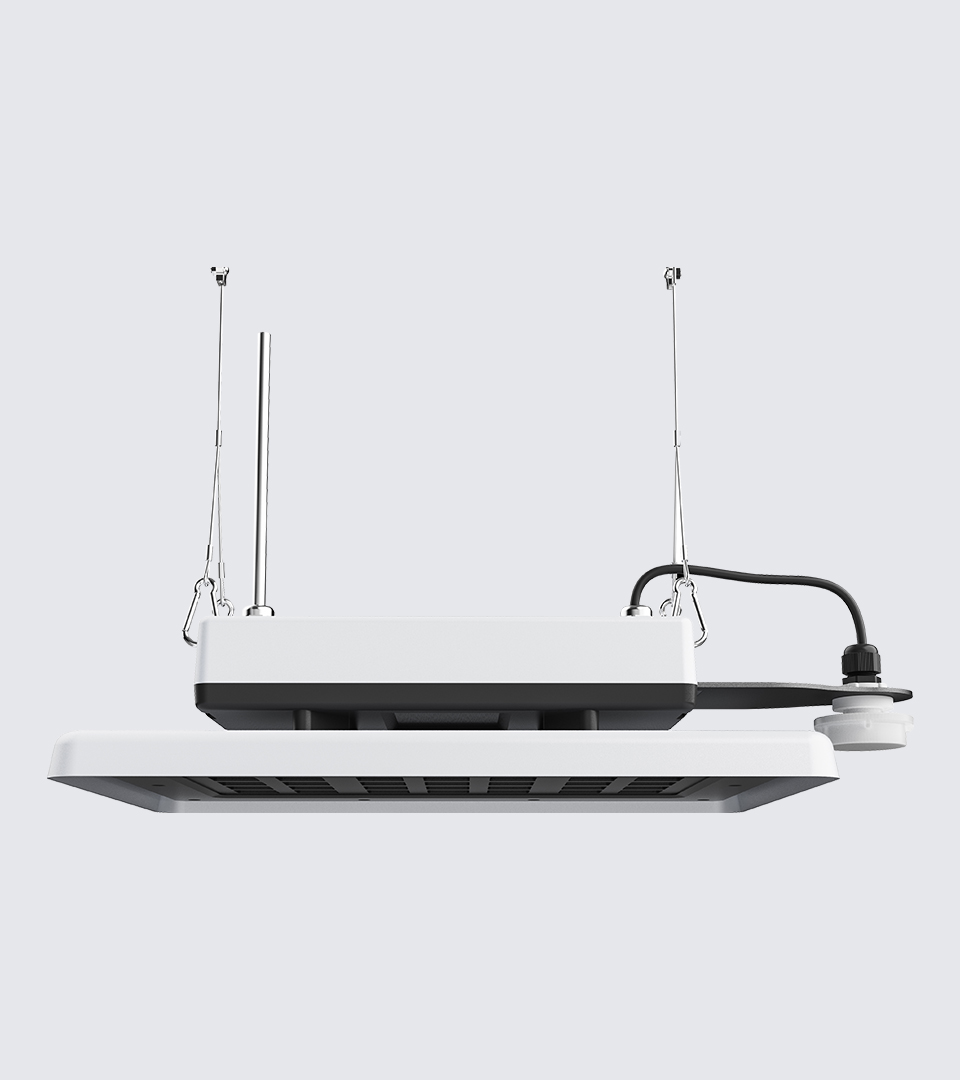
Lighting integration is often overlooked: well-placed fixtures such as the Squarebeam Elite allow technicians to see and service cable trays without adding portable lighting — cutting inspection time.
- Map cabling with rack and lighting positions in mind.
- Keep fiber runs away from high-heat sources.
- Design for technician access without disrupting airflow.
Cabling Standards That Should Never Be Ignored
Adhering to established standards ensures interoperability, safety, and predictable performance:
- TIA/EIA-568 — Covers cable specs and performance.
- ANSI/TIA-942-A — Data center infrastructure guidelines.
- ISO/IEC 11801 & 24764 — International structured cabling rules.
- EN 50173-5 — European data center cabling standard.
- ANSI/TIA-606-C — Labeling and administration.

When cabling above racks, pairing tray placement with linear lighting such as the SeamLine Batten reduces shadowing and improves color rendering for color-coded cable ID.
Best practice: Document compliance certificates during commissioning to avoid costly rework.
Choosing the Right Cable Types and Architectures
Every choice affects performance and cost:
- Copper: Cat5e, Cat6, Cat6a; shielded for EMI-heavy areas.
- Fiber: OM3/OM4 for 40/100G, OM5 for 400G+, MPO/MTP for high-density.
- Architectures: Top-of-Rack (ToR), End-of-Row (EoR), Middle-of-Row (MoR), Centralized cross-connects.
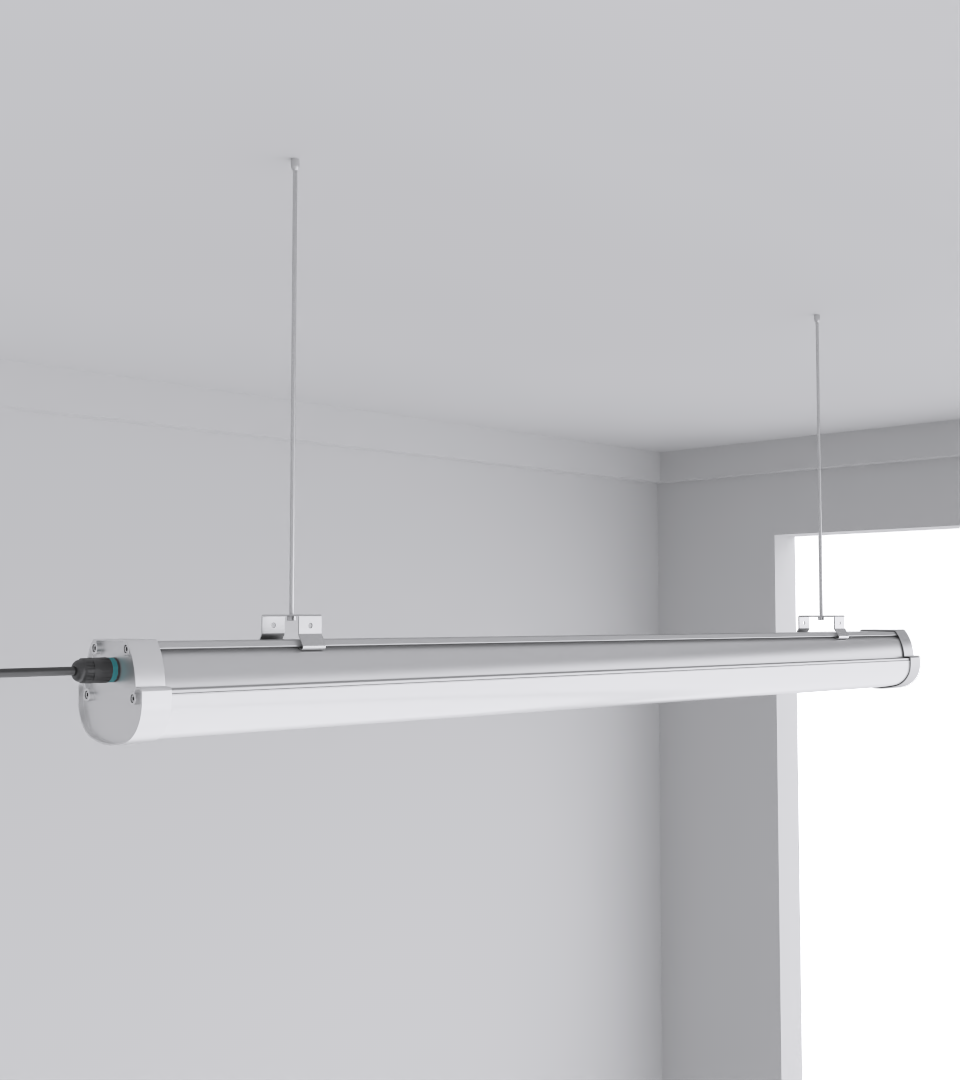
In fiber-dense cold aisles, moisture-resistant lighting like the Quattro Triproof Batten prevents condensation damage while maintaining clear visual access for cable inspections.
Pathways, Airflow, and Cooling Integration
Cable routing directly impacts cooling efficiency:
- Use overhead trays for fiber and underfloor for copper power feeds.
- Keep pathways at least 30% under maximum fill to allow airflow.
- Separate power and data to prevent EMI.
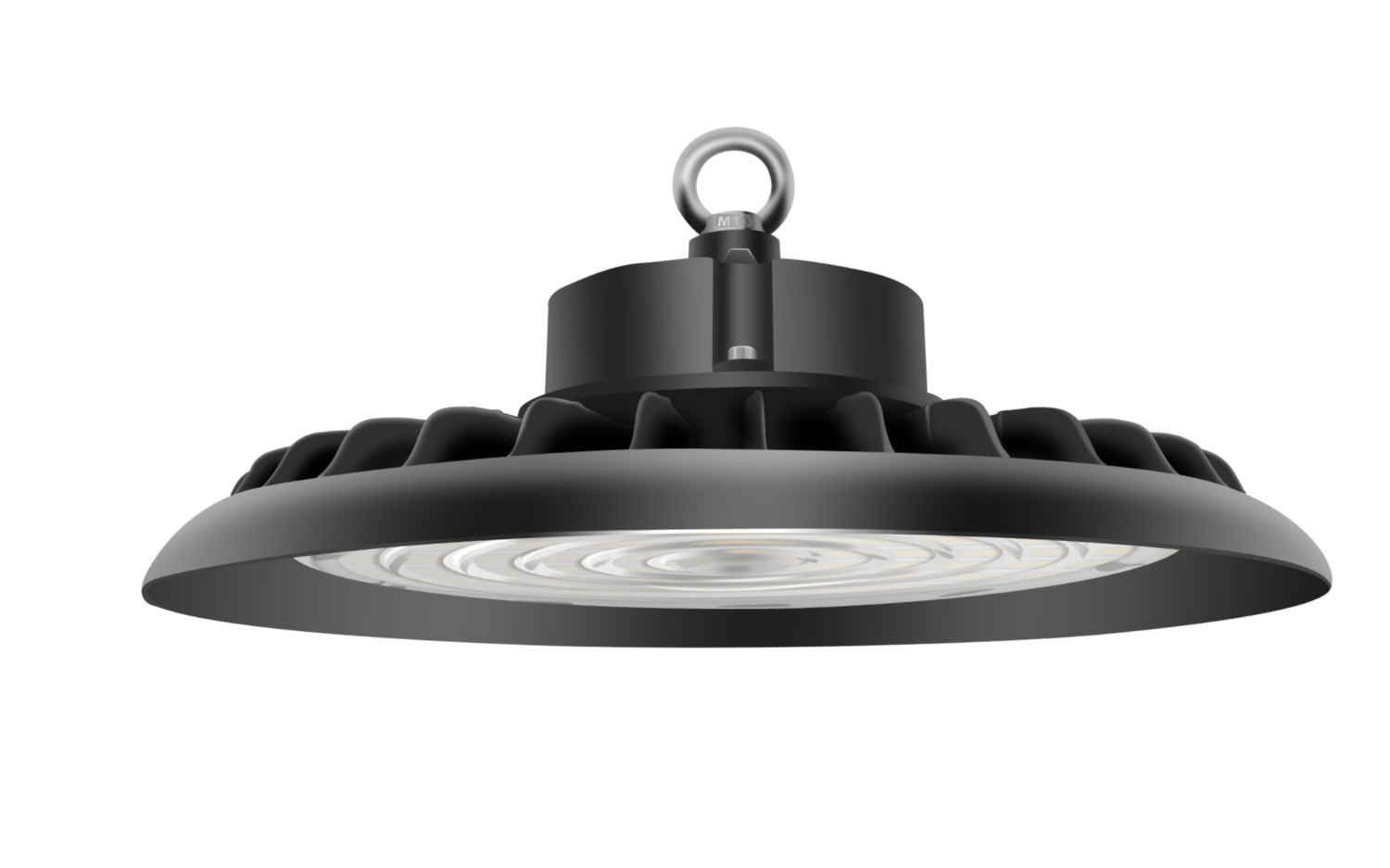
High-bay fixtures like the Budget High Bay Light can illuminate overhead trays without adding heat load, aiding in both cooling and cable maintenance.
Labeling, Color Coding, and Documentation
Consistent identification prevents chaos:
- Use color coding per function (e.g., blue = data, yellow = voice).
- Apply both ends labeling per TIA-606-C.
- Maintain digital maps for quick trace.
Under-rack lighting from products like the SeamLine Batten ensures techs can read port labels without strain.
Planning for Scalability and Future-Proofing
Data rates are rising fast — 400G and 800G backbones are becoming common.
- Spare conduit and tray space (20–30% empty).
- Modular patch panels.
- Fiber types (OM5 for wideband).

Clear overhead lighting ensures upgrades can be done without accidental fiber bends — a common cause of unplanned outages.
Testing, Maintenance, and Lifecycle Management
Testing isn’t optional:
- Certify cables after install (OTDR for fiber, certification tester for copper).
- Schedule annual re-certification.
- Replace damaged cables promptly.
Keep:
- Test records
- Spare cable inventory
- Access logs for maintenance activity
Lighting positioned correctly — like Squarebeam Elite over cross-connects — makes testing less error-prone.
Security, Compliance, and Audit Readiness
Security isn’t just firewalls — it’s physical too:
- Lock cabinets and trays in multi-tenant facilities.
- Separate sensitive routes.
- Ensure cable routes match compliance documentation.
During audits, well-lit and well-labeled cable trays not only pass inspection but make corrective action faster.
Frequently Asked Questions (FAQ)
Q: How often should a data center’s cabling be audited?
A: At least annually, with visual checks quarterly.
Q: What is the maximum Cat6a cable length in a data center?
A: 100 meters including patch cords, per TIA/EIA-568.
Q: Why integrate lighting into cabling design?
A: Proper lighting reduces installation errors, speeds up maintenance, and enhances safety.
Q: Should fiber and copper share the same tray?
A: No — separate to avoid EMI and maintain serviceability.
Q: How much spare capacity should be in cable trays?
A: Aim for 20–30% free space to allow for growth.