
Data Center Lux Levels Explained: Illuminance Standards by Zone with Compliance Guide
–
Key Takeaways
| Zone | Recommended Illuminance | Notes |
|---|---|---|
| Surveillance / Security | 10–50 lux | Just enough for camera clarity and passive monitoring |
| General Walkways | 100–200 lux | Avoid trip hazards, enable navigation during low activity |
| Server Aisles (Vertical) | 200–300 lux | For cable-side inspection and server face recognition |
| Server Aisles (Horizontal) | 500 lux | Required during active maintenance and re-cabling |
| Control Rooms / NOCs | 500–750 lux | To reduce operator fatigue and improve interface visibility |
| Equipment Rooms | 200–300 lux | Routine visibility for environmental checks and maintenance |
| Egress / Emergency Paths | >1 lux maintained | Per EN 1838 & TIA-942-C for emergency lighting minimum |
Why Lighting Levels Actually Matter
Lighting in a data center isn’t just about brightness. It’s about safety, precision, energy budgeting, and standard compliance. You ever tried to identify a tiny port on a patch panel in a dimly lit hot aisle? It’s like threading a needle during a blackout. Even worse when vertical lux isn’t properly distributed.
Bad lighting = errors, rework, heat waste (yes, lights add to your BTU), and higher PUE. Good lighting = lower LPD, better uptime, and easier work.
Codes & Standards (TIA-942, EN12464, ASHRAE)
Here’s the truth: multiple standards define what “good enough” looks like — but most designers mix guidelines across regions:
- TIA-942-C: Tiered lighting levels by task — 3 levels: routine, maintenance, emergency
- EN 12464-1: Defines visual comfort and minimum lux per workplace task
- ASHRAE: Focuses on Lighting Power Density (LPD) — 0.5–1.5 W/ft² depending on zone
If you’re in Malaysia or Thailand: cross-reference with local energy codes, but the EU and U.S. standards still dominate spec books.
Server Aisles, Control Rooms, and the 3-Zone Model
- Surveillance / Passive Zones: 10–50 lux. Just enough for motion cams and security patrols.
- Operational / Walkway Zones: 100–200 lux. Navigation without fatigue.
- Maintenance / Work Zones: Up to 500 lux horizontal. Use this when people are opening racks, replacing blades, or tracing patch cables.
Horizontal vs Vertical Illuminance — Don’t Mix ‘Em Up
Horizontal lux = Light falling flat on the floor or surface
Vertical lux = On the face of the server rack — critical for technicians
If you spec 300 lux horizontal but ignore vertical? Enjoy those support tickets and flashlight-taped-to-a-screwdriver setups.
- Vertical: 200–300 lux is ideal for hot/cold aisle equipment zones
- Horizontal: 500 lux for full-room rework or inspections
Lumen Method Basics (Yes, You’ll Need This Math)
Here’s the simplified version:
Illuminance (lux) = (Lumens × Coefficient of Utilization × Maintenance Factor) / Area (m²)
Don’t let the jargon scare you. Coefficient of Utilization (CU) depends on reflectance values (ceiling/wall/rack), fixture shape, and spacing. Maintenance Factor (MF) is your safety net for dirt, LED depreciation, etc.
Need tools? DIALux and Relux help.
Picking Fixtures That Won’t Fry or Fail
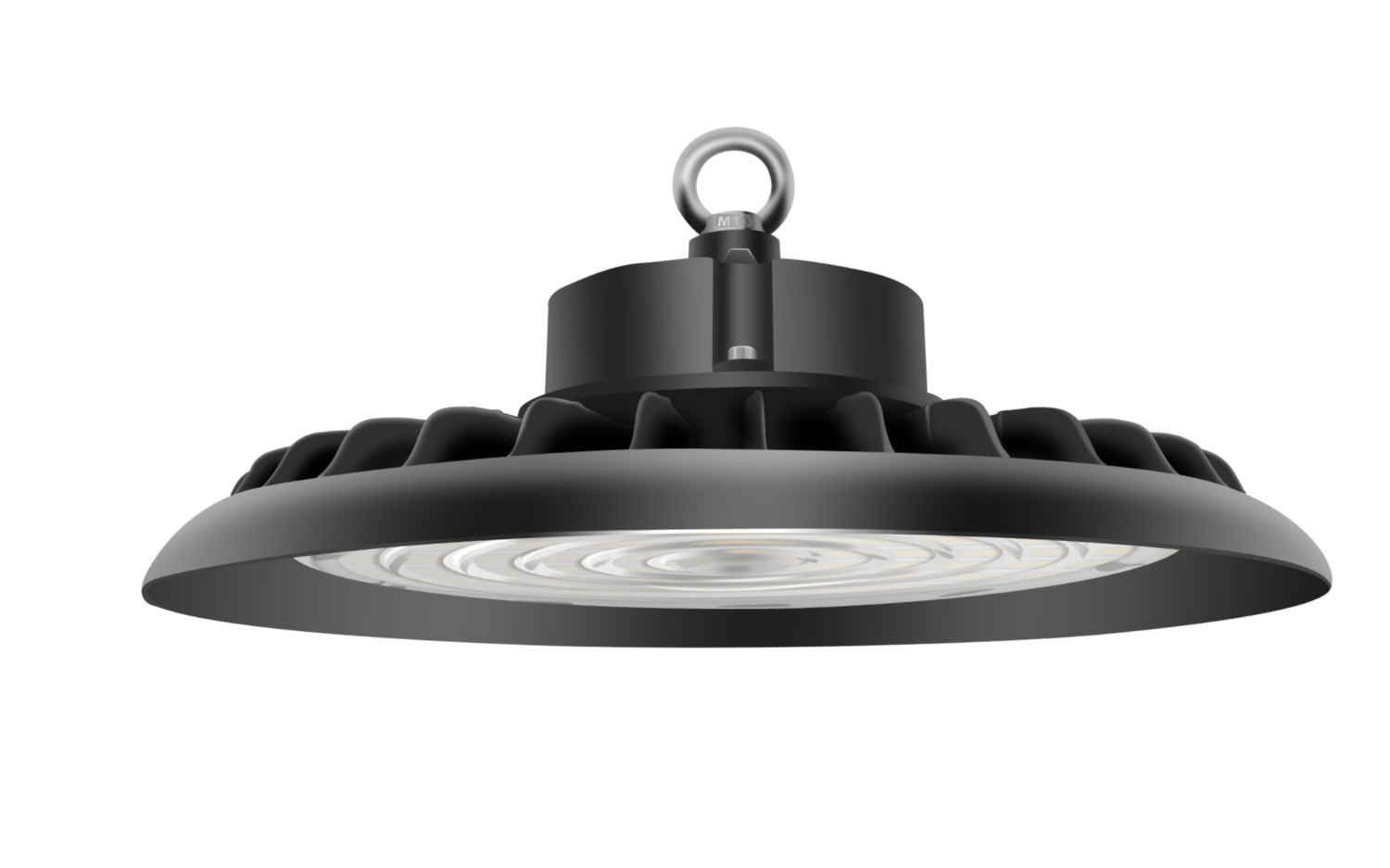
Don’t just grab any IP65 batten and bolt it to the aisle. Consider:
- Ingress Protection (IP): Min. IP54. For dusty, semi-moist environments.
- Temperature Rating: Must handle 40–50 °C ambient without degrading
- Mounting: Aim for asymmetrical aisle lighting over racks
- Dimming + Sensor Options: Choose fixtures that talk to your BMS
Examples:
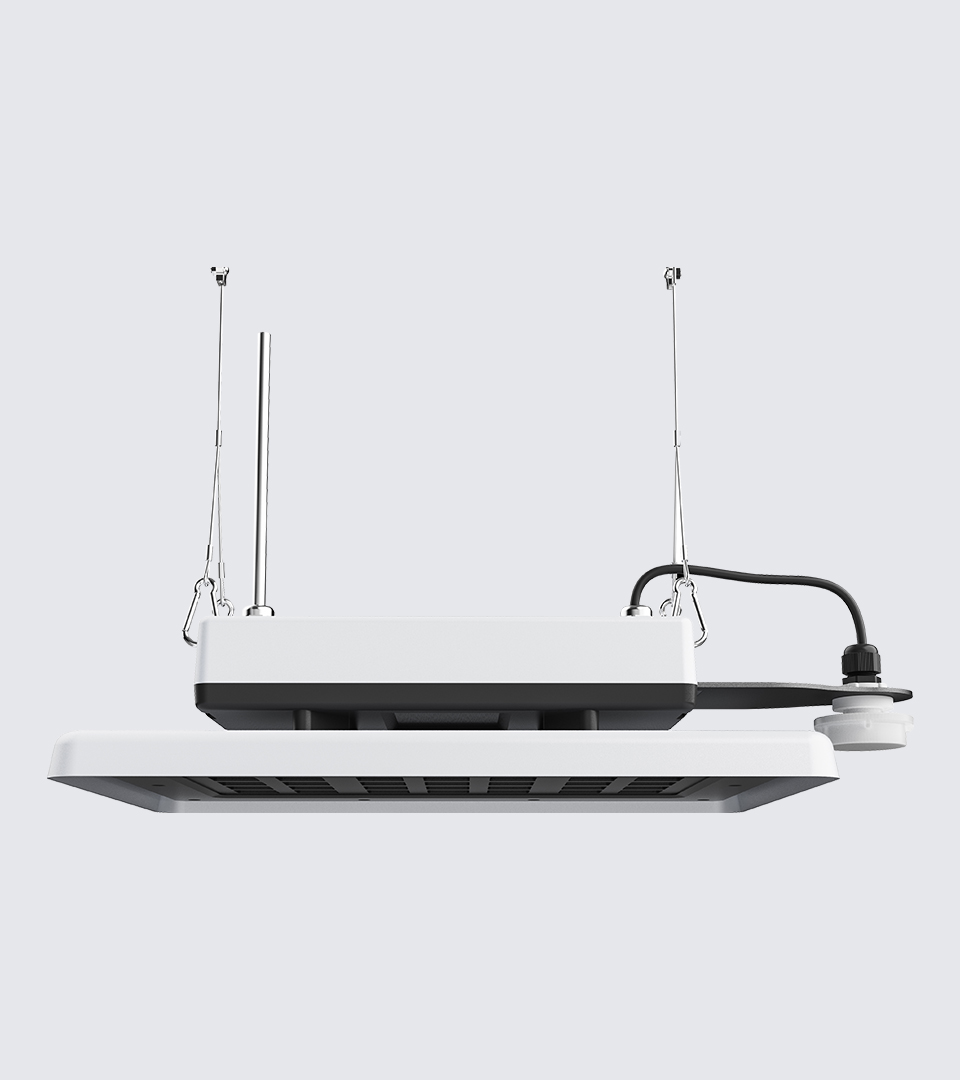
- Squarebeam Elite: Great for aisle-focused uniformity
- SeamLine Batten: Lightweight and modular
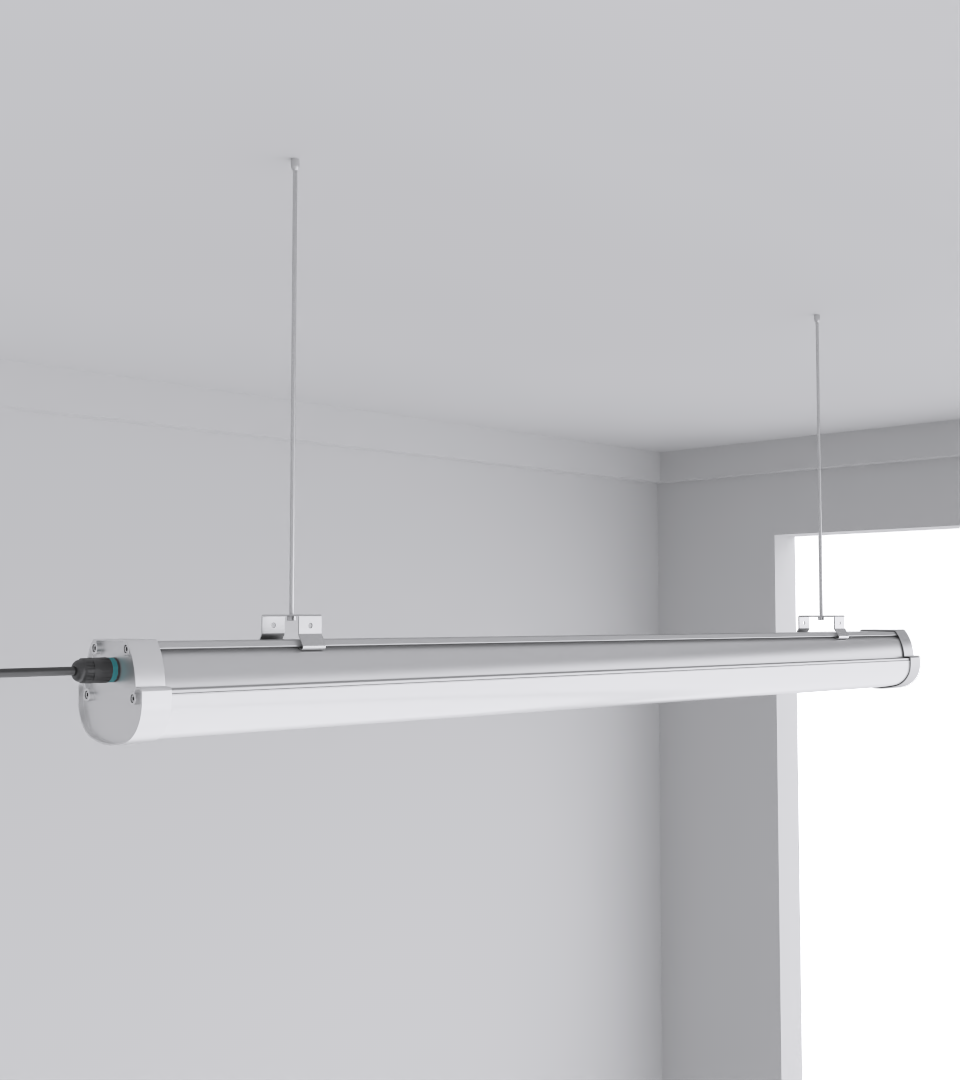
- Quattro Triproof Batten: Moisture-proof and sensor-ready

Zoning, Sensors & Real Power Savings
Want to cut your lighting load in half? Start zoning smart:
- Occupancy Sensors: Use in hallways, cages, unused zones
- Daylight Sensors: Only if there’s skylights (rare)
- Scheduled Dimming: Maintenance time → full power; idle time → 30%
- Integration: Use BMS to override based on UPS status
Sensor tech isn’t a gimmick — it keeps your watts aligned with your uptime.
FAQ
Q: What’s the lux level for server aisles?
A: Vertical 200–300 lux, horizontal up to 500 lux for maintenance.
Q: Why care about vertical lux?
A: It directly impacts technician visibility on rack faces — essential for cable work.
Q: Do black racks absorb more light?
A: Yes — white racks reflect more, potentially reducing fixture count by 30–40%.
Q: Are sensors worth the cost?
A: If properly zoned, yes — they reduce idle energy waste and extend fixture lifespan.
Q: Should I go IP65 for all fixtures?
A: Not necessarily. Use IP65 in harsher zones only; IP54 suffices in well-controlled aisles.
