
Data Center Power Management in 2025: Advanced Strategies for UPS Systems, Energy Efficiency, and Compliance
- Power Architecture That Actually Fits the Load
- UPS Topologies, Battery Choices, and Why BESS Changes the Game
- Distribution: PDUs, RPPs, Busways, and the Boring Things That Save Your Weekend
- Monitoring & DCIM: From “We Think” to “We Know” (Rack by Rack)
- Cooling–Power Coupling and Why Efficient Lighting Matters More Than It Seems
- Standards, KPIs, and the Evidence You’ll Be Asked to Produce
- Resilience That Isn’t Just Letters: N, N+1, 2N, and What Actually Fails
- Practical Playbook: From Audit to Action (and who does what)
Key Takeaways
| Topic | What you need to know | Fast action |
|---|---|---|
| Power architecture | Right-sized UPS + smart distribution beats “overbuild everything.” AC remains common, but 380V DC and 48V OCP gain ground for AI racks. | Map present loads, then model 12–24-month GPU growth before picking UPS topology. |
| Monitoring | Rack-level metering + DCIM alarms catch phase imbalance, stranded capacity, and breaker risks. | Enable outlet-level alerts on intelligent PDUs and feed data to DCIM. |
| Battery & BESS | Li-ion/LFP extends runtime and enables peak shaving + demand response. | Set BMS thresholds for thermal events; run quarterly capacity tests. |
| Lighting’s power slice | Efficient, low-glare luminaires + sensors trim idle kWh and cooling load. | Standardize on high-efficacy fixtures and occupancy logic in aisles. |
| KPIs | PUE is table stakes. Track CUE, WUE, and GEC for a full picture. | Add KPI tiles to DCIM and review monthly with facilities + IT. |
| Compliance | ASHRAE 90.4, TIA-942, and ISO 30134 series govern reporting and design choices. | Build a single “evidence pack” for audits and refresh it quarterly. |
| Resilience | Selective coordination and tested failover paths matter more than nameplate N. | Run black-start and source-transfer tests under live load, not just theory. |
1) Power Architecture That Actually Fits the Load (and the load you’ll have in 6 months)
The biggest miss I see is capacity drag—oversized gear that runs far from its sweet spot. Double-conversion UPS at 20–30% load looks safe on paper but leaks efficiency and adds heat your chiller must pull back out. Start with present loads, then model GPU ramp for 12–24 months. If you’re moving to liquid-cooled racks at 30–80 kW, consider 48 V OCP Open Rack V3 or 380 V DC for distribution simplicity and lower conversion steps. AC still dominates for compatibility with legacy PDUs, but mixed AC/DC backbones are no longer exotic in AI pods.
- Typical path (AC): Utility → MV switchgear → LV switchboards → UPS → PDUs/RPPs → rack PDUs.
- DC options: Fewer conversions, easier bus tie, but watch connector standards and fault isolation strategies.
- Reality check: Your fault current study and selective coordination plan decide whether a clever architecture survives a real short.
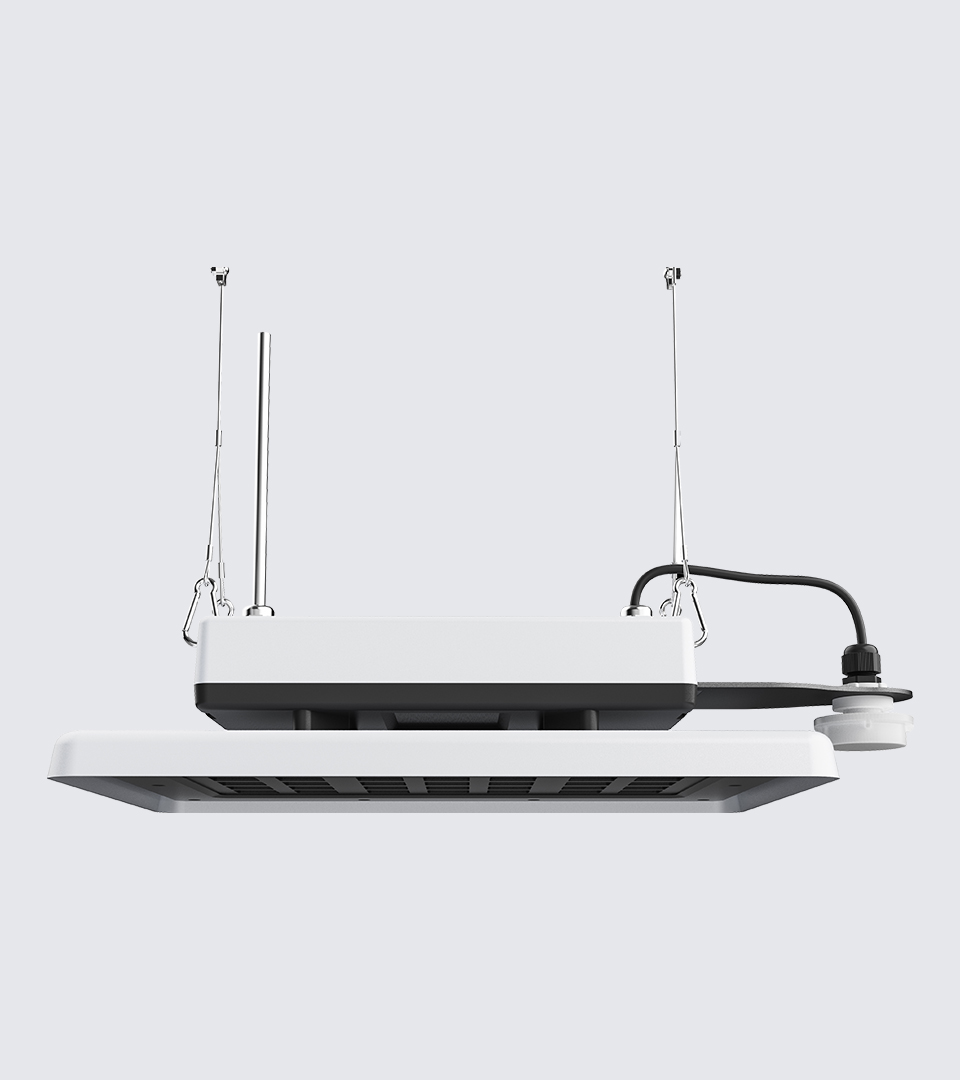
Internal reference for lighting loads and heat reduction: CAE Lighting • Product lineup
–
2) UPS Topologies, Battery Choices, and Why BESS Changes the Game
Topology in one table:
| UPS topology | Pros | Watchouts | Where it fits |
|---|---|---|---|
| Double-conversion (VFI) | Clean output, tight regulation | Efficiency at light load | Mixed legacy + new racks |
| Line-interactive (VI) | Simple, efficient | Limited conditioning | Edge rooms, non-critical |
| Eco-mode (on VFI) | Better efficiency | Transfer events must be tested | Stable utility regions |
Batteries: VRLA still shows up for cost, but Li-ion/LFP brings higher cycle life, smaller footprint, and usable runtime that doesn’t fall off a cliff with age. Tie this with BESS and you don’t just survive outages—you shape your demand curve: peak-shave afternoon spikes, absorb PV midday, and enroll in grid programs that pay you to be flexible. Do the math on round-trip efficiency and cycling wear; many teams forget to budget battery depreciation into the energy arbitrage spreadsheet.
- Quarterly capacity tests (not just float checks).
- BMS thresholds for thermal events and imbalance across strings.
- Separate maintenance bypass path you’ve actually used under load.
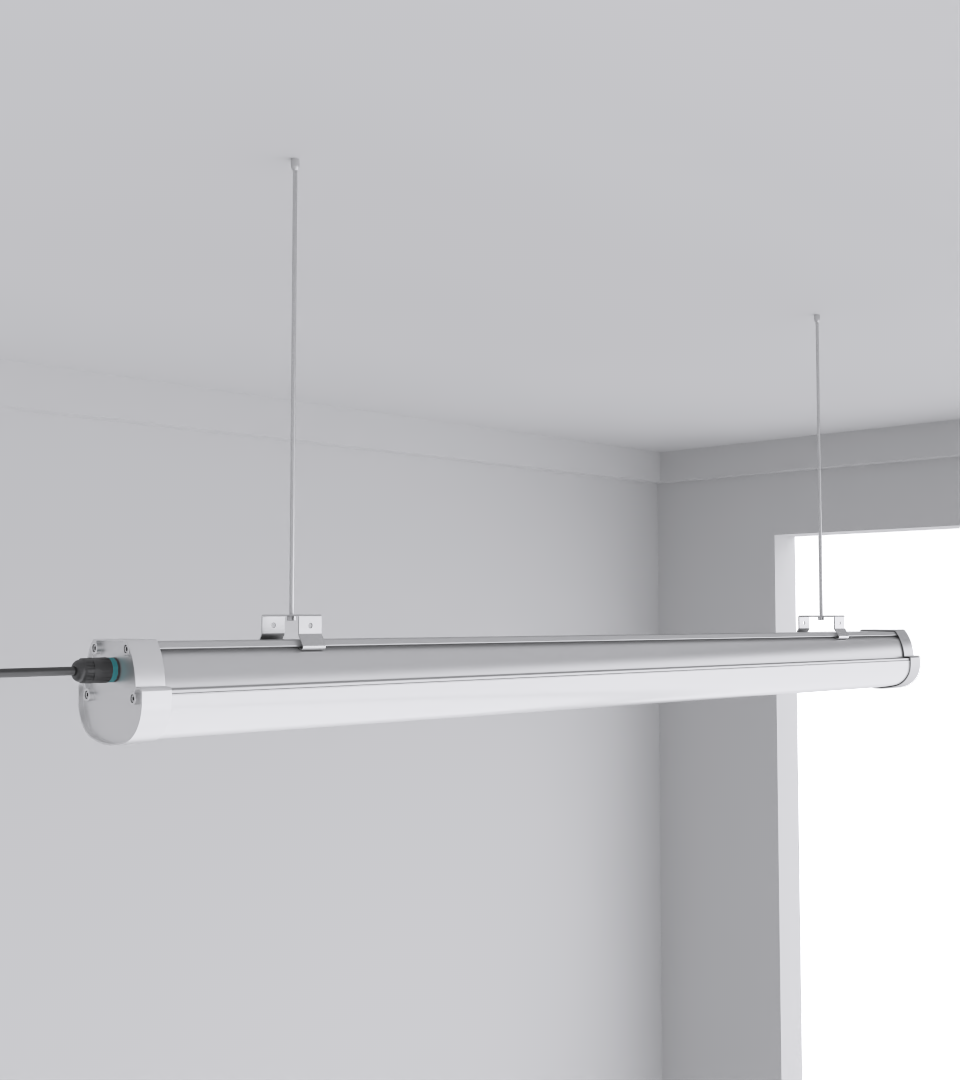
For aisle lighting that doesn’t mind humidity or wash-downs: Quattro Triproof Batten
3) Distribution: PDUs, RPPs, Busways, and the Boring Things That Save Your Weekend
Phase imbalance and stranded capacity waste more money than fancy algorithms ever recover. Meter at panel + PDU + rack outlet where possible. Intelligent rack PDUs let you:
- Alert on breaker creep before nuisance trips.
- Quarantine servers that misbehave at the outlet.
- Spot “zombie” circuits and reclaim power.
Busway vs. whips: Busway wins on moves/adds/changes, especially in fast-growing GPU rows. But keep a tidy tap-off labeling regime; I’ve seen two-hour outage hunts caused by creative handwriting. For RPPs, keep feeder conduits accessible—if your tech has to limbo under cable trays to torque a lug, you planned a failure.
Lighting is a quiet part of distribution design. Use high-efficacy, low-glare luminaires and tune controls so idle aisles don’t soak watts. I’ve measured double-digit cooling relief after replacing hot, inefficient fixtures over dense racks.

Aisle uniformity and quick installs: SeamLine Batten • Project guidance: Data center lighting best practices
4) Monitoring & DCIM: From “We Think” to “We Know” (Rack by Rack)
If you can’t see it, you can’t fix it. Feed utility meters, UPS, switchboards, PDUs, rack PDUs, chillers, CRAHs/CRACs, and sensor grids into DCIM. Then set alarms that matter:
- Phase imbalance thresholds (L1/L2/L3 spread).
- Breaker % of rating and time-current curves integrated with your protection study.
- Hot-spot correlation between thermal maps and power draw to spot recirculation.
- Drift alerts for PUE, CUE, and WUE so “normal” doesn’t slowly get worse.
Run weekly exception reviews; don’t wait for month-end. I keep a “Top 10 Noisy Outlets” list and work with IT to retire or rightsize the offenders. Tie DCIM to ticketing so “power anomaly at Rack 42” isn’t just a graph—it’s a task with an owner and a due date.
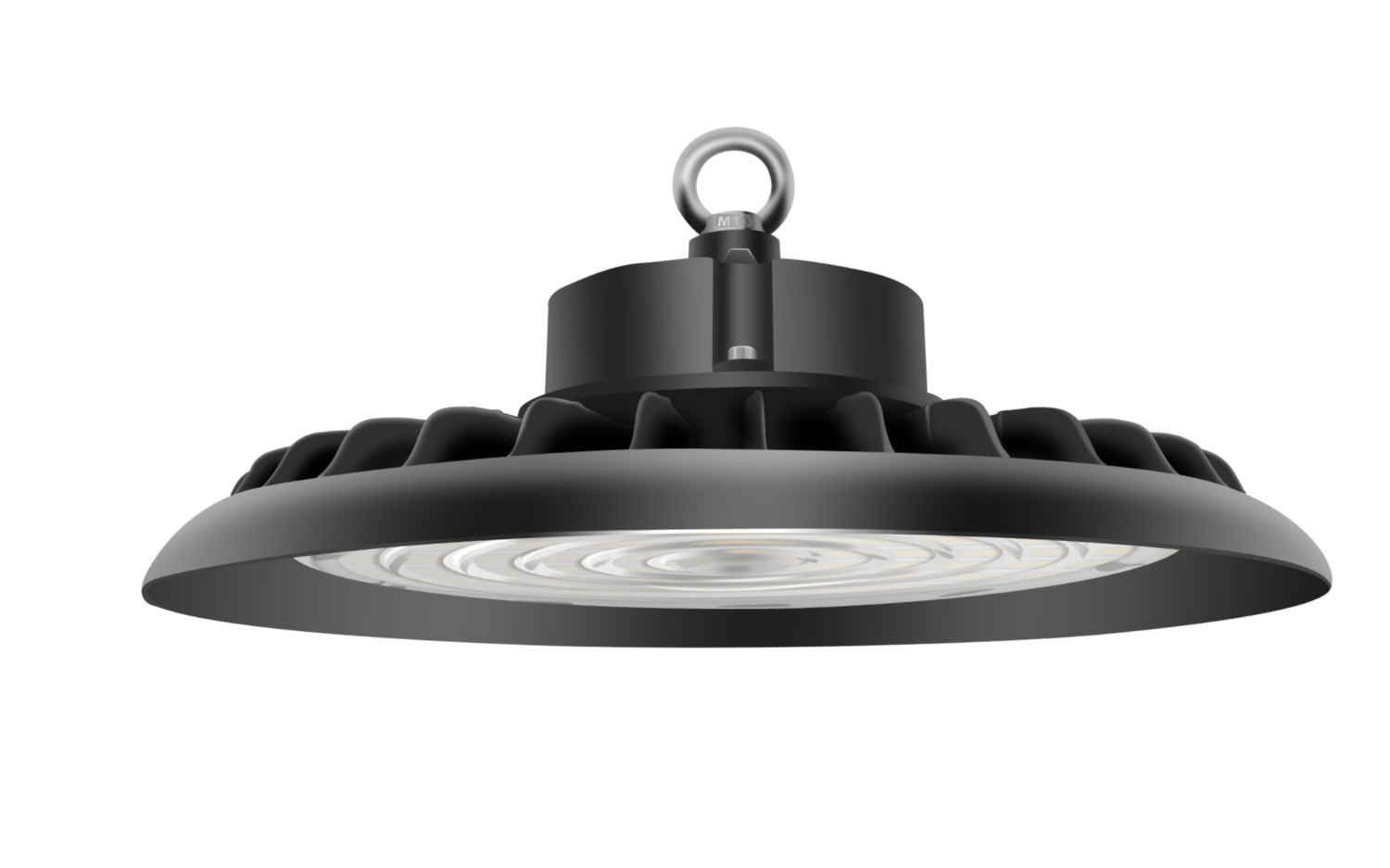
Lighting telemetry helps too—motion data exposes idle zones. See high-efficacy high bays and CAE Lighting products
5) Cooling–Power Coupling and Why Efficient Lighting Matters More Than It Seems
Every watt your fixtures sip gets multiplied by cooling. Swap legacy tubes for high-efficacy LED and you cut two bills: electric and thermal. In high-density rooms, glare control matters—UGR and optics that keep light off shiny bezels reduce eye strain for hands-on work. I favor linear fixtures with narrow-wide distributions over aisles; you get floor uniformity without blasting the tops of racks.
Simple calculation approach (cooling penalty):
- Lighting delta kW × 1 / chiller COP ≈ extra cooling kW.
- In a site with COP 4, saving 10 kW of lighting frees ~2.5 kW of cooling power.
Controls: presence + time-outs in rarely entered rows, and scene presets during maintenance windows. Don’t set everything to full all day; that’s just inertia pretending to be policy.
Low-glare linear for technical spaces: SquareBeam Elite • Background reading: Data center lighting solutions (2024)
6) Standards, KPIs, and the Evidence You’ll Be Asked to Produce
You’ll be measured—plan for it.
- ASHRAE 90.4: Performance-based limits for electrical loss and mechanical load components. Keep your modeling files current.
- TIA-942: Facility ratings and distribution guidance; auditors will ask how your redundancy maps to design.
- ISO 30134 series: PUE (-2), WUE (-9), CUE (-3), and GEC definitions to keep everyone honest.
- OSHA/NFPA 70E: For energized work and LOTO procedures—train, test, document.
KPIs beyond PUE:
- IT kW per rack vs. planned envelope (how fast are you heading for breaker limits?).
- Energy reuse factor if you’re dumping heat into district systems.
- Lighting kWh per m² of white space—easy win, often ignored.
Build a central compliance pack so audits aren’t scavenger hunts: single folder with one-page KPI snapshots, breaker coordination study, UPS test logs, generator run sheets, and lighting control profiles.

For spec alignment and photometric files, coordinate early with CAE Lighting and product pages like SeamLine Batten
7) Resilience That Isn’t Just Letters: N, N+1, 2N, and What Actually Fails
Letter soup doesn’t keep services online; tested paths do. I’ve watched pristine 2N plants drop a row because a maintenance bypass was wired “temporary” three years earlier. Commit to:
- Black-start tests on a real, representative load (not a token rack).
- ATS/STS transfer timing measured at the server inlet—catch brownout windows.
- Breaker coordination drills: trip a downstream device under supervision and prove upstream stays.
- Run sheets for weather events: who calls utility, who throttles loads, who rides BESS.
Lighting is part of egress and emergency visibility. Ensure critical paths have fixtures tied to central battery or local packs, with routine autonomy tests. Poor egress lighting becomes a safety and uptime problem at the same time—people can’t restore what they can’t see.
Emergency/egress planning context: Data center emergency lighting (2025)
8) Practical Playbook: From Audit to Action (and who does what)
Here’s the sequence I use on engagements that need results fast without rebuilding the building:
- Four-week audit:
- Metering sanity check; fix blind spots.
- Load model with 18-month GPU roadmap from IT.
- UPS efficiency sweep, eco-mode candidacy, and runtime targets.
- Lighting survey: fixture types, controls, glare issues.
- Quick wins list with payback bands (<12 mo, 12–24 mo, >24 mo).
- Staged changes:
- Enable outlet-level alerts; correct phase balance.
- Replace worst-offender luminaires; standardize controls in low-traffic rows.
- Tune UPS setpoints; pilot BESS if tariff supports peak shaving.
- Update protection study; run a selective trip test.
- Lock in processes:
- Weekly exception review in DCIM (15 minutes, max).
- Quarterly runtime and generator under-load tests.
- Annual evidence pack refresh for ASHRAE/TIA/ISO.
When you need fixture specs, photometry, and install methods that don’t fight your airflow plan, loop in CAE Lighting’s data center resources and products such as SquareBeam Elite and SeamLine Batten. For quoting or sample runs: Contact CAE Lighting.
FAQ
Q1: Is 380 V DC worth it for a brownfield site?
Usually not across the whole plant. It can make sense in new AI pods or specific rows where conversion stages stack up. Mixed backbones are fine if your protection and maintenance teams are trained for both.
Q2: How much runtime should I target on UPS if I have BESS and generators?
Common planning band is 5–10 minutes on UPS, with BESS smoothing and tested generator start/acceptance. Don’t chase 30 minutes unless your grid requires it; invest that space in extra distribution resilience.
Q3: Do lighting upgrades move the PUE needle?
Yes—modestly on paper, more when you include cooling relief and better task lighting that reduces rework time during maintenance windows.
Q4: What KPI mix should I report to leadership?
PUE, CUE, WUE, monthly peak kW, top 10 circuits by risk, and a one-pager on projected GPU growth vs. available capacity.
Q5: What’s the first step if I have no DCIM?
Start with metering + export: UPS, main switchboards, PDUs, and a handful of intelligent rack PDUs. Even CSV into a lightweight dashboard beats flying blind.
Further reading & internal resources:
Data center lighting best practices •
Lighting’s role in data center emergencies •
Data center lighting solutions overview •
Thailand data center investment context •
Products: SquareBeam Elite • SeamLine Batten • Quattro Triproof Batten • Budget High Bay Light